Skip to content
Navo24Navo24
Gulf, Levant and Africa freight data

Logistics in the Middle East and Africa.

Jebel Ali, Tanger Med, Durban and Mombasa: the ports, the countries and the Navo24 tools for the Middle East and Africa.

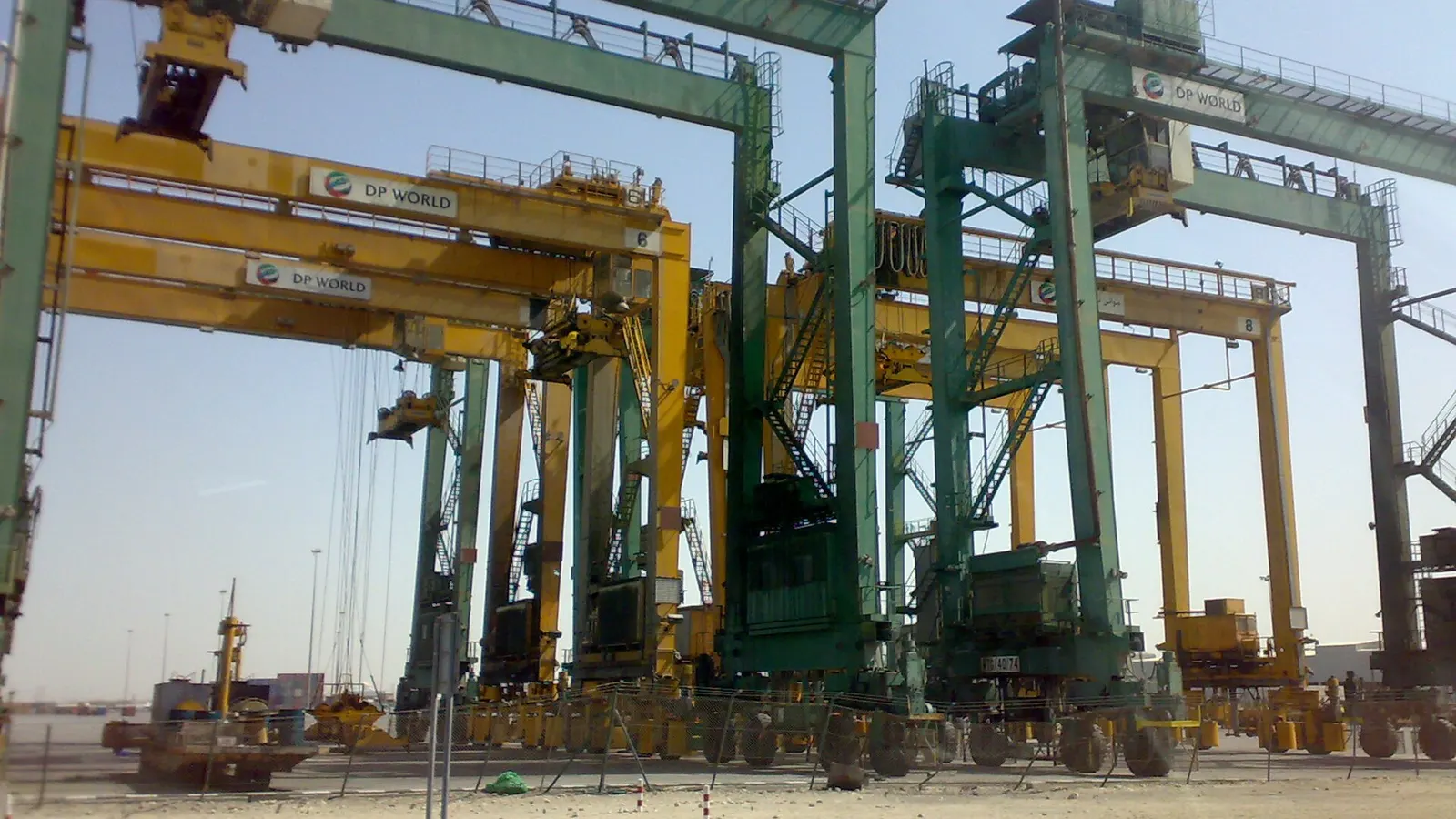
Container cranes owned by Dubai Port Authority, Jebel Ali, Dubai (UAE)

Overview

Freight in this region moves on three very different systems. The Gulf runs on transshipment and re-export: containers discharge at Jebel Ali, Khalifa, Dammam or Jeddah, then go by truck across the GCC or by feeder to Sohar, Salalah and the Indian subcontinent. North Africa is a Mediterranean feeder and gateway market centred on Tanger Med, Port Said and Alexandria. Sub-Saharan Africa is largely gateway and corridor cargo: 20 ft boxes from Durban, Mombasa, Dar es Salaam and Tema going inland by road and rail, with reefers, bulk and project cargo alongside.

Problems cluster at the edges of the voyage. Red Sea and Hormuz disruption changes rotations and adds days at short notice, while a skipped call or a late feeder leaves a box at the wrong hub. Ashore, free time runs out in congested yards, pre-arrival filings such as Egypt ACI or Nigeria Form M block release, and landlocked consignees wait on transit paperwork. Live tracking, schedules by vessel and port facts let you see the gap before the demurrage clock does.


What goes wrong today

01

Red Sea and Hormuz rotation changes

Services re-route via the Cape or skip Gulf calls at short notice, adding roughly 10 to 14 days on Asia to Europe strings and stranding cargo at transshipment hubs. A booking that named a port can end up discharged at an alternative one, so the discharge port needs checking against the live rotation.

02

Yard congestion and short free time

Wind delays at Durban, gate queues at Mombasa and peak imports at Jebel Ali can push a box past its free time before the consignee has cleared it. Demurrage and detention then run on separate clocks, and the depot where the empty must be returned may be far from the consignee.

03

Pre-arrival filings and local documents

Egypt requires Advance Cargo Information, Nigeria a Form M and Pre-Arrival Assessment Report, and Saudi Arabia SABER conformity certificates, while several West and Central African states use cargo tracking notes. A missing or mismatched number holds the box at the terminal regardless of where the vessel is.


04

Heat, reefers and long inland corridors

Ambient temperatures above 40 °C at Gulf quays stress reefer plugs and gensets, and citrus, dates and pharma all have strict set points. Inland legs from Mombasa to Kampala or Durban to Lusaka add border queues and transit bond requirements that no ocean tracker shows on its own.
What Navo24 gives you

TrackingMCP

Track containers from Jebel Ali to Mombasa

TrackingMCP follows boxes across 240+ carriers with predicted ETAs, so a changed rotation or a late transshipment shows before arrival. Free-time and demurrage alerts give consignees in Durban, Tema or Dubai time to clear and return the empty.

  • Predicted ETAs beyond carrier-typed dates
  • Free-time and demurrage alerts per container
  • API, webhooks and MCP for your own systems
Open TrackingMCP
SchedulesMCP

Compare sailings and cut-offs by vessel

SchedulesMCP lists sailings with cut-offs, transshipment points and carrier on-time reliability, which matters when a string omits a Gulf or East African call. Compare direct and feeder options for Tanger Med, Durban or Djibouti before you book.

  • Cut-offs and transshipment hubs per sailing
  • Carrier on-time reliability on each lane
  • One entry per vessel, not three duplicates
Open SchedulesMCP
World Sea Ports

Check port limits before you book

World Sea Ports gives depths, maximum vessel size, berths and facilities for ports across the Gulf, Levant, Red Sea and African coasts. Use it to see whether a terminal handles reefers, heavy lift or bulk, and which vessel sizes can call.

  • Depth and maximum vessel size per port
  • Berths, cranes and reefer facilities
  • UN/LOCODE for correct booking and EDI
Open World Sea Ports
FreightRatesMCP

See indicative FCL rates and history

FreightRatesMCP shows indicative ocean FCL lane rates and their history, useful when war risk, congestion or transit disruption surcharges move quickly. Compare base rate trends with surcharge-laden quotes on Asia to Gulf and Europe to West Africa lanes.

  • Indicative FCL rates by lane
  • Rate history to spot surcharge-driven swings
  • Benchmark a quote before you accept it
Open FreightRatesMCP

How it works with Navo24

  1. Check the lane and port limits

    Confirm the load and discharge ports, vessel size limits and reefer or DG facilities in World Sea Ports before requesting quotes.

  2. Compare sailings and rates

    Review cut-offs, transshipment hubs and on-time reliability in SchedulesMCP, and benchmark the quote against FreightRatesMCP.

  3. Book, file and submit VGM

    Lodge the local pre-arrival filings, such as ACI, Form M or SABER, and submit the verified gross mass before the carrier cut-off.

  4. Track to delivery and return

    Follow the container in TrackingMCP, act on free-time alerts and return the empty to the right depot.

Rules and standards that apply

SOLAS VGM (Chapter VI, Regulation 2)

Every packed export container needs a verified gross mass before loading, and a mismatch can mean the box is left behind at Jebel Ali, Durban or Tanger Med.

IMDG Code

Dangerous goods must be classed, packed, marked and declared to IMO classes 1 to 9, and some Gulf and African terminals apply their own storage and notice rules.

ISPS Code

Port facility security rules apply at every regional terminal and often appear as a port security charge on carrier invoices.

Incoterms 2020

The chosen rule decides who files import documents and who pays terminal charges and demurrage at the African or Gulf discharge port.

Harmonized System and GCC Common Customs Tariff

A correct HS code drives duty and conformity checks, and the GCC customs union applies a common external tariff, commonly 5 per cent, across member states.

Questions

How long does a Cape of Good Hope reroute add to Asia to Europe transit?

Sailing around the Cape instead of through Suez typically adds about 10 to 14 days on Asia to Europe services, depending on the string and speed. The extra time also moves cut-offs, port windows and inland connections, so check the live schedule rather than an old transit table.

What is a VGM and who must provide it?

A verified gross mass is the total weight of a packed container, required under SOLAS Chapter VI before it can be loaded on a ship. The shipper named on the bill of lading is responsible for providing it to the carrier and terminal by the stated deadline, by weighing the packed box or by summing the contents and the tare.

Why does my container show a different discharge port than I booked?

During Red Sea and Hormuz disruption, carriers have changed rotations, omitted calls or discharged at alternative ports and moved cargo onward by feeder or road. Compare the bill of lading port with the live vessel rotation and ask the carrier early to confirm the revised arrival port.

How do I avoid demurrage at Mombasa, Durban or Jebel Ali?

Read the free time on the carrier tariff for the specific port, have customs and transit documents ready before arrival, and arrange haulage ahead of discharge. Demurrage applies to time in the terminal and detention to time outside it, so alerts on both clocks help.

Does Navo24 move or insure cargo in the Middle East and Africa?

No. Navo24 is a freight data and software platform and never moves, stores, insures or handles cargo. It provides tracking, schedules, rates, reference data, APIs and MCP tools, and Navo Mesh lets you post a transport request for freight forwarders to quote.