Skip to content
Navo24Navo24
Dangerous goods and tank logistics

Chemicals and dangerous goods.

Dangerous goods move under stricter rules, fewer carriers accept them and a rejected booking costs weeks. Navo24 brings tracking, sailings and the DG reference material into one place.

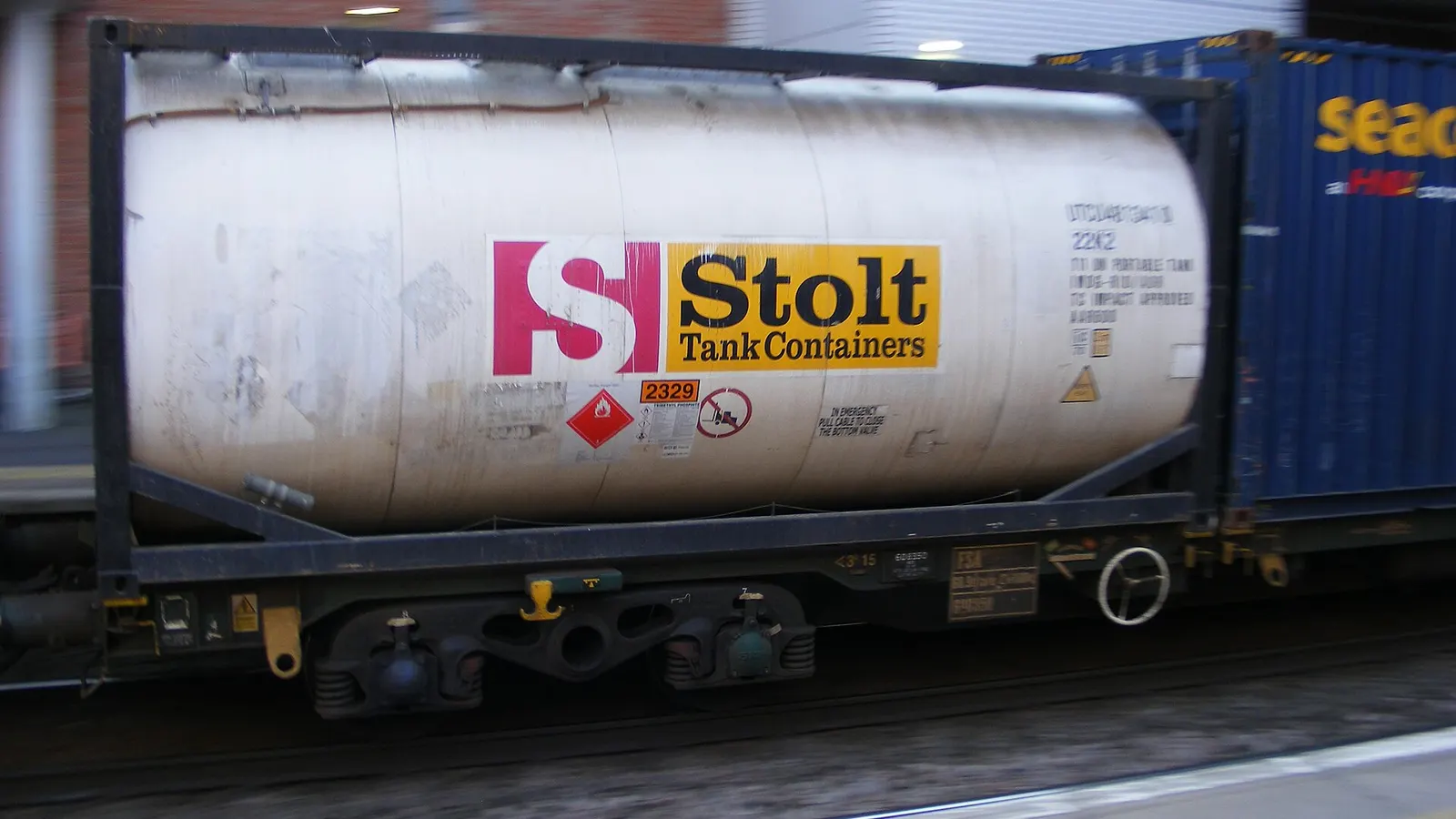
Stolt 22K2 20ft tank container   containing Trimethyl Phosphate, UN 2329  London Gateway to Garston

Overview

Packaged chemicals move mostly in 20 ft and 40 ft containers: drums, IBCs, bags and cylinders packed under the IMDG Code. Bulk liquids go in ISO tank containers, typically 20 ft with 21,000 to 26,000 litres, which travel by road, rail tank wagon and container ship, or in parcel tanks on chemical tankers. Main lanes run from Antwerp, Rotterdam, Houston, Jubail, Ningbo and Singapore, with feeder and rail legs into inland terminals. Each mode applies its own rulebook: IMDG at sea, ADR on road, RID on rail.

Most failures are information failures. A booking is accepted on a draft declaration, then the carrier refuses the UN number, the vessel's DG capacity is full, or the cargo misses a DG cut-off that falls days before the general one. Once a tank is moving, it often disappears between terminals. Putting sailings, cut-offs, container events and class and packing group reference data in one place lets planners check before cargo is ready and chase it once it has gone.


What goes wrong today

01

Late DG refusals after cargo is ready

Carriers accept dangerous goods per vessel and per UN number, and many restrict classes such as 1, 6.2 or 7 altogether. A refusal that arrives after production and packing leaves drums on the dock and a missed sailing.

02

Tank containers lost between terminals

An ISO tank can change hands from depot to truck, rail terminal and deep-sea port with no single status. Planners lose track of heating, cleaning and return slots while demurrage keeps running.

03

Class and packing group scattered across PDFs

IMO classes, divisions, packing groups, segregation and T-codes sit in separate documents that are amended every two years. Teams re-check the same entries by hand and still miss changes.

04

DG cut-offs earlier than general cargo

Dangerous goods usually have their own gate-in and documentation deadlines, often ahead of the standard cut-off. Missing the declaration deadline rolls the box to the next sailing even if it reached the terminal.

What Navo24 gives you

SchedulesMCP

Check sailings and DG cut-offs early

SchedulesMCP covers 72,000+ sailings with cut-offs, transshipment points and carrier on-time reliability. Planners can compare direct and transshipped options before cargo is packed, so a DG booking is not placed on a leg that is likely to roll.

  • Cut-offs and transshipment per sailing
  • Carrier on-time reliability by service
  • Fewer transfers for sensitive cargo
Open SchedulesMCP
TrackingMCP

Follow every box and ISO tank

TrackingMCP follows containers across 240+ carriers and gives predicted ETAs, with free-time and demurrage alerts. Tank container numbers use the same ISO 6346 format, so they sit in the same timeline as packaged cargo.

  • One timeline across 240+ carriers
  • Free-time and demurrage alerts
  • API, webhooks and MCP for agents
Open TrackingMCP
World Sea Ports

Check ports before you route chemicals

World Sea Ports lists depths, maximum vessel size, berths and facilities for 2,900+ ports. Use it to judge whether a discharge port can take the vessel and whether it offers tanker or liquid bulk facilities.

  • Depth and maximum vessel size
  • Berths and terminal facilities
  • UN/LOCODE for clean booking data
Open World Sea Ports
FreightRatesMCP

Budget lanes with DG surcharges in mind

FreightRatesMCP shows indicative FCL lane rates and rate history, a starting point for budgeting. Dangerous goods usually add their own charge and a tighter acceptance process, so treat the indicative rate as a base, not a quote.

  • Indicative FCL rates and history
  • Compare lanes before RFQs
  • Base rate to which DG charges are added
Open FreightRatesMCP

How it works with Navo24

  1. Classify and check the cargo

    Confirm UN number, class, packing group and packaging against the IMO class reference, then compare the lane and port options.

  2. Pick a sailing with margin

    Compare sailings, transshipment points and DG cut-offs, and book on a service with a sound reliability record.

  3. Pack, declare and weigh

    Submit the dangerous goods declaration and container packing certificate, with the verified gross mass, before the DG cut-off.

  4. Track to delivery and return

    Follow the container or tank through each leg, watch free-time alerts and plan cleaning and depot return.

Rules and standards that apply

IMDG Code (SOLAS VI and VII, MARPOL Annex III)

The mandatory code for dangerous goods at sea, covering classification, packing, marking, segregation, stowage and the dangerous goods declaration, with amendments every two years.

UN Model Regulations and UN numbers

They set the four-digit UN number, proper shipping name, class and packing group that every mode builds on.

SOLAS VI/2 verified gross mass

A packed container, including a tank container, needs a signed verified weight before loading, and a mismatch can lead to refusal.

CTU Code

The IMO, ILO and UNECE guidance on packing cargo transport units, including blocking, bracing and the container packing certificate.

ADR, RID and ADN

The road, rail and inland waterway agreements that govern pre-carriage and on-carriage of dangerous goods around the sea leg.

Questions

What are the IMO dangerous goods classes?

The IMDG Code uses nine classes: 1 explosives, 2 gases, 3 flammable liquids, 4 flammable solids, 5 oxidisers and organic peroxides, 6 toxic and infectious substances, 7 radioactive material, 8 corrosives and 9 miscellaneous. Classes 1 to 6 are split into divisions, and many substances also carry a packing group I, II or III for the degree of danger.

Why do carriers refuse dangerous goods bookings?

Acceptance depends on the carrier, the vessel and the UN number. Some classes are excluded entirely, others are limited by stowage position, segregation or capacity. Incomplete declarations or missing documents are another common reason.

What is the difference between a tank container and a flexitank?

A tank container is an ISO frame holding a pressure-rated steel vessel built to a portable tank instruction, with T-codes such as T11 or T14 showing its design. A flexitank is a single-use bladder placed inside a standard dry container and is generally used for non-hazardous liquids.

Do tank containers need a verified gross mass?

Yes. Under SOLAS VI/2 every packed container, including a loaded tank container, needs a verified gross mass before it is loaded on a vessel. The shipper signs it, and a mismatch can lead to refusal at the terminal.

Can Navo24 confirm that my cargo will be accepted?

No. Navo24 is a data and software platform, not a carrier or forwarder, and acceptance is decided by the carrier. It gives you sailings, cut-offs, tracking and reference material, so you can prepare the booking and spot problems earlier.