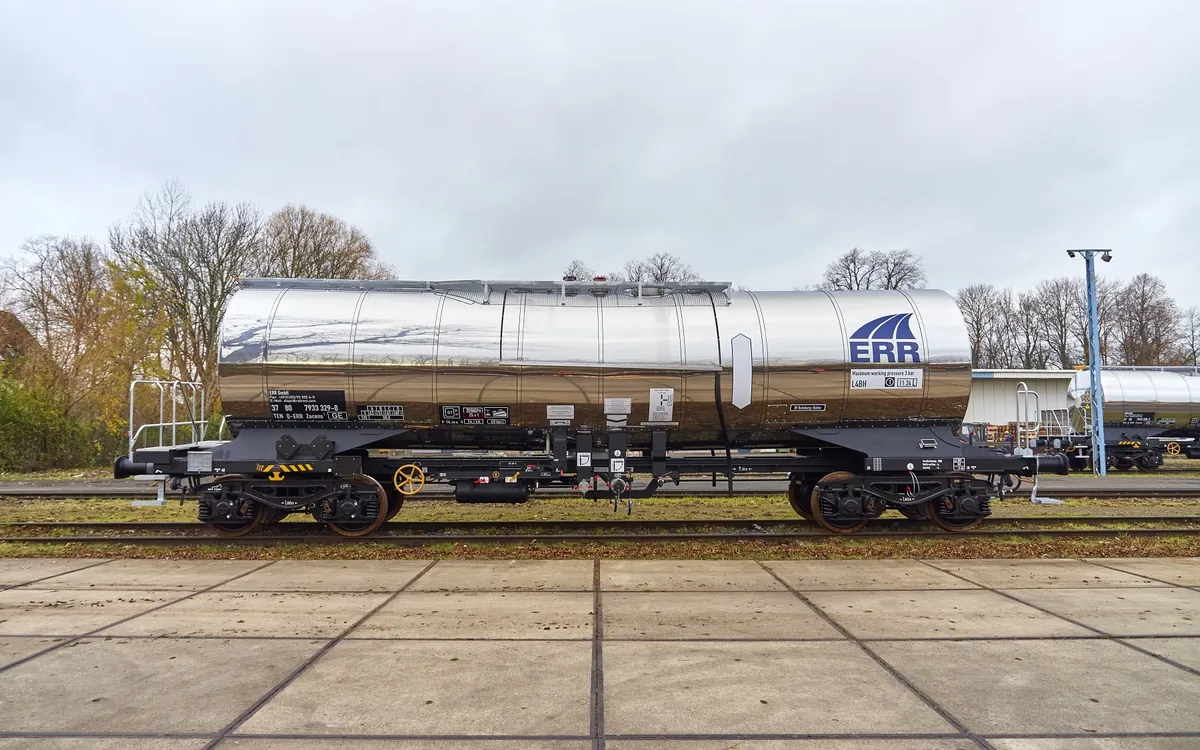
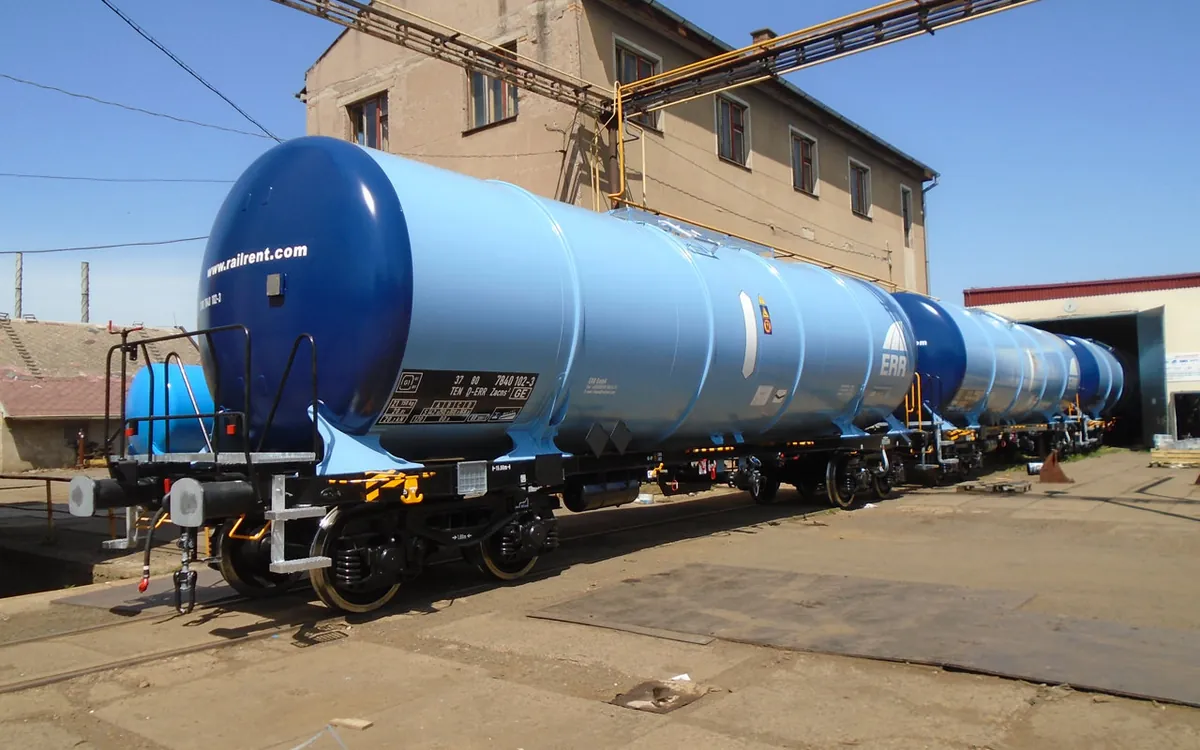
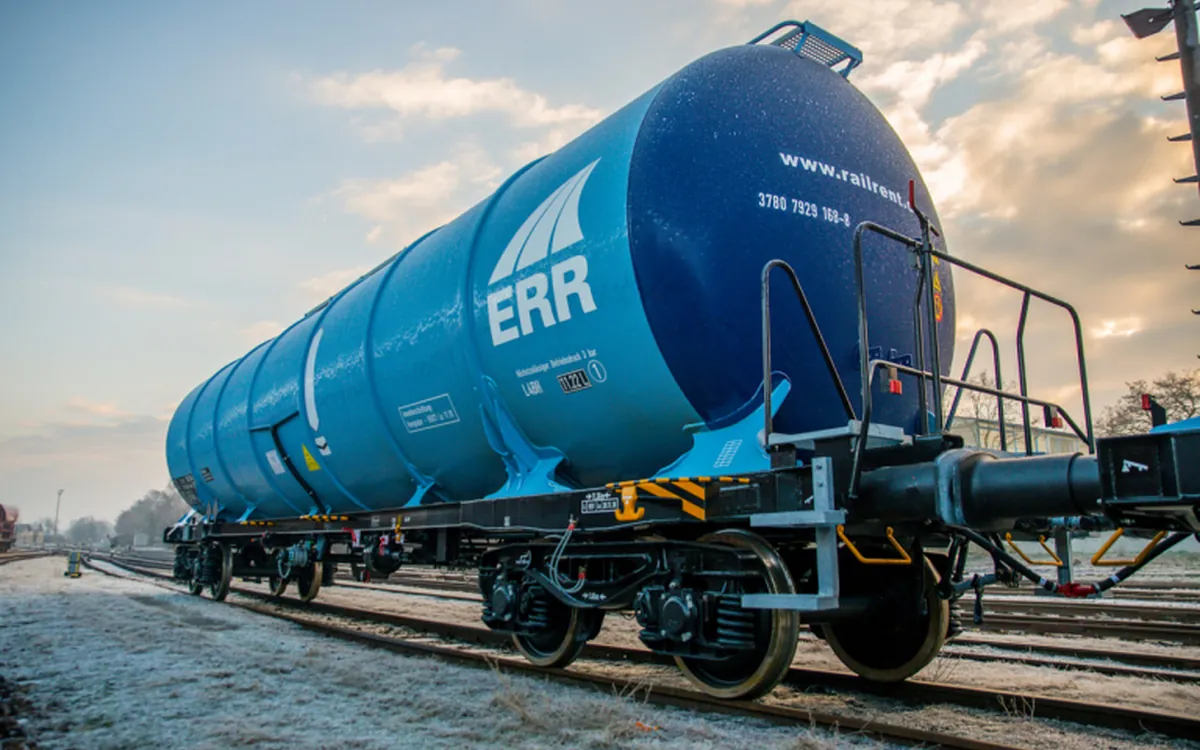
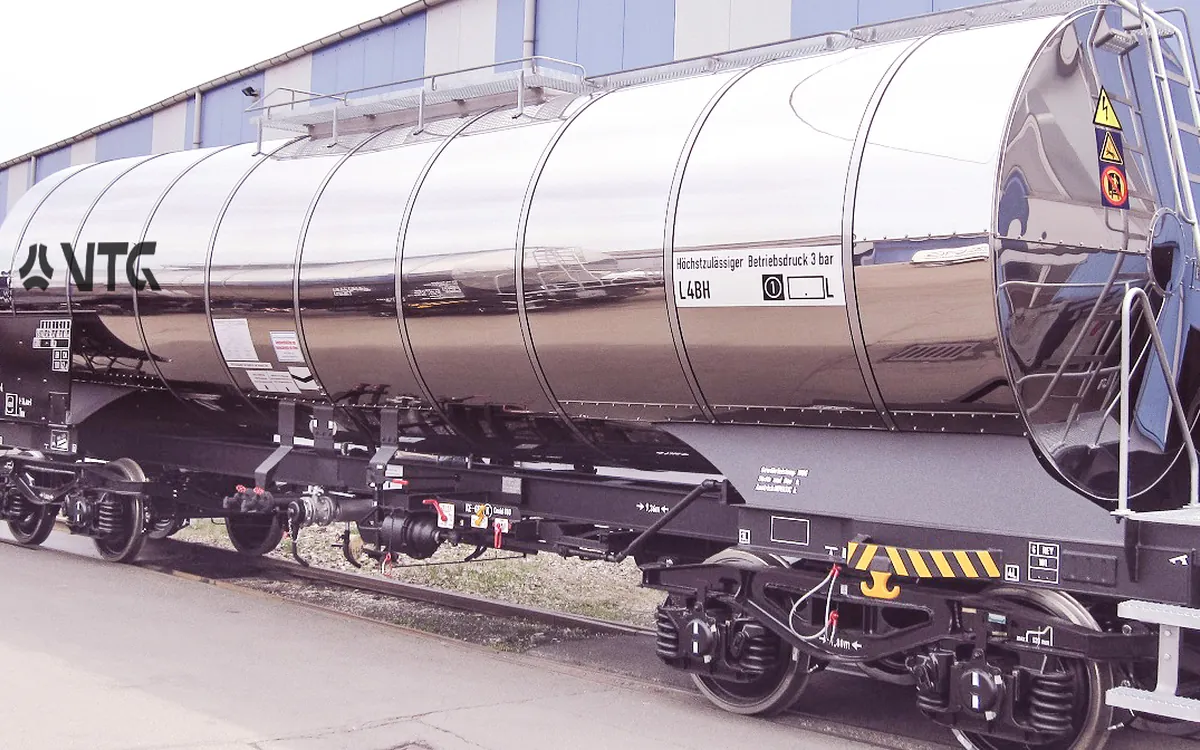
Barrel on a frame for liquids and gases. Two groups: pressure-gas tank wagons (top or bottom discharge, or for deep-cooled liquefied gas) and tank wagons for liquids. Gas wagons often carry a sun shield; newer designs use thicker walls instead.
What a tank wagon is
A tank wagon carries one or more closed vessels, some under pressure, for liquids and gases. In the UIC system it has class Z, from the German Zisternenwagen, and type number 7. Until 1979 the UIC class was U. Containers for powdered goods do not count as tank wagons; they are special wagons of class U.
Depending on the load weight, tank wagons are built with two bogies or with two (formerly sometimes three) single axles. The barrel holds 20 to 120 m³ depending on the design.
Types and how they fill and empty
There are two groups. Pressure-gas tank wagons come with bottom discharge, with top discharge, or for deep-cooled liquefied gases. Tank wagons for liquids come with bottom discharge (often called mineral oil wagons), with top discharge (chemical wagons), or with both.
Mineral oil wagons are usually filled from the top and emptied from the bottom. Many have a forced venting system that opens a valve together with the outlet so the tank cannot implode; these carry a vertical white band in the middle. Chemical wagons are mostly filled and emptied from the top: air or nitrogen is pumped in and pushes the load out through a riser pipe.
Markings and safety features
In Europe pressure-gas tank wagons carry an orange stripe about 30 cm high around the barrel at mid-height. Gas wagons usually have a sun shield over the barrel; newer designs do without it and use thicker walls for insulation. Many tank wagons are strong enough to stay sealed even after derailing and overturning.
In North America, a boom in Bakken oil from North Dakota moved large volumes to rail from 2011. DOT-111 wagons, which tear easily in derailments, made up two thirds of the fleet in the early 2010s and are to be upgraded or replaced by the TC-117 type.
Cargo and ownership
Tank wagons carry crude oil and oil products, chemicals, liquefied and compressed gases, and food such as milk, beer and edible oil. Railways also use service tank wagons for water.
Unlike most wagon types, tank wagons usually belong to the shipper or to a leasing company such as VTG or GATX, not to the railway. Because barrels and linings are matched to one product, tank wagons often return empty.
The class letters
Z is a tank wagon. a means four axles. c means compressed-air discharge. e means heating equipment. g means for compressed, liquefied or dissolved gases. i means non-metal containers. k, kk and n give the load limit band, and s or ss the speed of 100 or 120 km/h.
Choosing a tank wagon
Start with the product and its dangerous goods class: the barrel material, lining, pressure rating and discharge type must match. Check whether your sites fill and empty from the top or bottom, and whether you need heating for viscous products. Since most wagons are leased, plan wagon supply with a lessor as well as with the rail operator.
Variants
Questions shippers ask
How much does a rail tank wagon hold?
Between 20 and 120 m³, depending on the design.
What does the orange stripe on a tank wagon mean?
In Europe it marks a pressure-gas tank wagon. The stripe is about 30 cm high and runs around the barrel at mid-height.
Who owns tank wagons?
Usually the shipper or a leasing company such as VTG or GATX, rather than the railway.