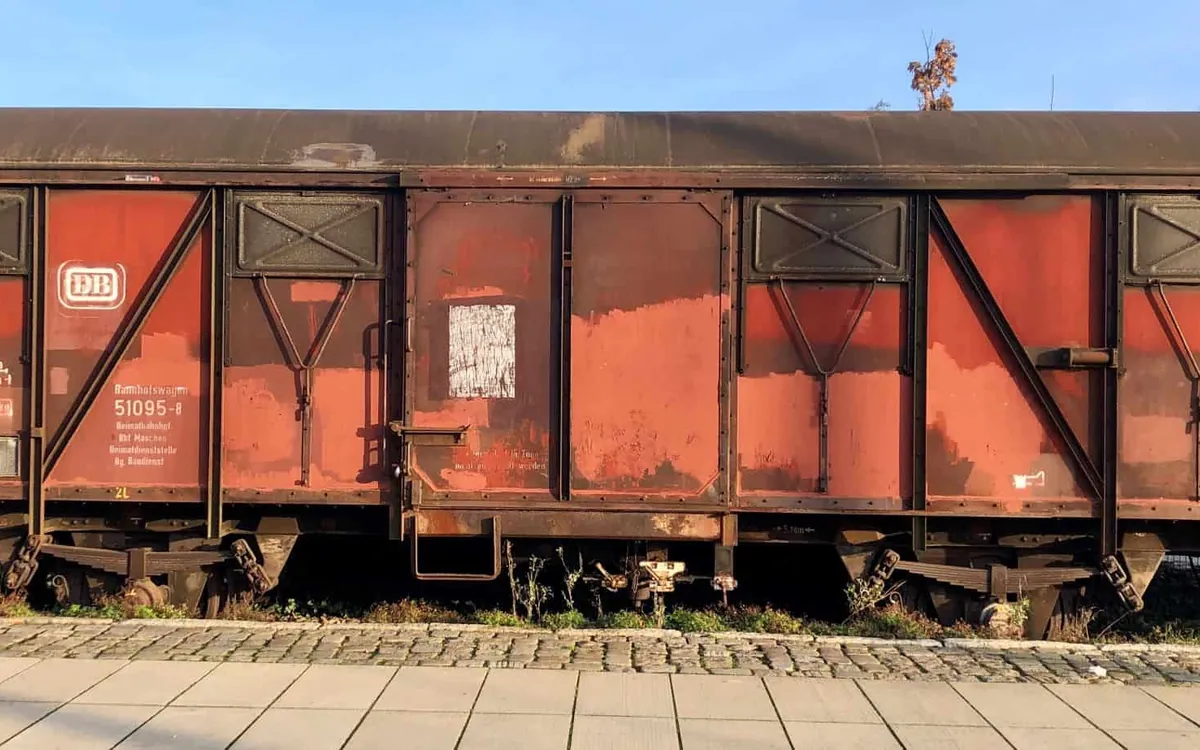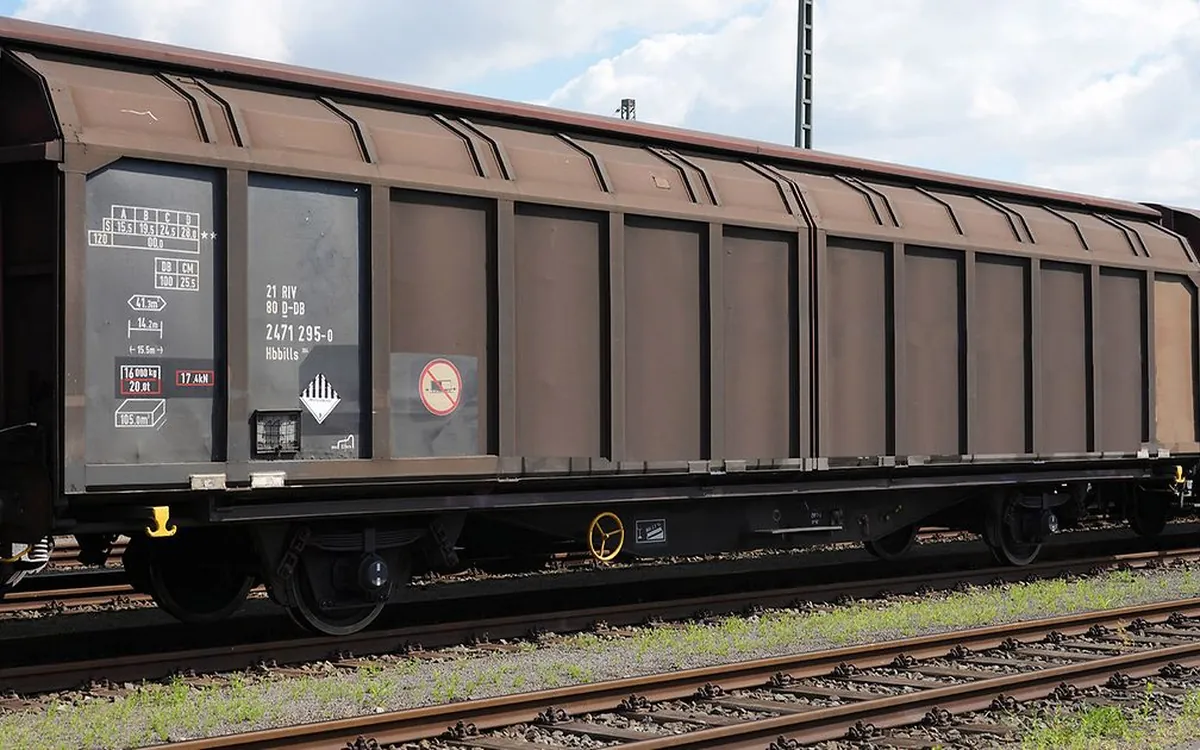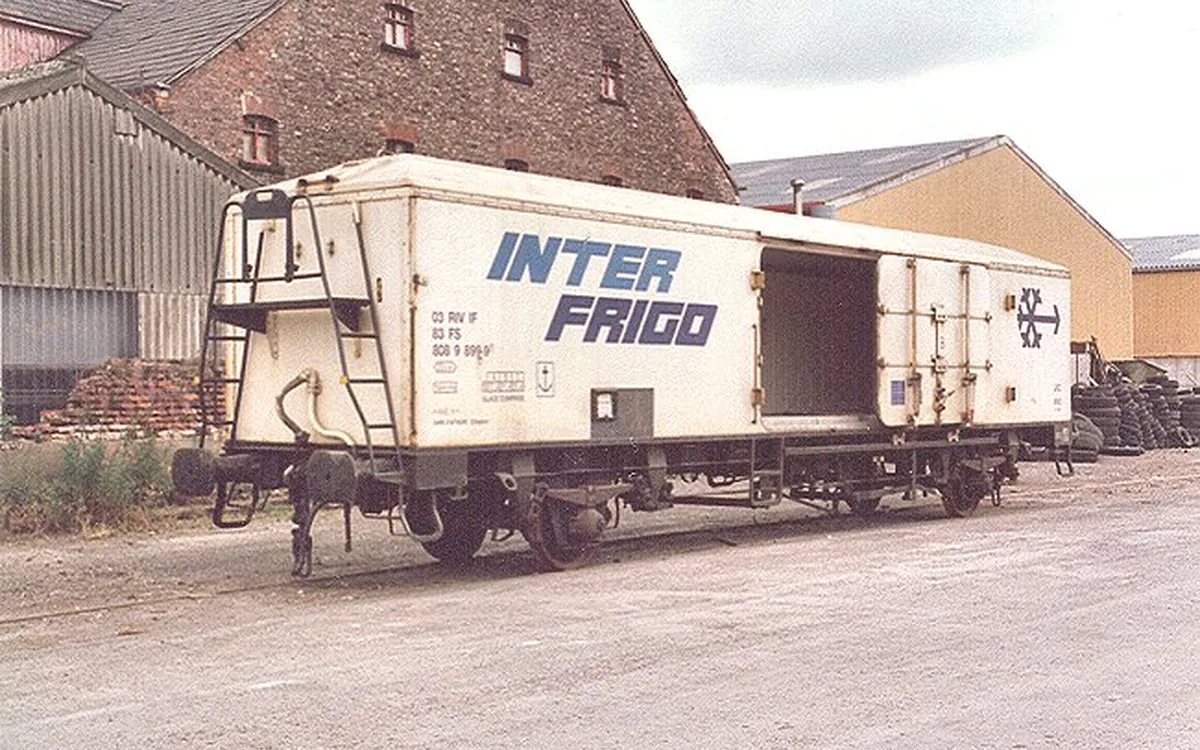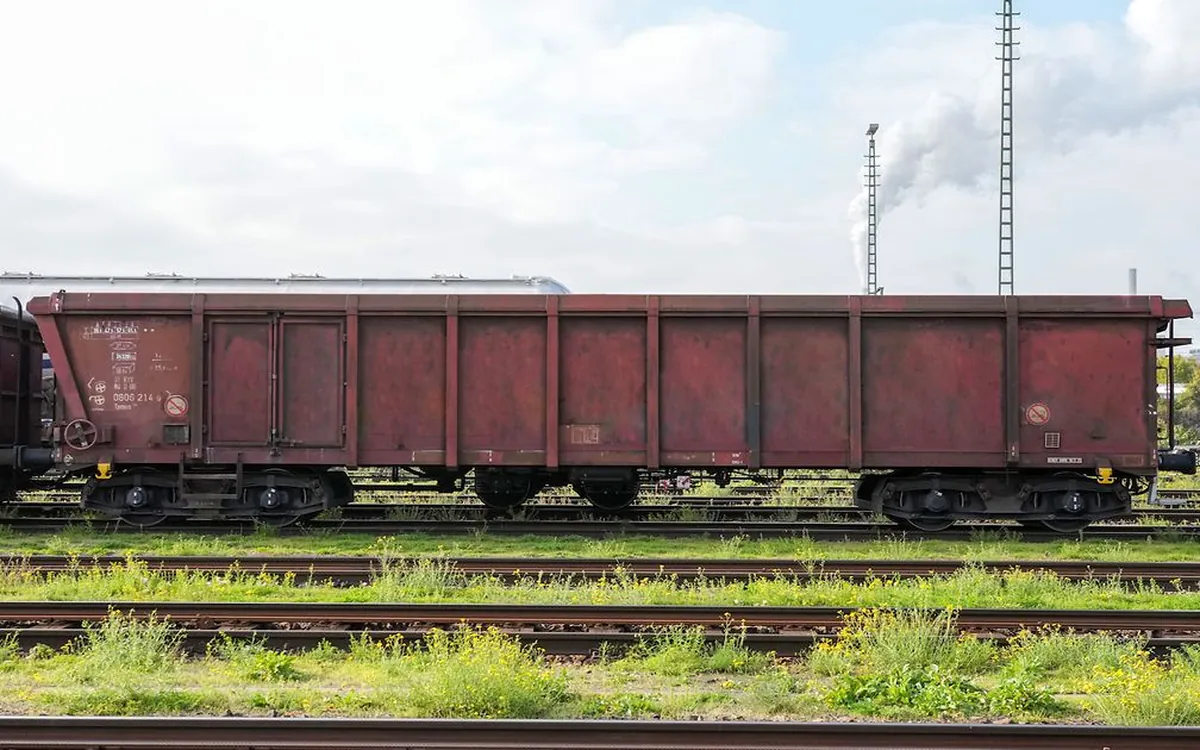
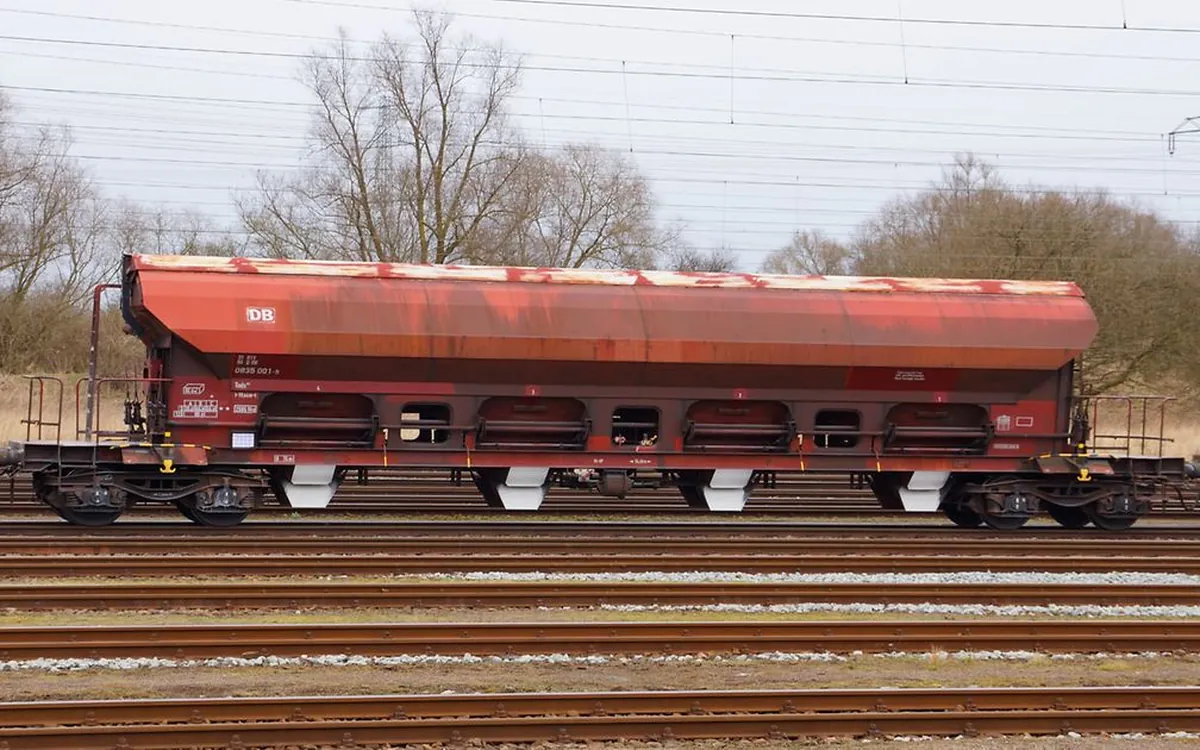
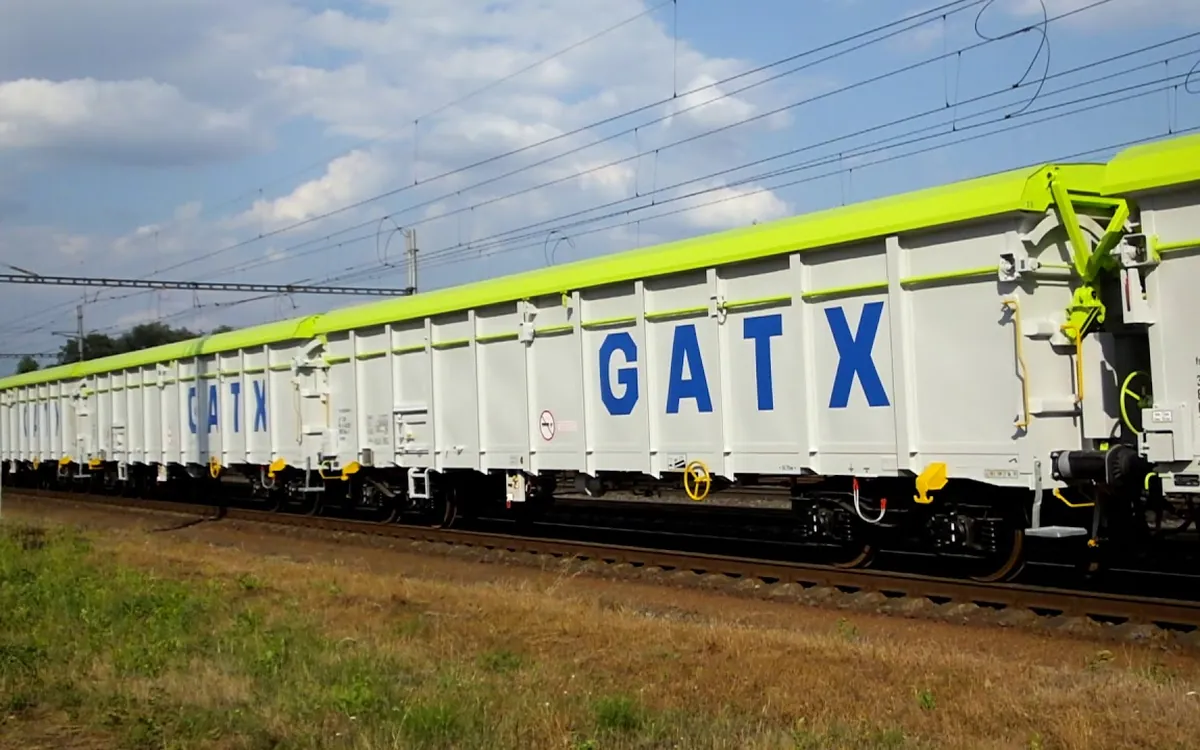
Covered wagon with a rolling or swinging roof, loaded by crane from above but protected from rain, for steel coils, sheet and bulk that must stay dry. Wagons with a flat floor carry at least 50 t and are common in heavy industry.
What an opening-roof wagon is
Wagons with an opening roof form UIC class T. They make up about one sixth of all goods wagons in Germany. Before the UIC system the German class was K or KK. Since 1988 the fifth digit of their wagon number is 0; before that it was 5, as for open wagons.
Taems and Tamns are the flat-floor versions. Their design is closely based on four-axle ordinary open wagons, and the UIC standard rolling-roof wagon has the same main dimensions as the open Ea(o)s.
Roof types and loading
Four roof designs exist. Hinged-lid wagons have several roof flaps, but the webs between them stop the roof from opening wide. Sliding-roof wagons, built in Germany from 1951, slide one half of the roof over the other and free half the floor. Swing-roof wagons, used from 1958, swing the roof out to the side and free the whole floor, but on some types the open roof breaks the loading gauge and can block the next track. Rolling-roof wagons, in service since 1973, roll a plastic roof towards the ends so the whole wagon can be loaded from above.
Deutsche Bundesbahn has run four-axle wagons with movable roofs for heavy, bulky and moisture-sensitive goods since 1964. At first they had swing roofs split down the middle, later rolling roofs to keep within the loading gauge. In East Germany a prototype was built in 1970 and series production started in 1975 in Leipzig.
Dimensions and capacity
The UIC standard rolling-roof wagon Taems (Taes until 1979) measures 14.04 m over buffers, with bogie centres 9.00 m apart. Its minimum loading length is 12.40 m, floor about 33 m², volume about 74 m³ and maximum tare 24.0 t. It has one door per side, 4.00 m wide.
Swing-roof and rolling-roof wagons with a flat floor have a high load limit of at least 50 t.
Cargo and where it is used
Because of that load limit, these wagons are common in heavy industry, for steel coils, sheet and other heavy pieces that must stay dry. They can also take moisture-sensitive bulk that is unloaded upwards by grab.
They share this market with flat wagons that have tarpaulins or hoods in classes K, R and S, such as coil wagons of the Shimmns type.
The class letters
T is a goods wagon with opening roof. a means four axles. e means a door height over 1.90 m. m means a loading length under 15 m for a four-axle T wagon. n means a load limit above 60 t on a class C line, and s permits 100 km/h.
T wagons with gravity discharge carry other letters: d for hoppers with controlled discharge, as in Tds, and l for saddle wagons with sudden discharge, as in Tals or Talns. These have replaced flat-floor and ordinary covered wagons for moisture-sensitive bulk such as cement, lime, potash and grain.
Choosing an opening-roof wagon
Choose a flat-floor Taems or Tamns if the load is lifted in and out by crane, such as coils or sheet. If the cargo is bulk that should empty by gravity, ask for a T wagon with hopper or saddle floor instead. Check the roof type: swing roofs may need the neighbouring track clear while open.
Variants
Questions shippers ask
What is a Taems wagon used for?
Heavy, bulky goods that must stay dry, such as steel coils and sheet, loaded by crane from above. It also takes some moisture-sensitive bulk.
How large is a Taems?
14.04 m over buffers, minimum loading length 12.40 m, about 33 m² floor and about 74 m³ volume.
Why did railways move from swing roofs to rolling roofs?
On some swing-roof types the open roof broke the loading gauge and could block the next track. Rolling roofs open towards the wagon ends.