Skip to content
Navo24Navo24
Specialty chemicals freight visibility

Specialty chemicals logistics.

Specialty and fine chemicals move in small lots across drums, IBCs and ISO tanks, often as dangerous goods with strict paperwork and temperature limits. Navo24 gives shippers and forwarders container and vessel tracking, sailing schedules, rates, load plans and reference data to plan and follow these shipments.

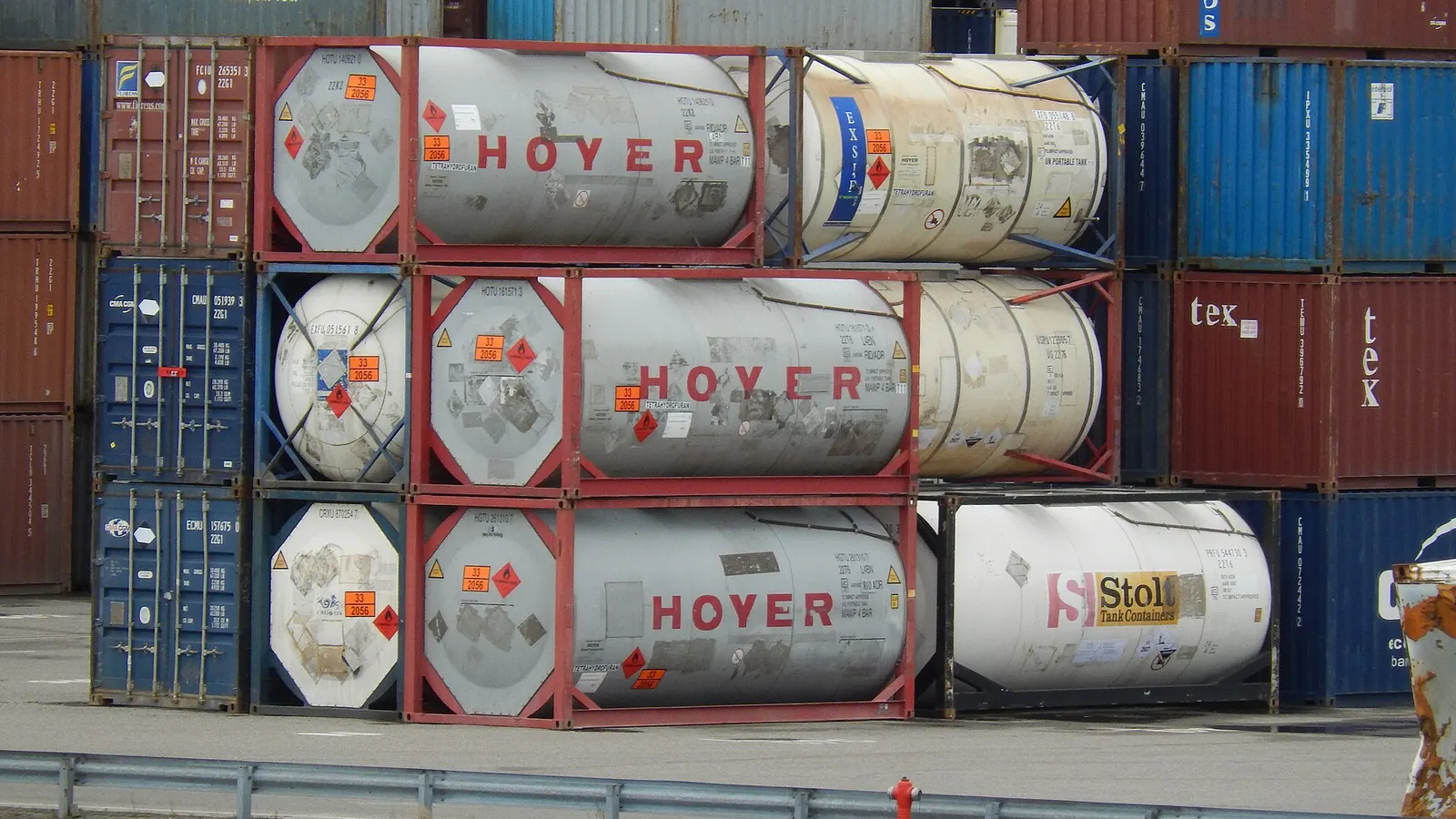
Tetrahydrofuran tank container in Rotterdam

Overview

Specialty and fine chemicals rarely fill a vessel. They move as part loads in 200 litre steel or plastic drums, 1,000 litre IBCs on pallets, and ISO tank containers that typically hold 20,000 to 26,000 litres. Cargo is trucked or railed under ADR and RID to ports such as Antwerp, Rotterdam, Hamburg, Houston, Shanghai and Jebel Ali, then sails on liner services, often with a transhipment. Many products are dangerous goods under the IMDG Code, and some need heating or temperature control.

Problems start where the booking data and the physical cargo disagree: a class, packing group or stowage note the vessel will not take, a box waiting at a transhipment port, or an empty tank that nobody has tracked back to a depot. Navo24 puts container events, sailings, port facts and load plans in one place, so shippers and forwarders can spot a gap early and act before a cut-off or a free-time deadline.


What goes wrong today

01

Dangerous goods bookings refused or rolled

A booking can be declined when the UN number, class, packing group or stowage category on the declaration does not match what the carrier or vessel accepts. Many carriers also set their own restrictions and earlier cut-offs for dangerous goods, so a late correction often means a rolled box.

02

Temperature exposure during port waiting time

Heated, viscous or temperature-limited cargoes suffer most when a box sits at a terminal or transhipment hub with a missed connection. Longer dwell raises the chance of solidification, crystallisation or degradation, and insulated tanks and drums only buy limited time.

03

Segregation in small mixed lots

Drums and IBCs from several suppliers can end up in one container, where IMDG segregation rules, compatible packaging and secure blocking all apply. A poor load plan creates an incompatibility, a weight imbalance or a CTU Code failure that only appears at the gate or on the weighbridge.

04

ISO tank return and cleaning timing

A tank container involves the consignee, a cleaning station, a depot and the tank operator, each with its own clock. Without a shared view of discharge, empty return and free time, demurrage and detention build up and the tank misses its next fill.

What Navo24 gives you

TrackingMCP

Follow drums, IBCs and ISO tanks door to door

TrackingMCP follows containers across 240+ carriers with predicted ETAs and free-time and demurrage alerts, so a delay at a transhipment port is visible while there is still time to arrange a haulier, a cleaning slot or a customer update. Webhooks, the API and MCP tools carry the same events into your TMS or an AI agent.

  • Container events from 240+ carriers
  • Predicted ETAs at discharge and transhipment
  • Free-time and demurrage alerts on tank returns
Open TrackingMCP
SchedulesMCP

Plan sailings around cut-offs and transhipment

SchedulesMCP lists sailings, cut-offs and transhipment points, so you can prefer direct services for heated or time-limited cargo and see how much time a dangerous goods gate-in leaves you. Carrier on-time reliability helps you judge which service to trust with a tight production schedule. The carrier still confirms acceptance of the dangerous goods booking itself.

  • 72,000+ sailings with cut-offs
  • Direct versus transhipment routings compared
  • Carrier on-time reliability by service
Open SchedulesMCP
LoadingMCP

Load plans for mixed drum and IBC lots

LoadingMCP builds 3D plans for pallets, drums and crates in containers and trucks, so you can check how many IBC or drum pallets fit and how weight sits across the floor. A plan gives the packer clear positions to follow, with blocking and bracing added to the instruction. It supports the CTU Code approach rather than leaving it to eye.

  • Pallet and drum layouts in 20 ft and 40 ft boxes
  • Weight spread checked before packing
  • Shareable plan for the packing site
Open LoadingMCP
World Sea Ports

Check port limits and facilities in advance

World Sea Ports gives depths, maximum vessel size, berths and facilities for 2,900+ ports, which helps when choosing a transhipment hub or a discharge port for a feeder-served destination. Use it to understand which ports can realistically receive the vessel type your routing implies.

  • Depths and maximum vessel size
  • Berths and terminal facilities
  • UN/LOCODE identified ports in 2,900+ locations
Open World Sea Ports

How it works with Navo24

  1. Check routing before you book

    Compare sailings, transhipment points and cut-offs in SchedulesMCP, then confirm dangerous goods acceptance for the chosen service with the carrier.

  2. Plan the load and weight

    Build a 3D plan for drums, IBCs or pallets in LoadingMCP and align it with the packing instruction, segregation and the VGM you will declare.

  3. Track from gate-in to discharge

    Follow container events and predicted ETAs in TrackingMCP, and set webhooks so your team is told about a roll, a delay or a changed discharge ETA.

  4. Close out delivery and empty return

    Use free-time alerts and the depot reference to arrange unloading, tank cleaning and empty return before demurrage or detention starts.

Rules and standards that apply

IMDG Code (SOLAS Chapter VII)

Sets classification, packing, marking, segregation and stowage for dangerous goods at sea, and Amendment 42-24 became mandatory on 1 January 2026.

Dangerous goods declaration and container packing certificate

The shipper must declare UN number, proper shipping name, class and packing group, and certify that the container was packed in line with the IMDG Code.

SOLAS Chapter VI VGM

A verified gross mass must be supplied before loading, and a mismatch can lead a terminal to refuse the container.

IMDG portable tank instructions (T-codes)

Each tank container must be approved for the specific substance under a portable tank instruction such as T11 or T14, which sets test pressure, shell and fittings.

IMO/ILO/UNECE CTU Code

Gives guidance on packing, blocking and securing cargo transport units, which covers drum and IBC loads in containers.

Questions

Why do dangerous goods bookings get rolled or refused?

Common causes are a declaration that does not match the cargo, a class or packing group the carrier or vessel does not accept, a stowage restriction, or a missed dangerous goods cut-off, which is often earlier than the standard one. Check acceptance with the carrier for the specific service before the booking is confirmed.

What is the difference between a drum, an IBC and an ISO tank for chemicals?

A drum typically holds 200 litres, an IBC 1,000 litres or so, and an ISO tank container around 20,000 to 26,000 litres. Drums and IBCs are packed into general containers and must meet the packaging rules and segregation of the IMDG Code, while a tank is a transport unit approved for specific substances.

What does a T-code on a tank container mean?

The T-code, such as T11 or T14, refers to the IMDG portable tank instruction that applies to a substance. It defines minimum test pressure, shell thickness and fittings, and the tank must be approved for the cargo under that instruction.

Is a VGM required for drums and IBCs in a container?

Yes. Under SOLAS Chapter VI, the shipper must provide a verified gross mass for every packed container, by weighing the packed container or by summing cargo, packing and tare under an approved method. The carrier or terminal can refuse loading without it.

How can I track an ISO tank container back to the depot?

Track the container number, which follows ISO 6346, to see discharge, gate-out and gate-in events and free-time alerts. Match the final events with the depot list for the country to plan cleaning and empty return before detention starts. Navo24 is a data platform and does not handle, clean or store cargo or equipment.