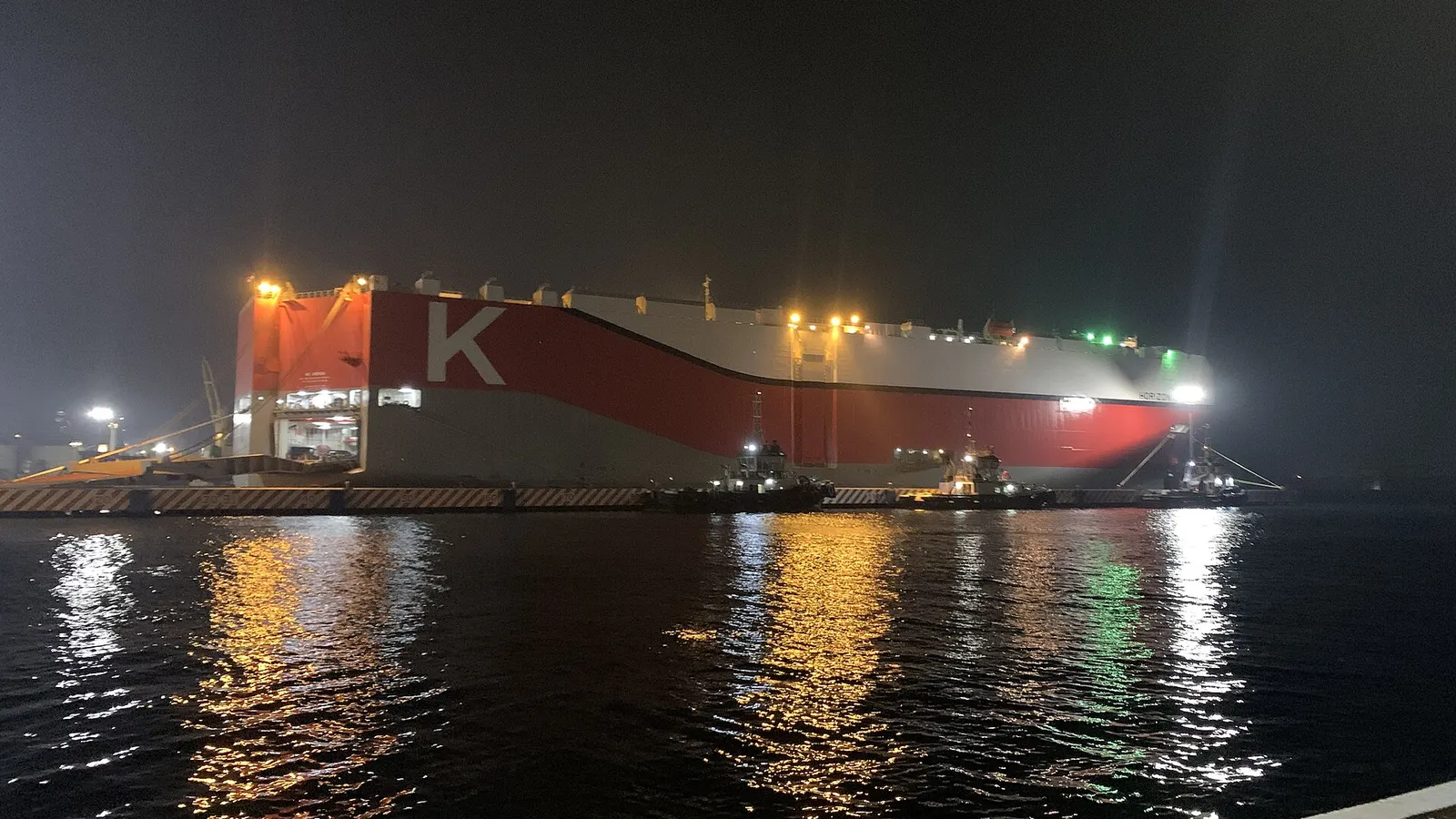
EV supply chains run on two very different flows. Lithium-ion cells, modules and packs mostly travel in 20 ft and 40 ft containers as class 9 dangerous goods, typically from East Asia to assembly plants in Europe and North America. Finished vehicles leave either by driving onto pure car and truck carriers (PCTCs) that carry thousands of car equivalent units, or in 40 ft high cube containers with a few cars per box for smaller markets. Inland legs add car transporters, rail autoracks and port compounds.
Trouble starts where the data splits. A dangerous goods booking can be declined or rolled because of vessel restrictions, a missing declaration or a missed cut-off, and a rolled box can stop a production line days later. Ro-Ro cargo also gives far less container-style event data. Navo24 puts sailing schedules and cut-offs, container events with predicted ETAs, and vessel positions side by side, so planners see slippage while there is still time to act.