Skip to content
Navo24Navo24
Heavy, oversized and project cargo

Machinery and equipment logistics.

Machinery and equipment moves on flat racks, open tops, breakbulk vessels and heavy-haul trucks, where dimensions, weight and port limits decide the route as much as price. Navo24 provides tracking, schedules, rates, load plans and reference data to help plan and follow these moves; it does not handle or move the cargo.

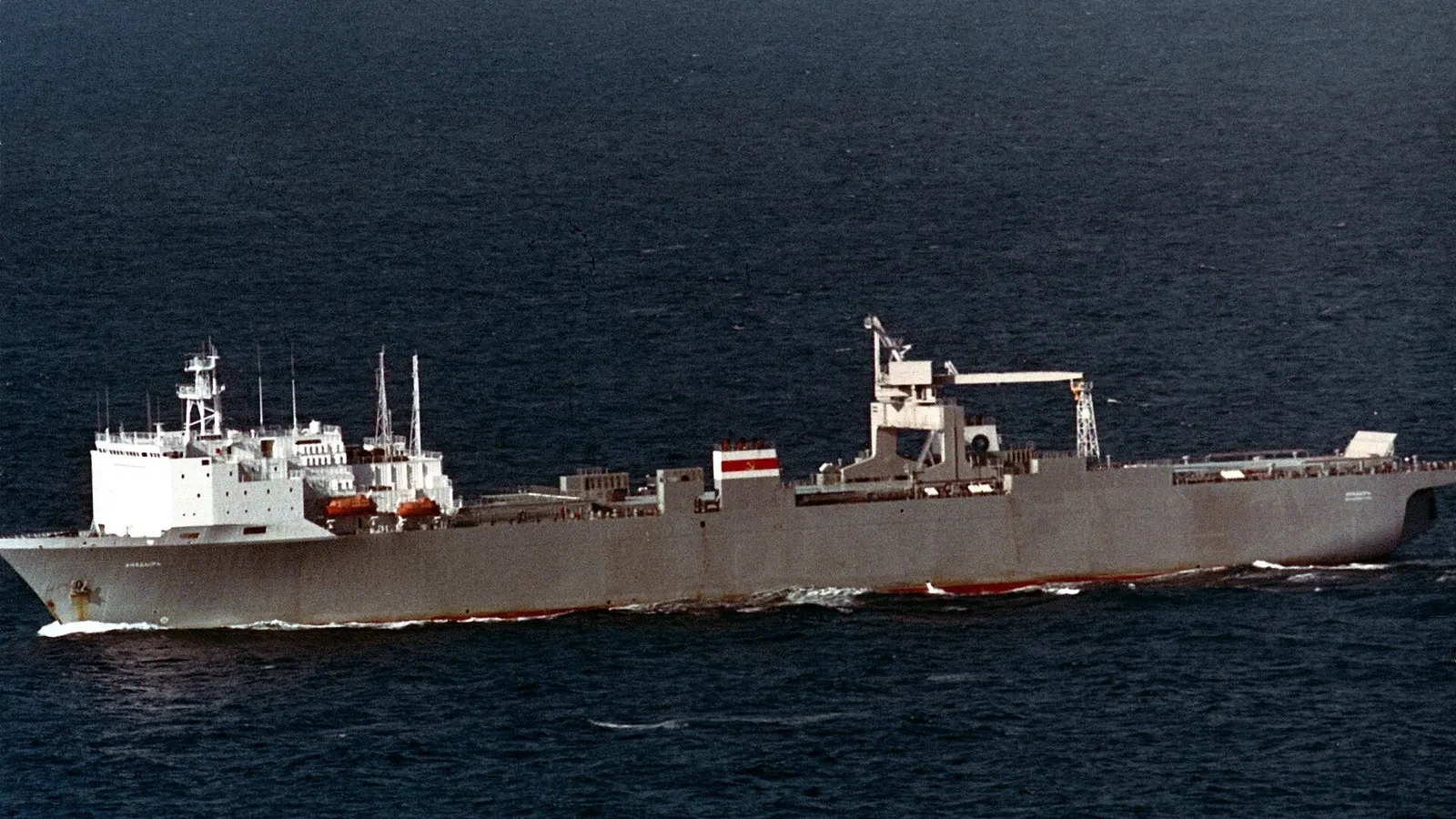
A port view of the Soviet HEAVY LIFT cargo ship ANADYR underway. The 741-foot, 34,151-ton ship has a floodable docking well 419 feet long by

Overview

Machinery and equipment travel in whatever form fits the piece. Units that fit go into 20 ft and 40 ft containers. Pieces too tall or wide go on flat racks, platforms or open tops, and count as out of gauge once cargo exceeds the box height or overhangs its sides or ends. Heavier or longer items move breakbulk on multipurpose and heavy-lift vessels, or roll on and off Ro-Ro ships on roll trailers. At both ends, lowboys and modular trailers carry the load where bridges, axle weights and permits set the limit.

Most failures come from a mismatch between the declared piece and what the vessel, berth or road can accept. A width that was rounded down, a crane that is not rated for the hook weight, or a rotation that changed after booking can each remove a sailing. Schedules, port facility data and live tracking close that gap by letting planners check limits and cut-offs before committing, then follow the move.


What goes wrong today

01

Out-of-gauge refusals and late re-planning

A flat rack with cargo over height or overhanging the sides needs line approval, a stow position and often adjacent slots left empty. If the declared dimensions are wrong, the unit can be refused at the gate or rolled to a later sailing.

02

Few sailings, hard cut-offs

Breakbulk and heavy-lift services sail on a fraction of the frequency of container strings, so a missed cargo cut-off can cost weeks. A changed rotation or port omission then moves the installation date at the destination site.

03

Terminal capability varies port to port

Mobile harbour cranes, heavy forklifts, ramp strength and open storage areas differ by terminal and by berth. A discharge port may list the right cranes but not the lift capacity or the space you need at that quay.

04

Weight, lashing and road limits

Packed flat racks and platforms still need a verified gross weight, and the lashing must match the vessel's cargo securing manual. The final road leg adds axle loads, width and height limits, and permits for abnormal indivisible loads.

What Navo24 gives you

SchedulesMCP

Check sailings and cut-offs before booking

SchedulesMCP lists sailings, cut-offs and transshipment points so planners can see which departures exist and when cargo must be at the terminal. Carrier on-time reliability helps judge how much float to build in front of a site installation date.

  • Compare sailings and cut-offs per lane
  • See transshipment calls that add handling risk
  • Use reliability data to set buffers
Open SchedulesMCP
World Sea Ports

Check port limits and facilities in advance

World Sea Ports shows depths, maximum vessel size, berths and facilities for 2,900+ ports. Use it to shortlist load and discharge ports before asking for terminal confirmation of crane capacity and storage.

  • Depth and maximum vessel size per port
  • Berths and facilities at a glance
  • Shortlist ports before requesting quotes
Open World Sea Ports
TrackingMCP

Follow units and get early warning

TrackingMCP follows containerised machinery, including units on flat racks and open tops, across 240+ carriers with predicted ETAs. Webhooks and alerts feed delay and free-time information into the project plan.

  • Predicted ETAs across 240+ carriers
  • Webhooks into your project system
  • Free-time and demurrage alerts
Open TrackingMCP
LoadingMCP

Plan crates and skids before stuffing

LoadingMCP builds 3D load plans for crates, skids and pallets into containers and trucks. It helps decide which spares, tooling and smaller machine parts fit a standard box and which pieces really need out-of-gauge equipment.

  • 3D plans for crates and skids
  • Check container and truck fit
  • Separate standard from out-of-gauge pieces
Open LoadingMCP

How it works with Navo24

  1. Define the piece and limits

    Record length, width, height, weight and centre of gravity, then check them against container types, vessel types and road limits using the reference pages.

  2. Shortlist routes and ports

    Use World Sea Ports and SchedulesMCP to compare load and discharge ports, available sailings and cut-offs, then request offers through Navo Mesh or from your forwarder.

  3. Confirm weight, lashing and documents

    Agree the stow and securing plan with the carrier and make sure the verified gross weight and dangerous goods declarations, if any, match the booking.

  4. Track the move to site

    Follow the vessel and unit with TrackingMCP, watch ETA changes and free time, and align terminal collection and the heavy-haul slot with the actual arrival.

Rules and standards that apply

SOLAS Chapter VI, Regulation 2 (VGM)

Packed containers, including flat racks and platforms carrying machinery, need a verified gross mass from the shipper before they can be loaded on a vessel.

IMO CSS Code

The Code of Safe Practice for Cargo Stowage and Securing sets the basis for each ship's cargo securing manual, which governs lashing of heavy and project cargo.

IMO/ILO/UNECE CTU Code

Guidance on packing cargo transport units covers blocking, bracing and weight distribution for machinery packed in containers and on flat racks.

IMDG Code, including UN 3528 and UN 3171

Machinery containing fuel or batteries can be regulated as dangerous goods, so engines, generators and battery-powered equipment need correct classification and declaration.

Incoterms 2020 (FCA, FOB, CPT, DAP)

The chosen rule decides who arranges and pays for lifting, lashing, main carriage and delivery to site, and where risk passes in a heavy-lift move.

Questions

What counts as out-of-gauge cargo?

Cargo is out of gauge when it exceeds the internal dimensions of a standard container, for example over the height of an open top, or overhanging a flat rack at the sides or ends. Carriers apply surcharges and need dimensions in advance so they can approve a stow position.

Does machinery on a flat rack need a VGM?

Yes. Under SOLAS Chapter VI, a packed container, including a flat rack or platform with cargo, needs a verified gross mass before loading. The shipper is responsible for supplying it to the carrier and terminal within their deadline.

When is breakbulk better than a flat rack?

Breakbulk suits pieces that exceed flat rack payload or dimensions, or that need heavy-lift gear, such as large presses, transformers or vessels. Flat racks suit units that fit within container-line limits and benefit from the more frequent container schedules.

How can I check whether a port can handle a heavy piece?

Use World Sea Ports for depth, maximum vessel size, berths and facilities to shortlist options. Then ask the terminal to confirm crane lift capacity at the berth, available heavy forklifts, ramp strength and storage space for your piece weight.

Does Navo24 book or move the machinery?

No. Navo24 is a data and software platform and does not move, store, insure or handle cargo. It provides schedules, tracking, port data and reference information, and Navo Mesh lets you post a request and receive offers from freight forwarders.