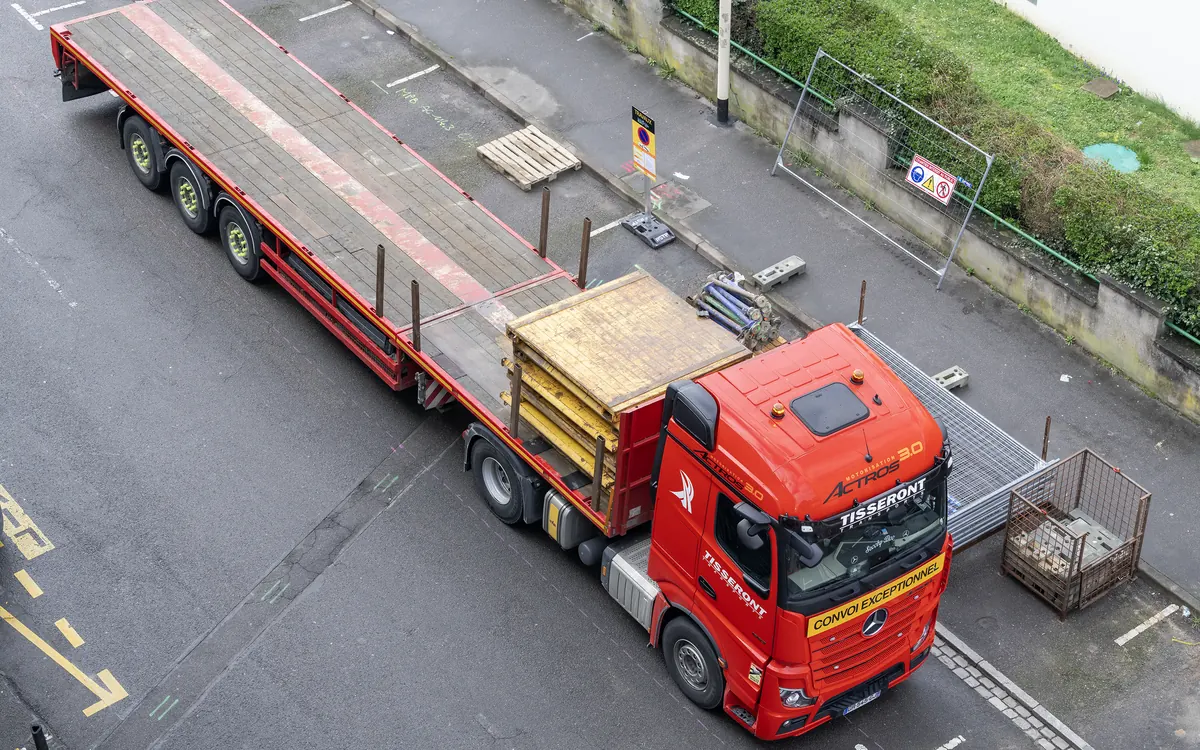





















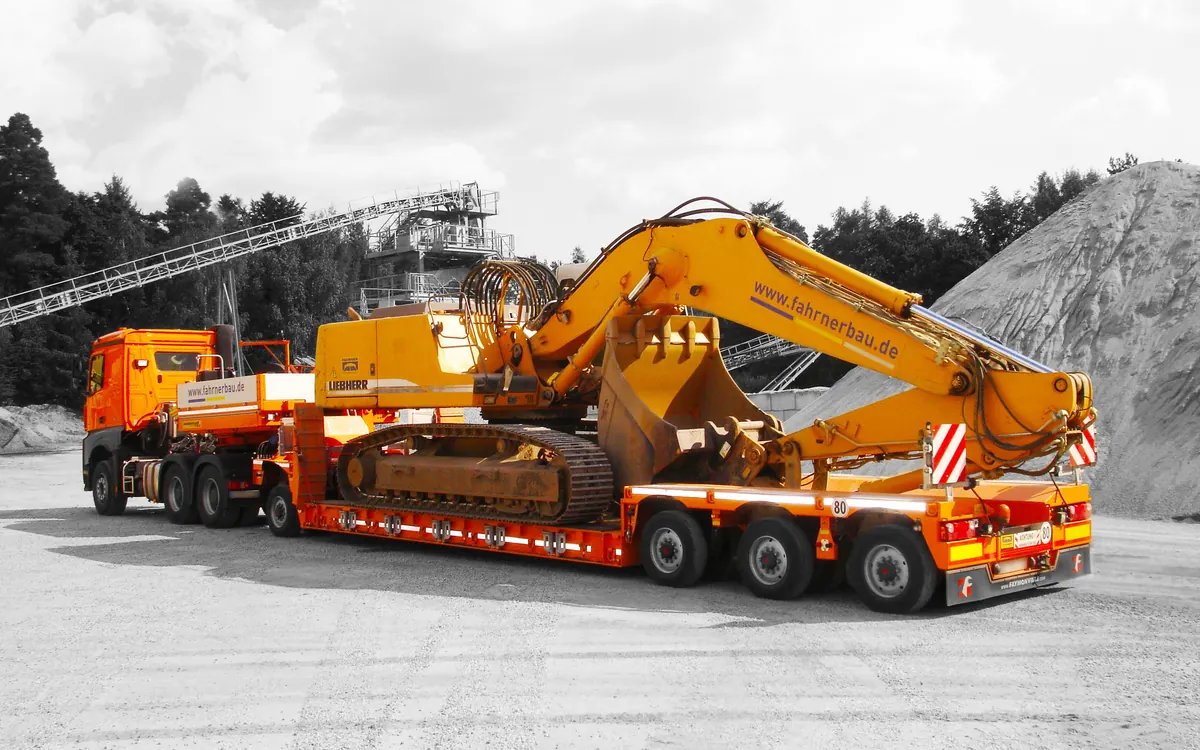
Semi-trailer with two drops in deck height, one behind the gooseneck and one in front of the wheels, so the deck sits very low. A removable gooseneck (RGN) can be detached from the deck. Called low-loader in the UK and float in Australia.
What a lowboy is
The deck has two drops in height: one right after the gooseneck and one right before the wheels. The low middle section allows legal loads up to 3,600 mm (12 ft) tall, which other trailers cannot carry. It is also called a low-bed in western Canada and South Africa and a float in Australia and eastern Canada.
The first lowboy appeared in the 1920s with a riveted gooseneck and solid rubber tyres. The removable gooseneck (RGN) followed in 1958.
How it is loaded
On a removable gooseneck trailer the neck detaches so tracked or wheeled equipment can drive on over the front. Hydraulic RGNs use large cylinders to lower the deck and are the fastest to detach; the hydraulics run from the truck or a pony motor in the neck. Mechanical RGNs are lighter but slower to detach. Fixed-neck trailers save weight but cannot be loaded over the front, so equipment uses rear ramps.
Suspension and structure
Spring suspension is cheapest but rides rougher. Air suspension rides smoother and can raise or lower the deck. Hydraulic and independent suspensions allow more axle travel and steering angle for very heavy loads.
Main beams of mill-rolled steel cost less but are around 4,000 to 6,000 lb (1,814 to 2,722 kg) heavier and tend to lose their camber; high-strength T1 or A514 beams save weight.
Typical cargo
Construction and mining machines (bulldozers, excavators, crawler cranes), generators, transformers and other large industrial equipment. Multi-axle heavy-haul lowboys go much further: one example carried a 100,000 kg transformer on 10 axles, with two ballast tractors pulling and one pushing.
When to book it
Book a lowboy when the load is too tall for a flatbed or step deck, or when a machine has to drive on. Most such loads need permits and route checks, so give the carrier exact dimensions and weight. Road rates for this equipment can be compared at rates.navo24.com.
Variants
Questions shippers ask
How tall a load can a lowboy carry legally?
Up to 3.6 m (12 ft) according to the trailer type definition; check the permit rules on the route.
Can an excavator drive onto it?
Yes. On an RGN the gooseneck detaches and the machine drives on over the front.
What is the difference from a step deck?
A step deck has one drop behind the tractor; a lowboy has a second drop before the wheels, so the deck is lower.