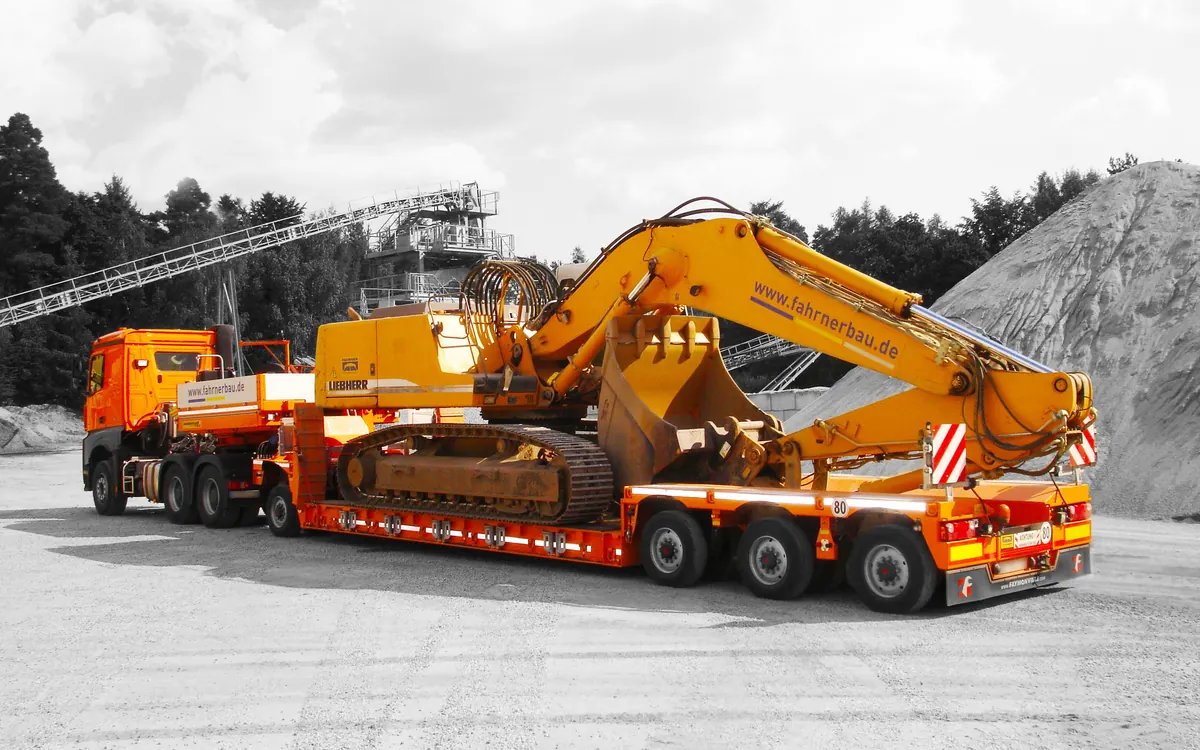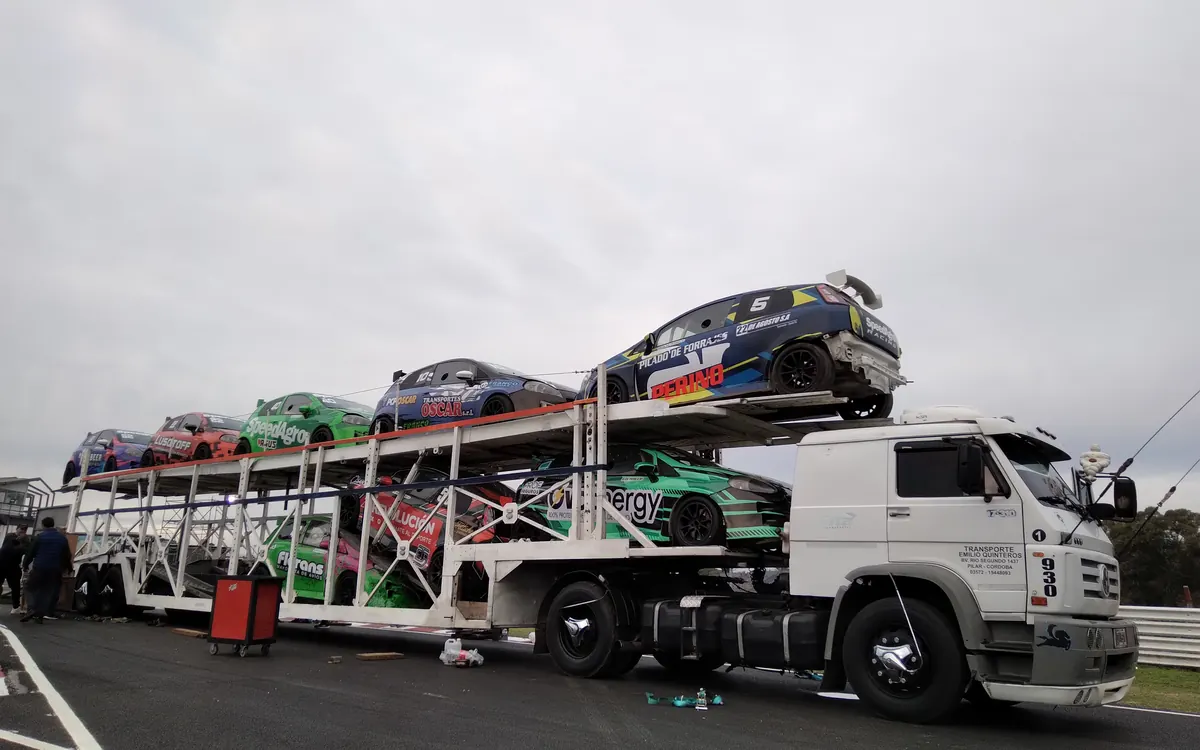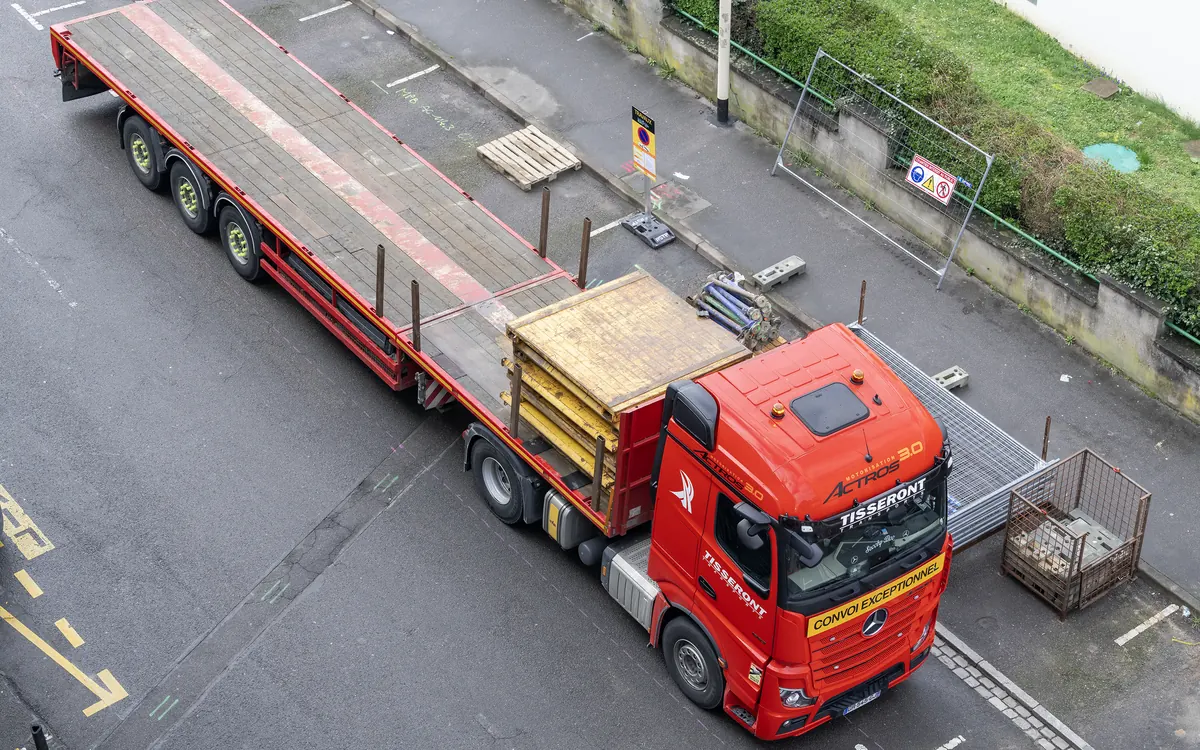
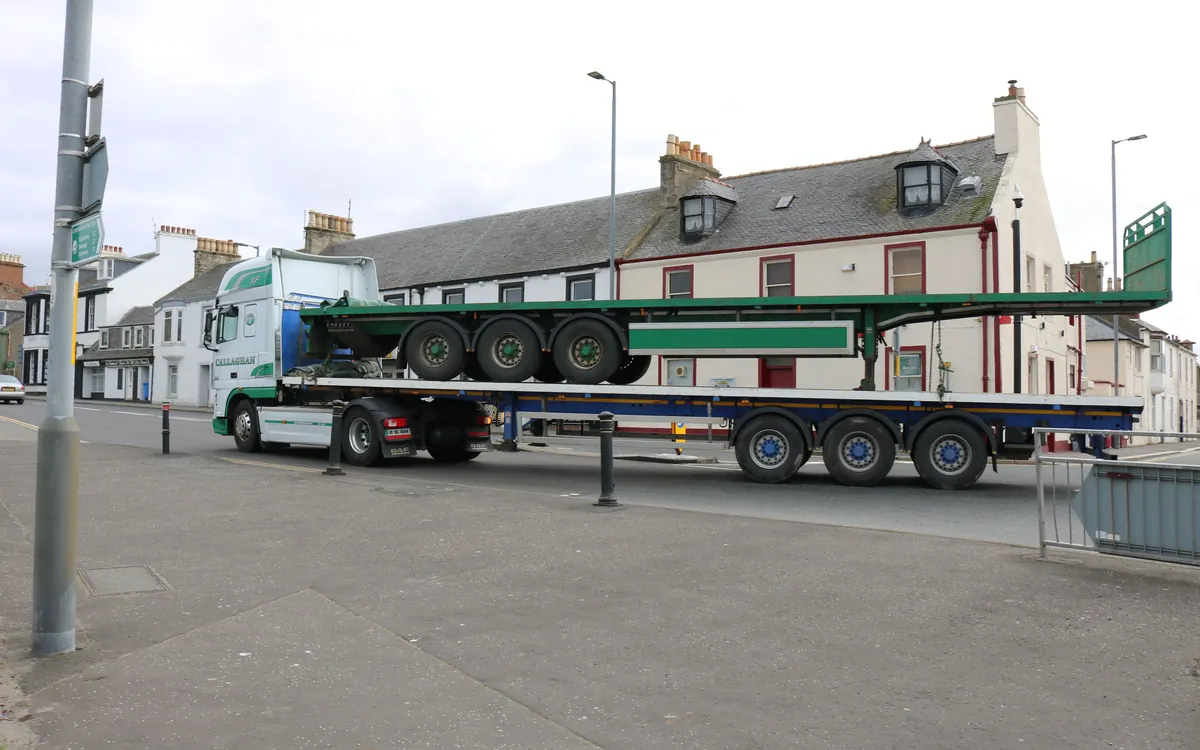
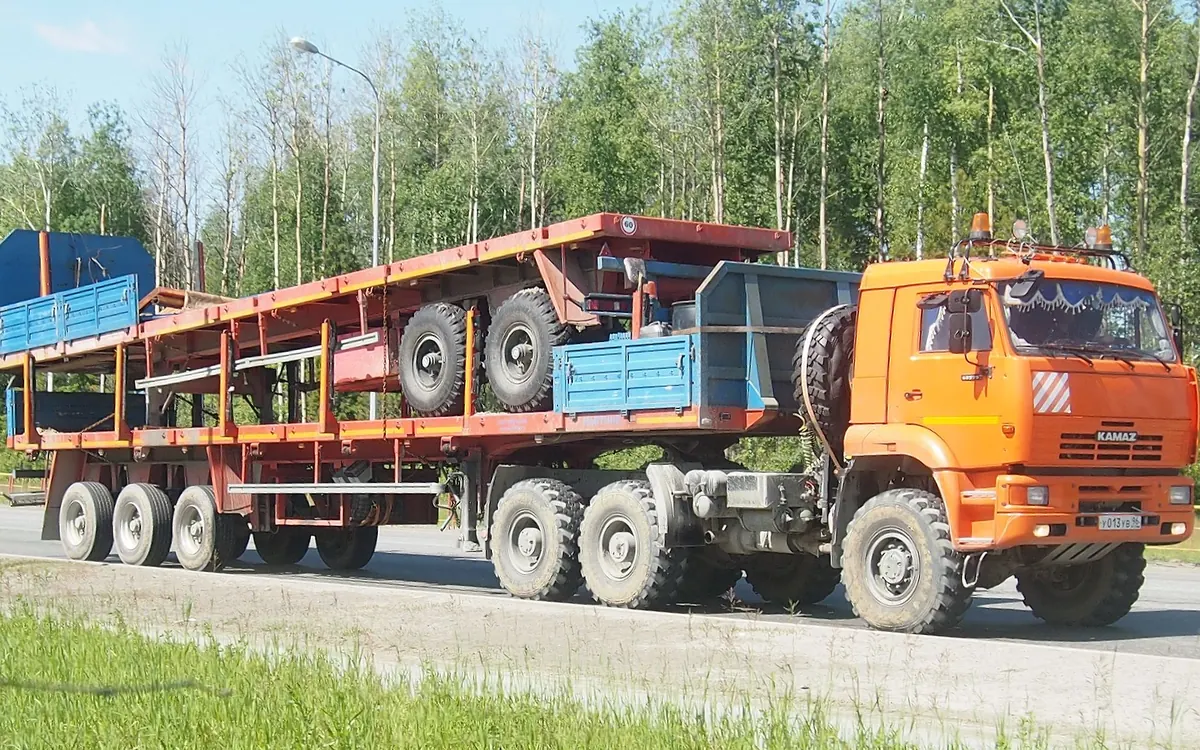
Solid deck with no roof and no fixed sides; a drop-side has low sides hinged down for loading, a stake bed has removable posts. 48 and 53 ft flatbeds often run a spread tandem axle more than 10 ft apart.
What a flatbed is
The deck has no roof and no fixed walls. Some versions add low sides that hinge down for loading (a drop-side) or removable steel stakes (a stake bed). A bulkhead or headache rack at the front of the deck can be added for load securement, for example of long pipes.
Flatbeds were once the standard general haulage truck. They became rarer from the 1980s as pallet freight moved into box and curtain-sided trailers and containers. Today they carry more specialised cargo.
How it is loaded and secured
Loading is from either side or the rear by forklift, or from above by crane, without a loading dock. The cargo is held by straps, chains or ropes attached to tie-down points along the edge. Ratchet webbing straps replaced ropes in most uses and give better control of tension.
Weather protection, if needed, is a tarpaulin fastened over the load by hand. Securing takes time and skill, an improperly secured load can be shed in transit, and an open deck offers little protection against theft.
Dimensions and legal limits
In North America flatbed trailers are commonly 48 or 53 ft (14.63 or 16.15 m) long, with stake pockets about every 2 ft (61 cm). The 48 and 53 ft trailers usually have two axles spread more than 10 ft (3.05 m) apart. The trailer itself is about 5 ft (1.52 m) high, the lowest of the standard semi-trailers, which leaves room for tall loads under the height limit.
Frames are all steel, steel with an aluminium floor, or all aluminium. Aluminium is lightest and allows more legal payload, but it is expensive, slippery when wet and flexes more.
Typical cargo
Structural steel, lumber, drywall, machinery, pipes and building materials, and lighter abnormal loads. Flatbeds also suit any delivery where the receiver unloads by forklift without a dock.
When to book it
Book a flatbed when cargo is long, heavy or loaded by crane, and when it tolerates rain or will be tarped. For tall machinery choose a step deck, and for heavy equipment a lowboy. Road rates for this equipment can be compared at rates.navo24.com.
Variants
Questions shippers ask
Can a flatbed carry cargo that must stay dry?
Only under a tarpaulin. For crane loading with full cover, ask for a Conestoga.
How tall can the load be?
It depends on the deck and the legal height limit; a step deck is about 2 ft lower than a standard flatbed and takes taller loads.
Does a flatbed need a loading dock?
No. It is loaded from the sides or the rear at ground level by forklift or by crane.