




















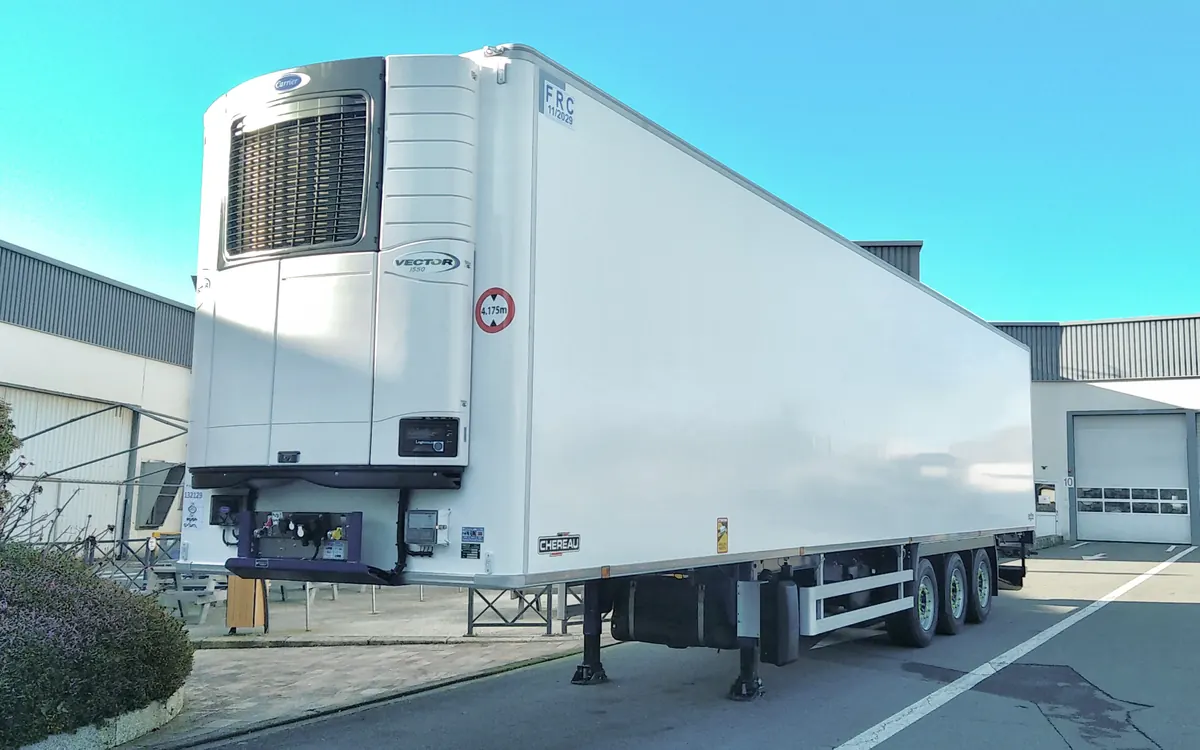
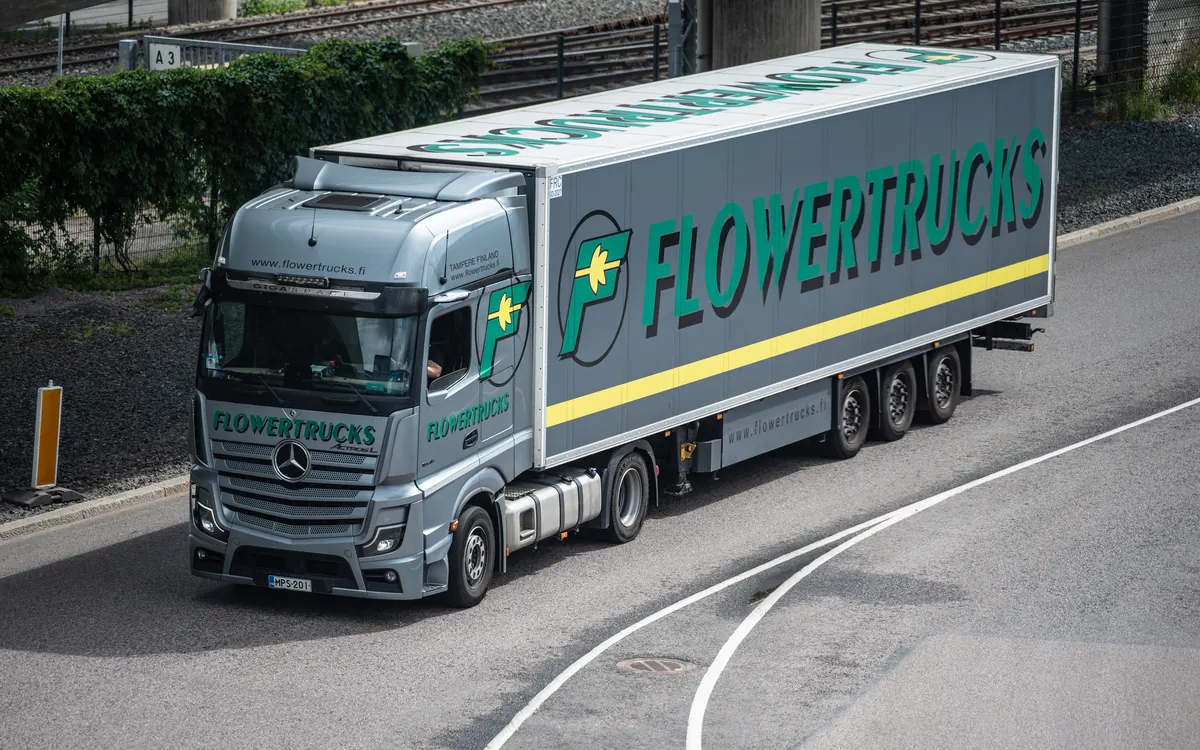
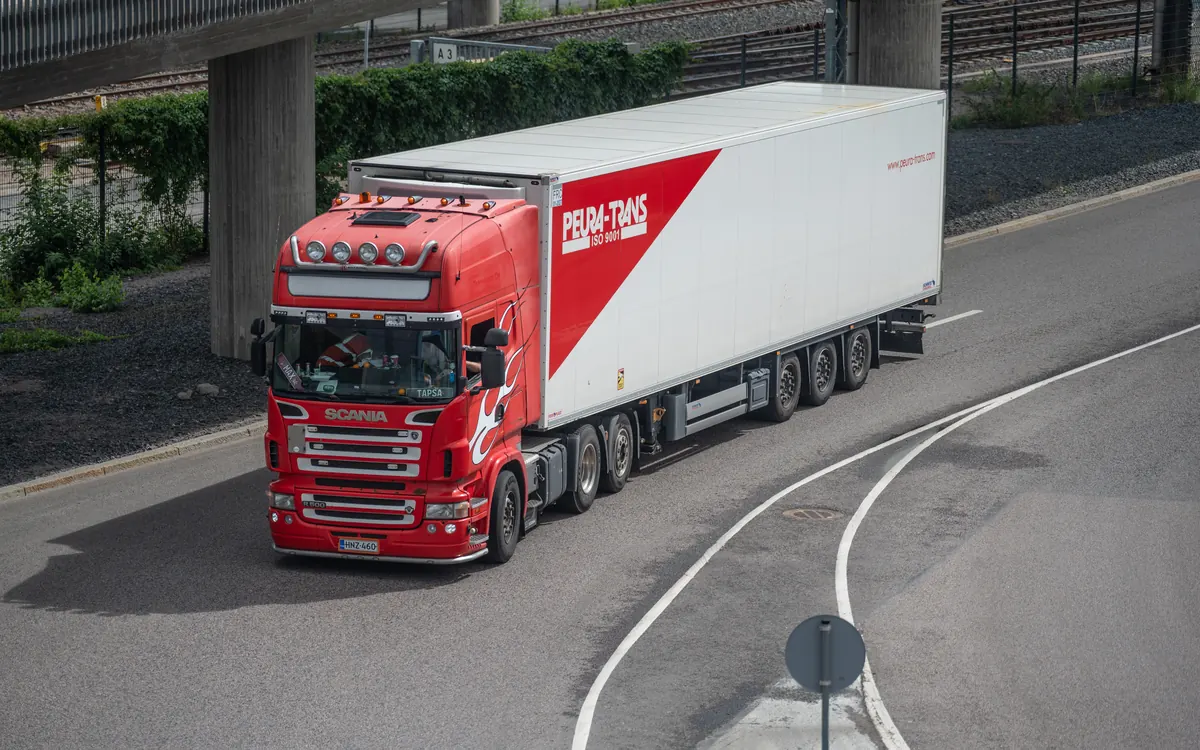
Insulated box cooled by a transport refrigeration unit (TRU) run by its own small engine or by the truck engine, or by ice, dry ice or liquid CO₂. Thicker insulated walls are why the EU allows conditioned bodies 2.60 m wide instead of 2.55 m. Insulated curtainsiders exist in some countries.
What a reefer is
A reefer is built on a box trailer: insulated walls and a heating and cooling unit mounted on the front. That separates it from an insulated or ventilated van, which has no cooling equipment and is used for fruit and similar cargo.
The first successful mechanically refrigerated trucks were built for the ice cream industry in 1925. Around 4 million refrigerated road vehicles were in use worldwide in 2010.
How it is cooled
Cooling can come from ice, dry ice, liquid carbon dioxide, or a mechanical transport refrigeration unit (TRU). A TRU is powered by its own small engine or by the truck engine.
Many reefers have small vent doors at the front and rear. These are opened when the trailer hauls non-refrigerated cargo, often on the return leg, to air the box.
Dimensions and legal limits
Thick insulated walls are why Directive 96/53/EC allows conditioned vehicle bodies to be 2.60 m wide, against 2.55 m for other vehicles. Height stays at 4.00 m, the articulated vehicle at 16.50 m and gross weight at 40 t for five or six axles.
In North America reefers are based on dry vans and share their height of 13 ft 6 in (4.11 m). The insulation takes some inside space, so check inside dimensions with the carrier before planning pallet counts.
Typical cargo
Fresh produce for grocery stores, frozen food, meat and flowers are the core cargo. Reefers also handle backhauls of dry goods with the vent doors open.
When to book it
Book a reefer whenever the goods must stay chilled or frozen during the trip, and agree the set temperature and how it will be recorded before loading. For bulk liquid food, an insulated or refrigerated tank trailer is the alternative. Road rates for this equipment can be compared at rates.navo24.com.
Variants
Questions shippers ask
Why is a reefer wider than other trailers?
EU rules allow 2.60 m for conditioned bodies so the thick insulation does not cost inside width.
Can a reefer carry ambient cargo?
Yes. Reefers often carry dry goods on the return trip with the vent doors open.
How is the cooling unit powered?
A TRU runs on its own small engine or from the truck engine; some vehicles use ice, dry ice or liquid CO₂ instead.