14 road trailer and body types in 4 groups, each with a photo, a Navo drawing and its own page, then the legal limits in the EU and the US side by side. Dimensions come from the standards and the law; payload depends on the tractor, axles and national rules, so we only give it where a source states it.
Photo: Lav Ulv, CC BY 2.0, Wikimedia CommonsNavo drawing, schematic, not to scale
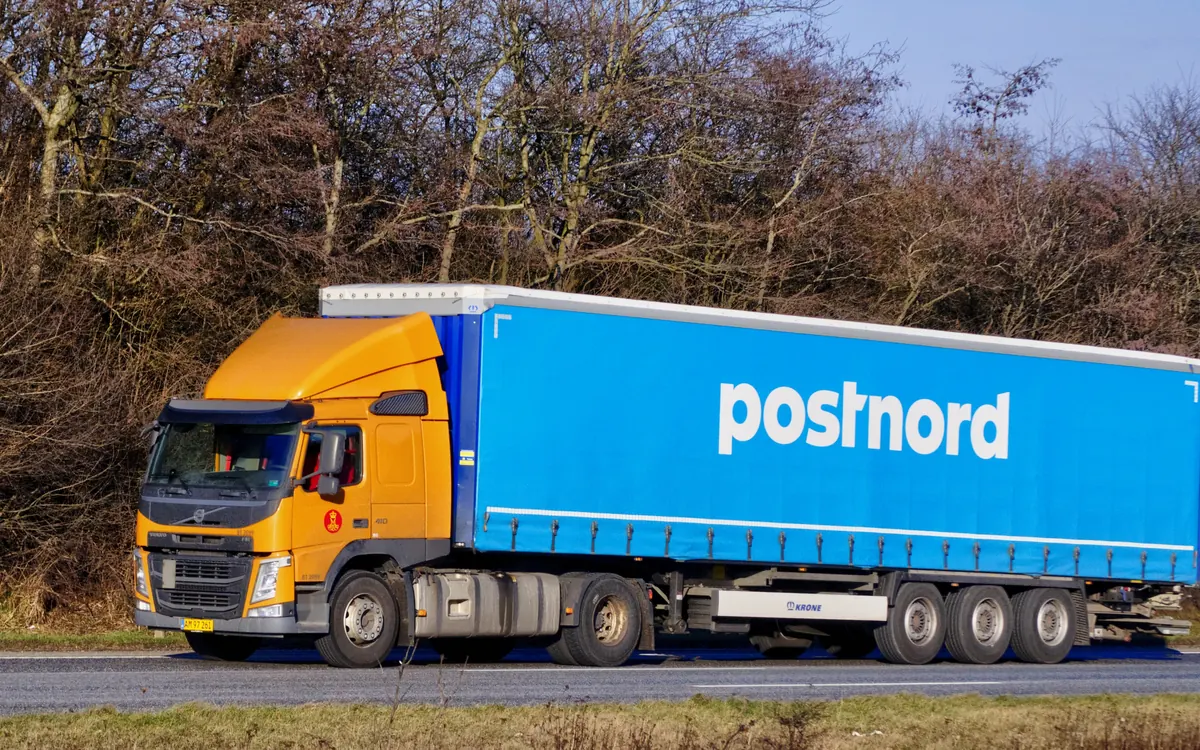
Semi-trailer with sliding curtains on both sides, so pallets can be loaded by forklift from the side as well as the rear. "Tautliner" is the trade name of Boalloy, used as a generic name.
Photo: Spielvogel, CC0, Wikimedia CommonsNavo drawing, schematic, not to scale
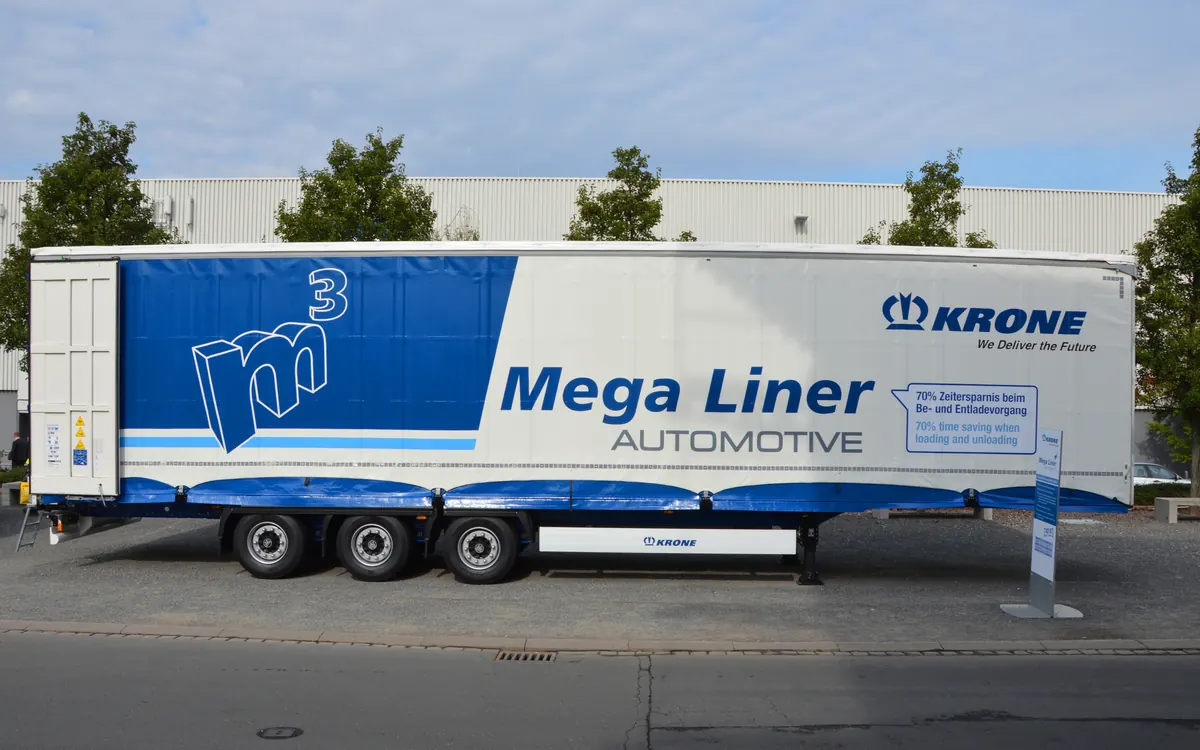
Semi-trailer with 3 m of inside height, made possible by a tractor with a very low fifth-wheel height ("lowliner") while the whole vehicle stays within the 4 m height limit. Coupling, electrics and air lines are the same as on a standard trailer. Built for light, bulky cargo such as automotive parts in mesh boxes and paper reels. Developed by Ewals Cargo Care.
Photo: Rundvald, CC BY-SA 4.0, Wikimedia CommonsNavo drawing, schematic, not to scale
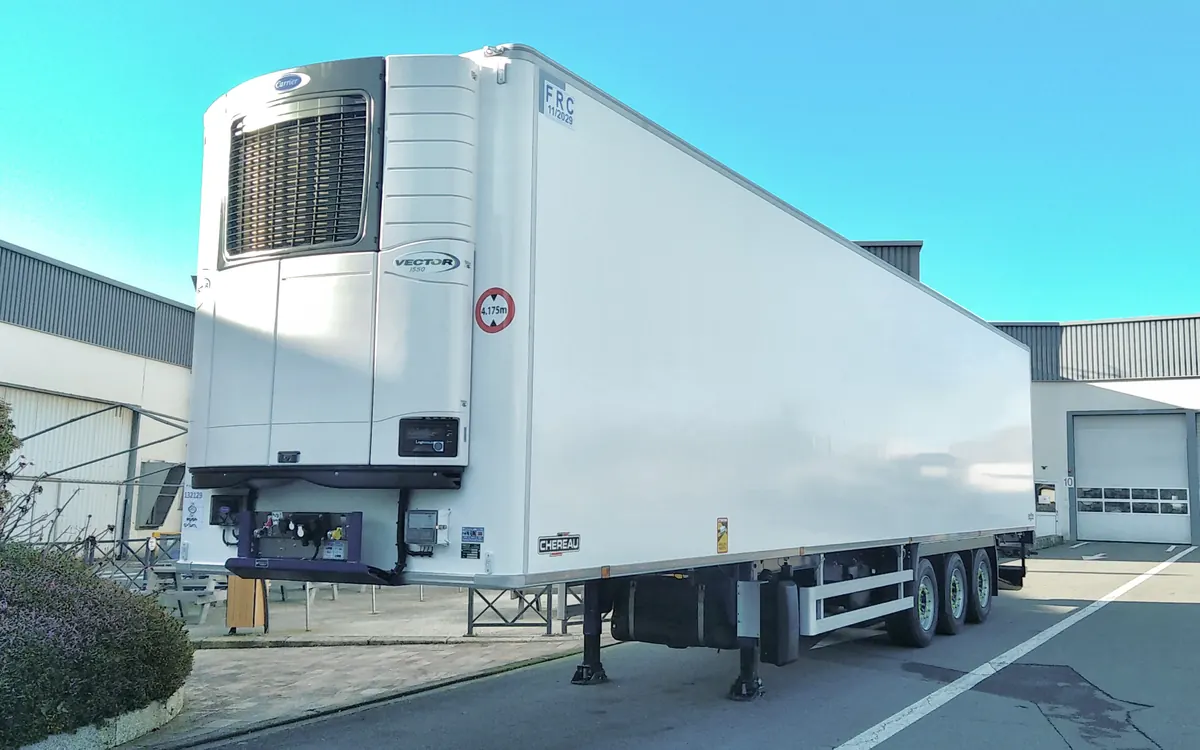
Insulated box cooled by a transport refrigeration unit (TRU) run by its own small engine or by the truck engine, or by ice, dry ice or liquid CO₂. Thicker insulated walls are why the EU allows conditioned bodies 2.60 m wide instead of 2.55 m. Insulated curtainsiders exist in some countries.
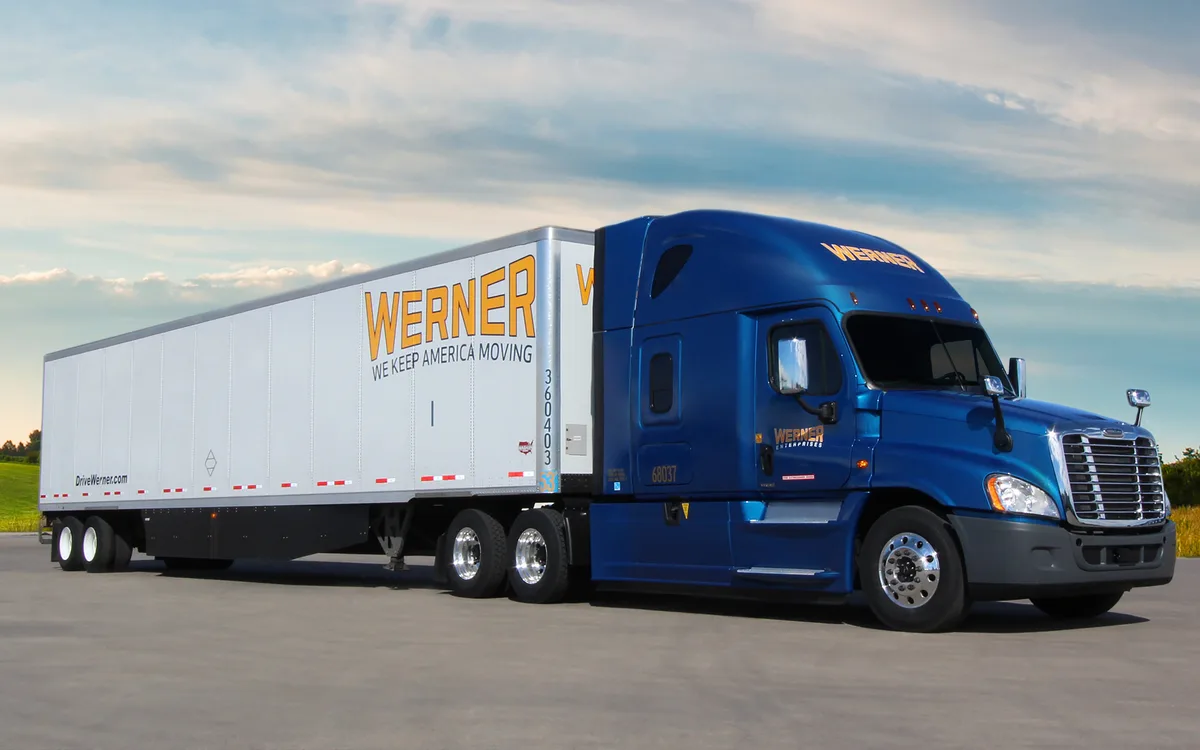
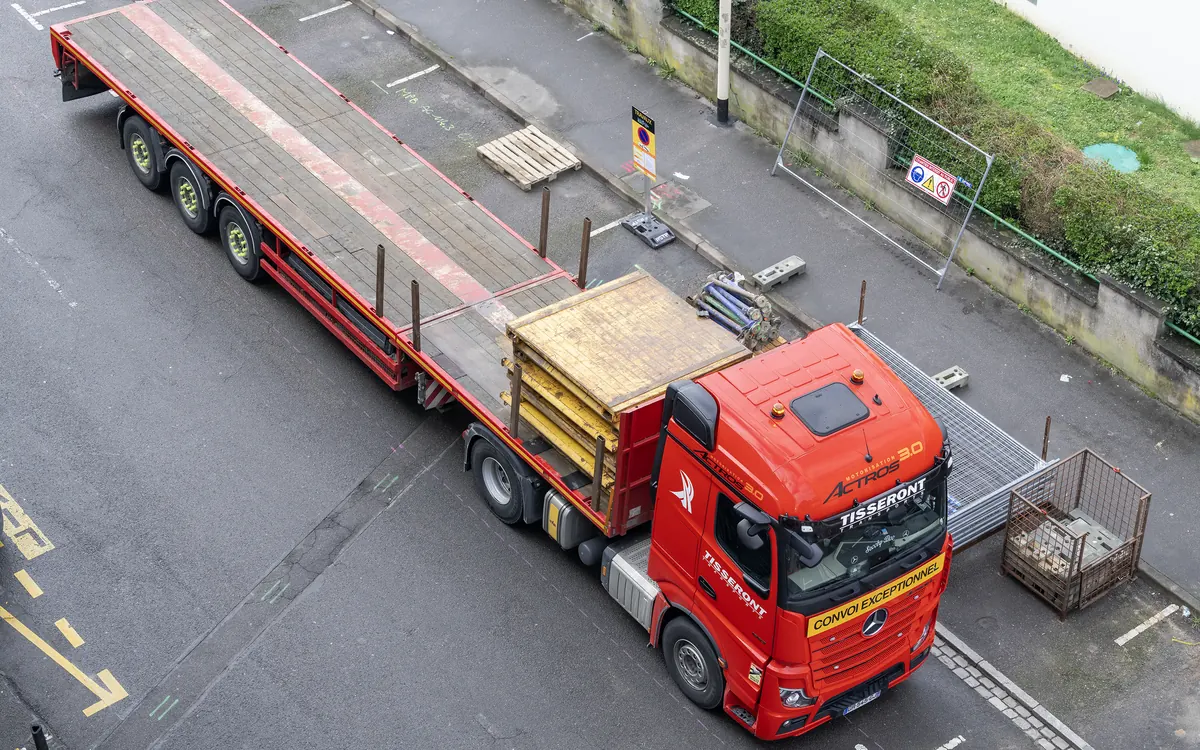
Solid deck with no roof and no fixed sides; a drop-side has low sides hinged down for loading, a stake bed has removable posts. 48 and 53 ft flatbeds often run a spread tandem axle more than 10 ft apart.
Common US lengths48 and 53 ft
CargoSteel, timber, building material, machinery
Load securityStraps, chains, stakes; no theft protection
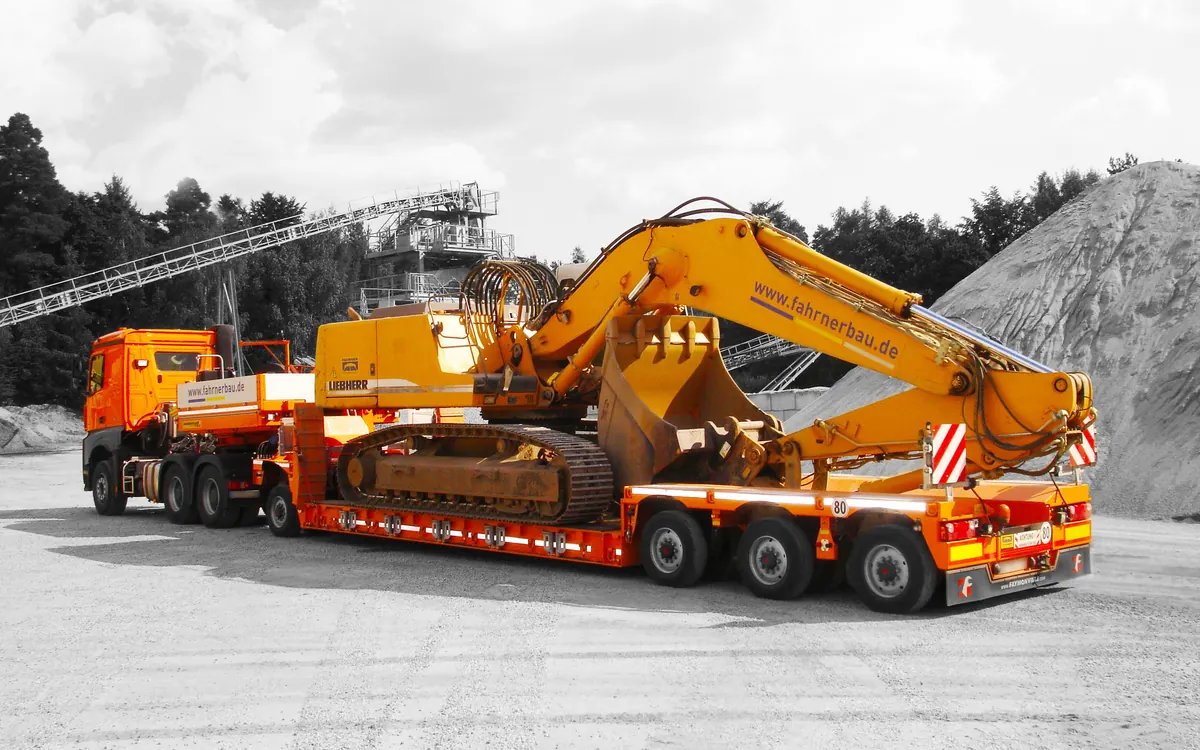
Semi-trailer with two drops in deck height, one behind the gooseneck and one in front of the wheels, so the deck sits very low. A removable gooseneck (RGN) can be detached from the deck. Called low-loader in the UK and float in Australia.
Photo: Husskeyy, CC BY-SA 4.0, Wikimedia CommonsNavo drawing, schematic, not to scale
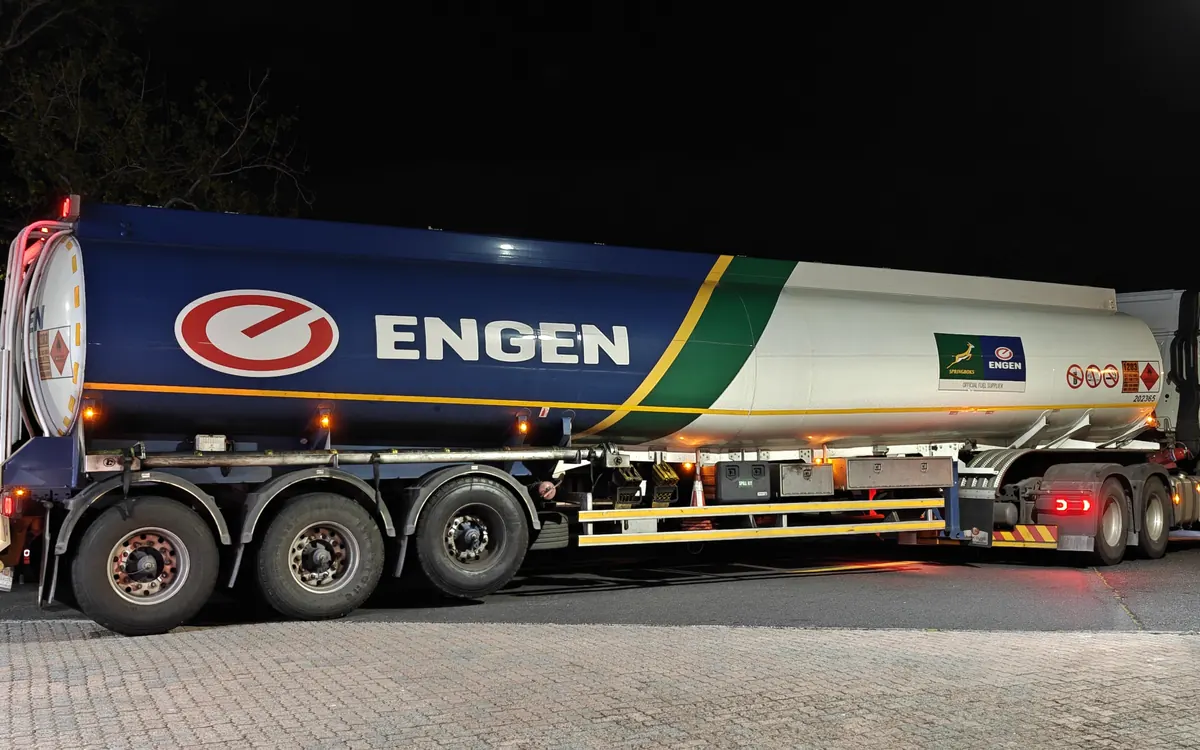
Cylindrical tank for liquids or liquefied gases, built from aluminium, carbon steel, stainless steel or fibre-reinforced plastic by product. Many are split into compartments or carry baffles that stop the load surging.
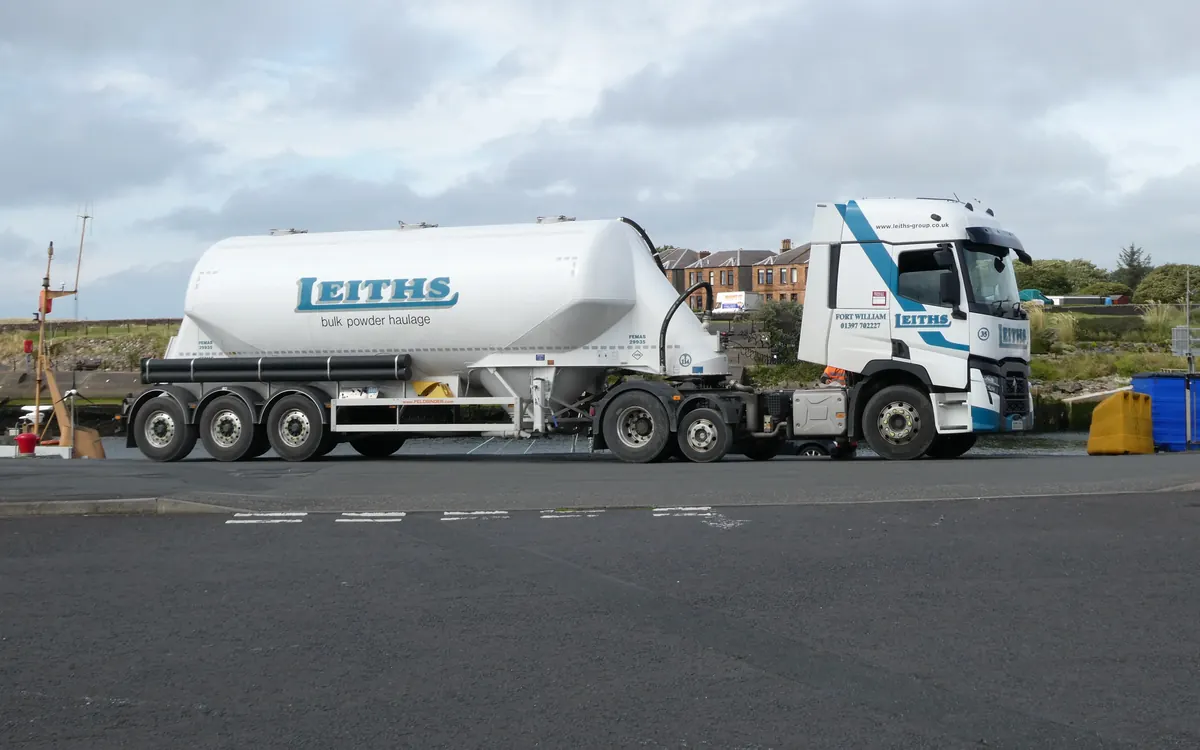
Tank for free-flowing dry bulk such as flour, grain, feed or cement. Hoppers at the bottom empty with the help of compressed air. Counted as a tank vehicle in German usage.
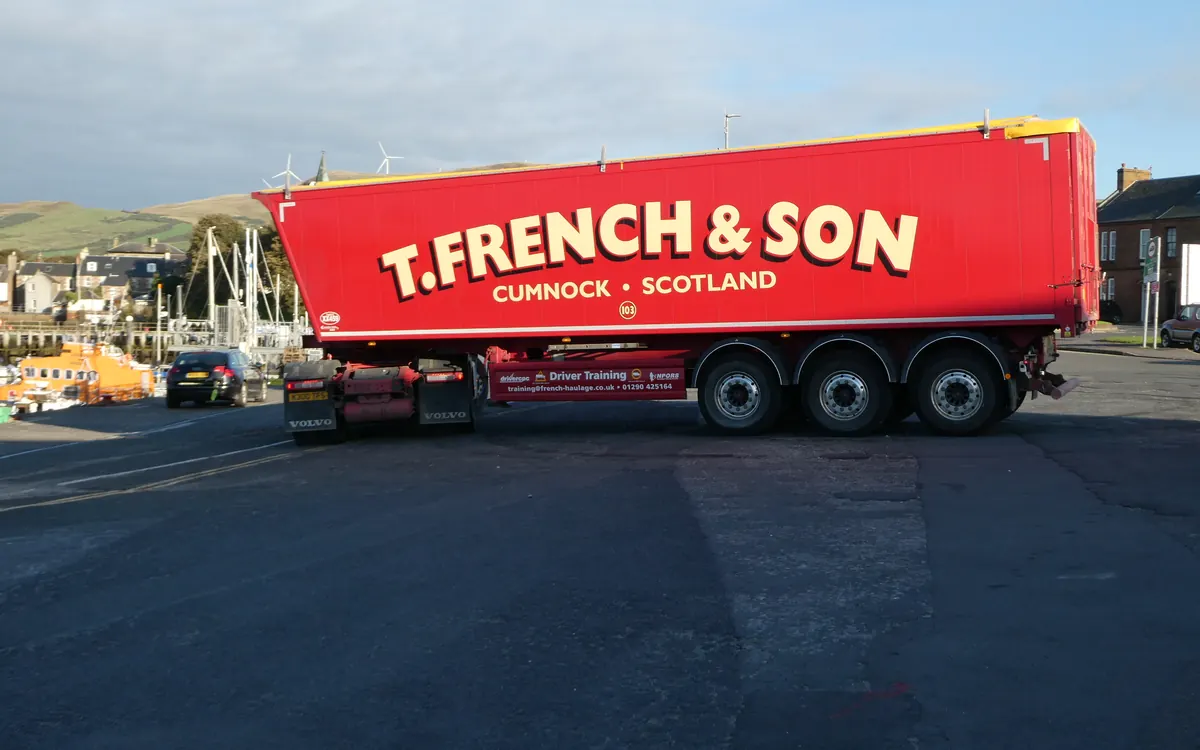
Open body lifted by a hydraulic ram. End dumps tip backwards; side dumps tilt the body to the left or right, unload faster and are hard to tip over during unloading.
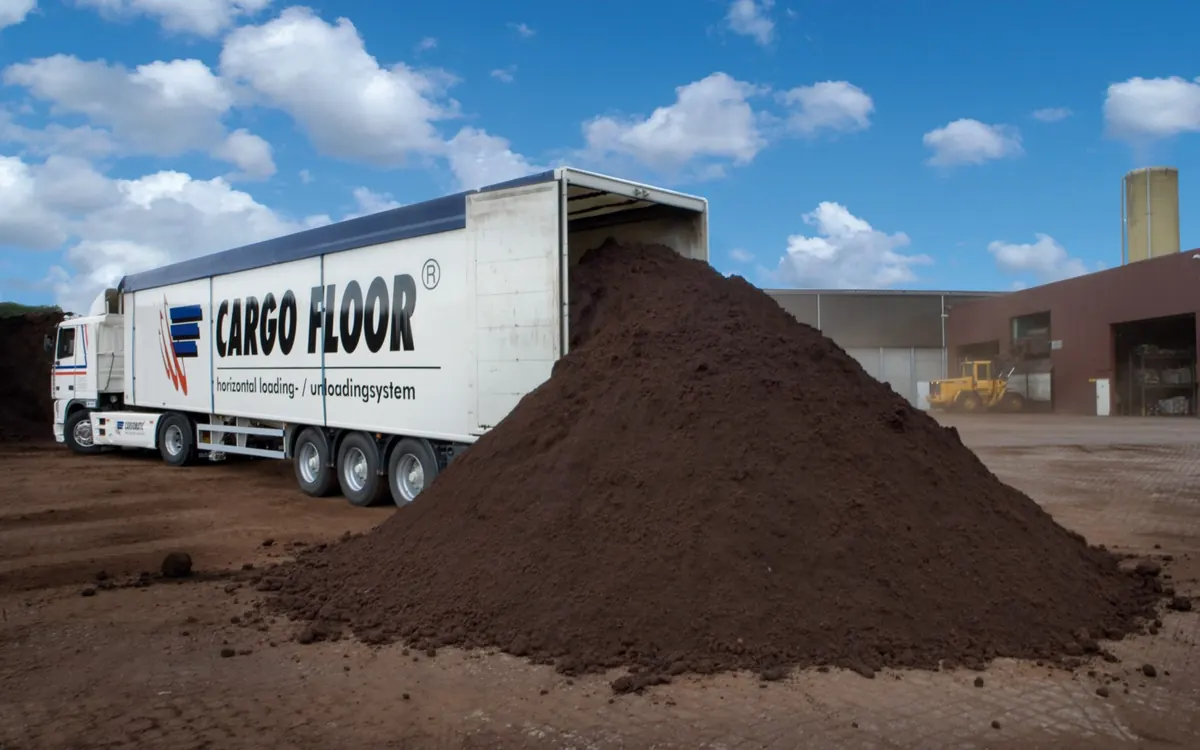
Box trailer whose floor is three sets of slats driven by hydraulics. Moving together they carry the load backwards, then return one set at a time, so the trailer unloads itself without tipping.
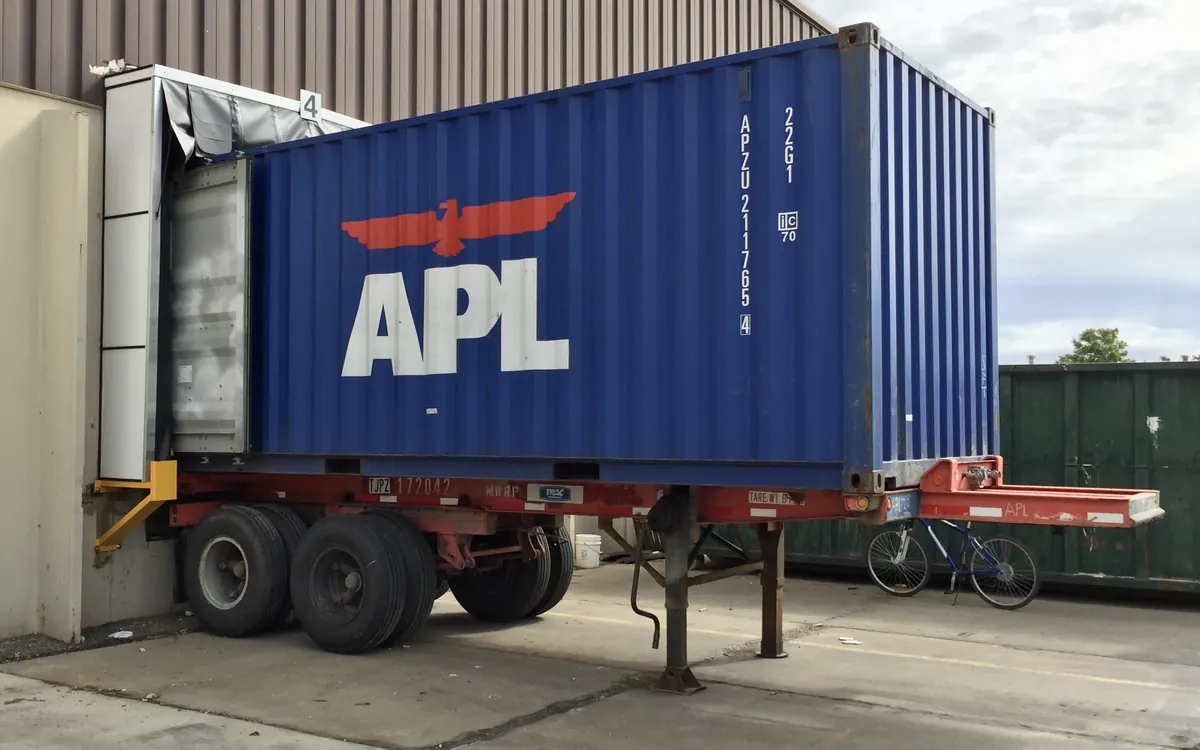
Skeletal trailer with a twistlock at each corner to carry an ISO container. On some 20 ft and 53 ft chassis the axle group slides to spread the weight of a heavy box. Reefer containers get a clip-on or underslung generator set.
LengthMatches the container: a 40 ft chassis for a 40 ft box; adjustable chassis exist
EU max weight, 45 ft box42 t with a 2-axle tractor, 44 t with a 3-axle tractor
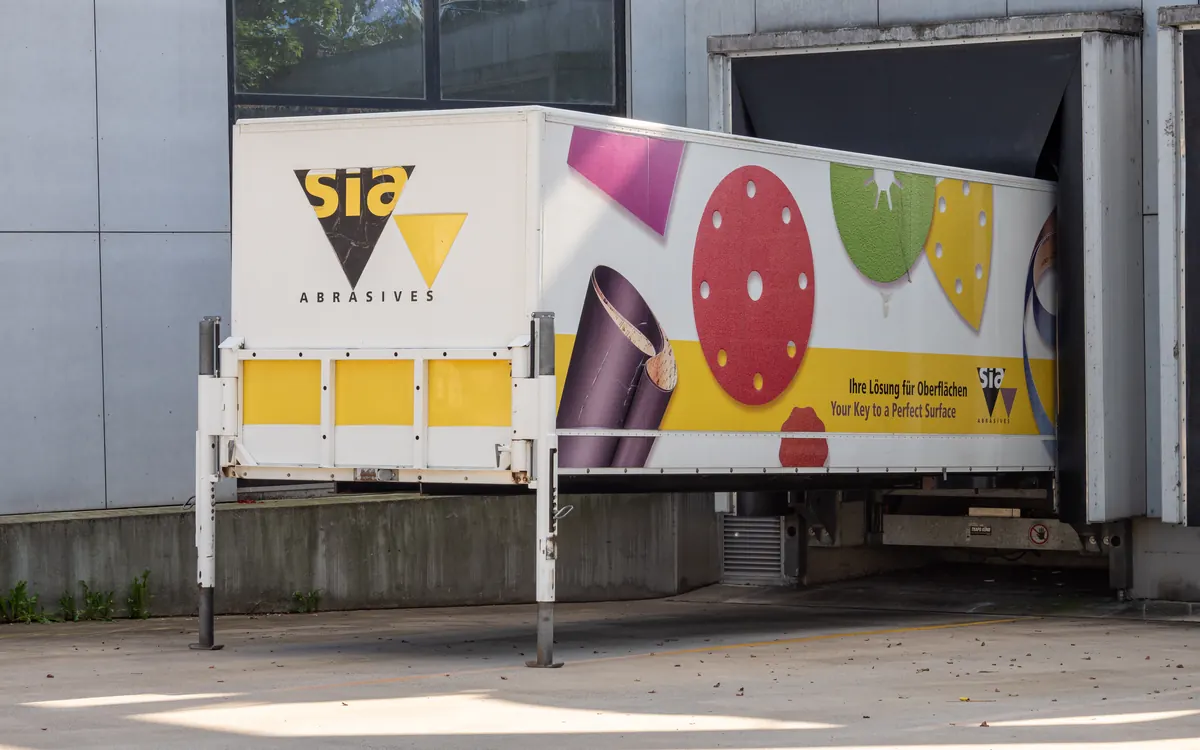
Load unit that sits on four fold-down legs. The rigid truck lowers its air suspension and drives out from under it, so the body waits at the customer while the truck keeps working. Moves by road and rail in Europe; class C units are sized to European pallets.
Photo: Kotivalo, CC BY-SA 4.0, Wikimedia CommonsNavo drawing, schematic, not to scale
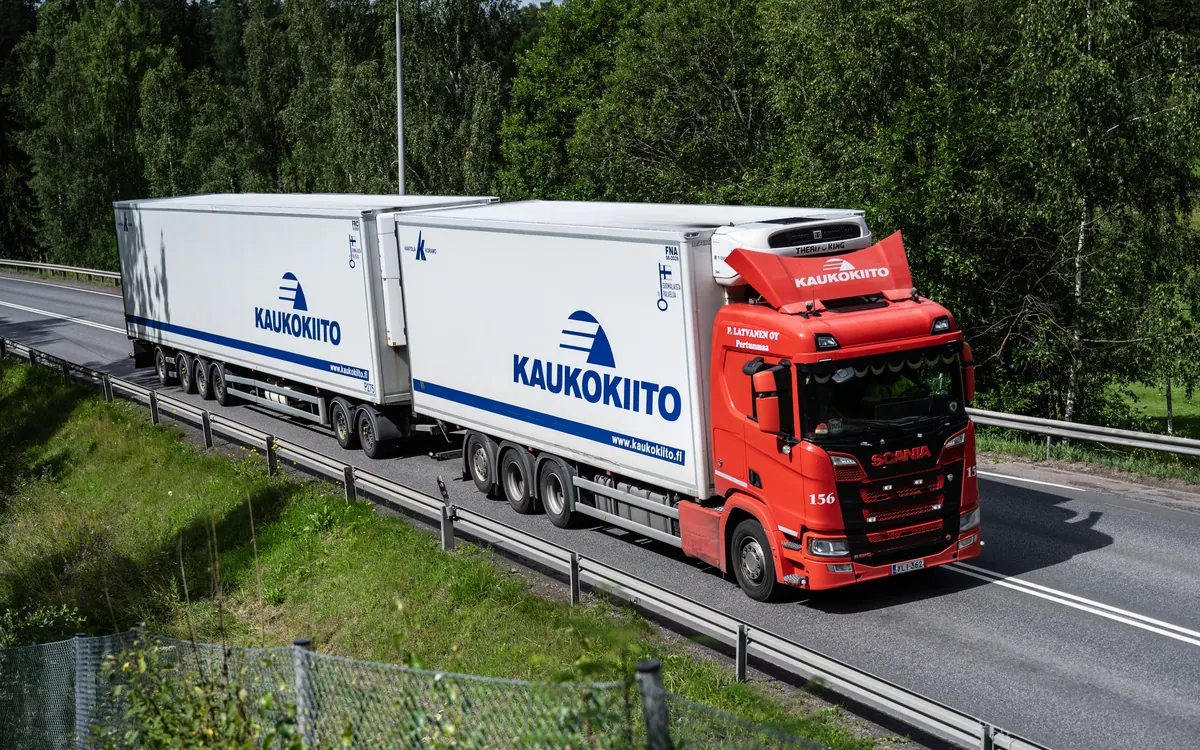
Longer combination built from standard modules: a truck carrying a 7.82 m swap body that tows a 13.6 m semi-trailer on a dolly, or a tractor and semi-trailer with an extra trailer. Up to 25.25 m and, where allowed, 60 t. Germany admits it at 44 t (Lang-Lkw).
EU: Council Directive 96/53/EC, Annex I, for vehicles in international traffic, as amended (incl. Directive 2015/719). US: federal limits for the National Network and the Interstate System, 23 CFR Part 658. States and member states may allow more on their own roads.
Drawings are by Navo, schematic, not to scale. Photos are from Wikimedia Commons under the license shown on each card. Payload depends on the tractor, axle count and national rules, so this page gives the legal gross limits and leaves payload out unless a source states it.