




















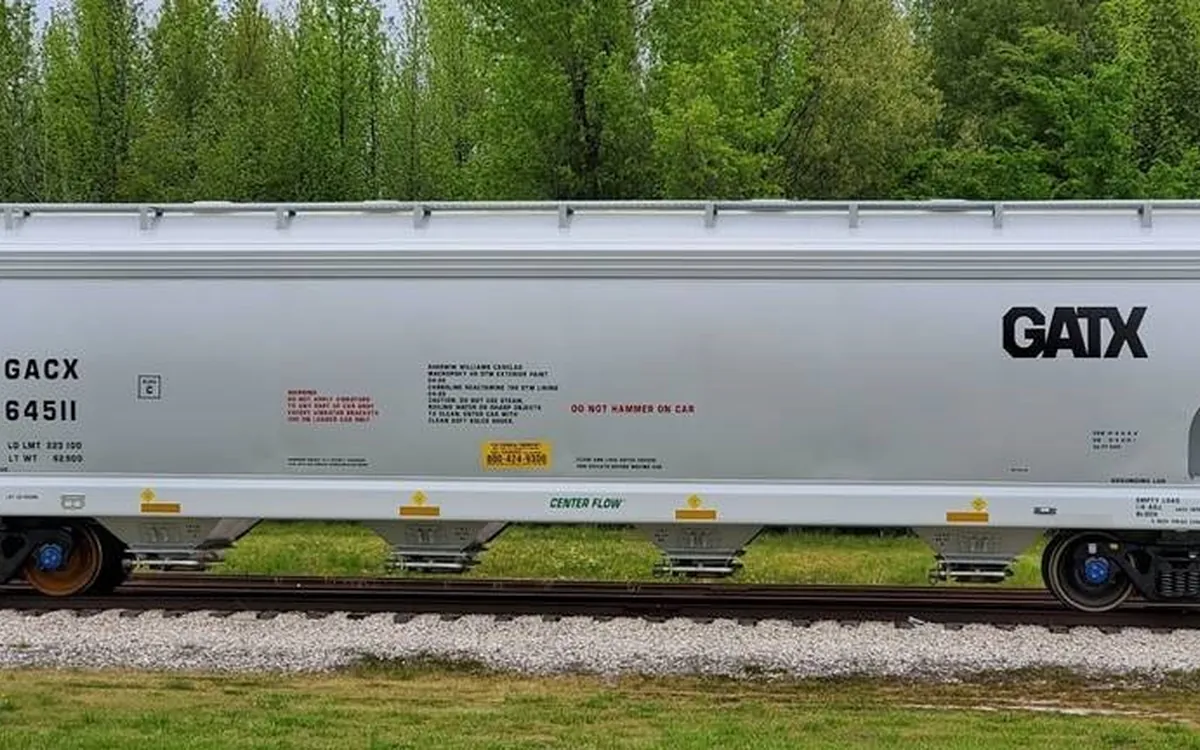
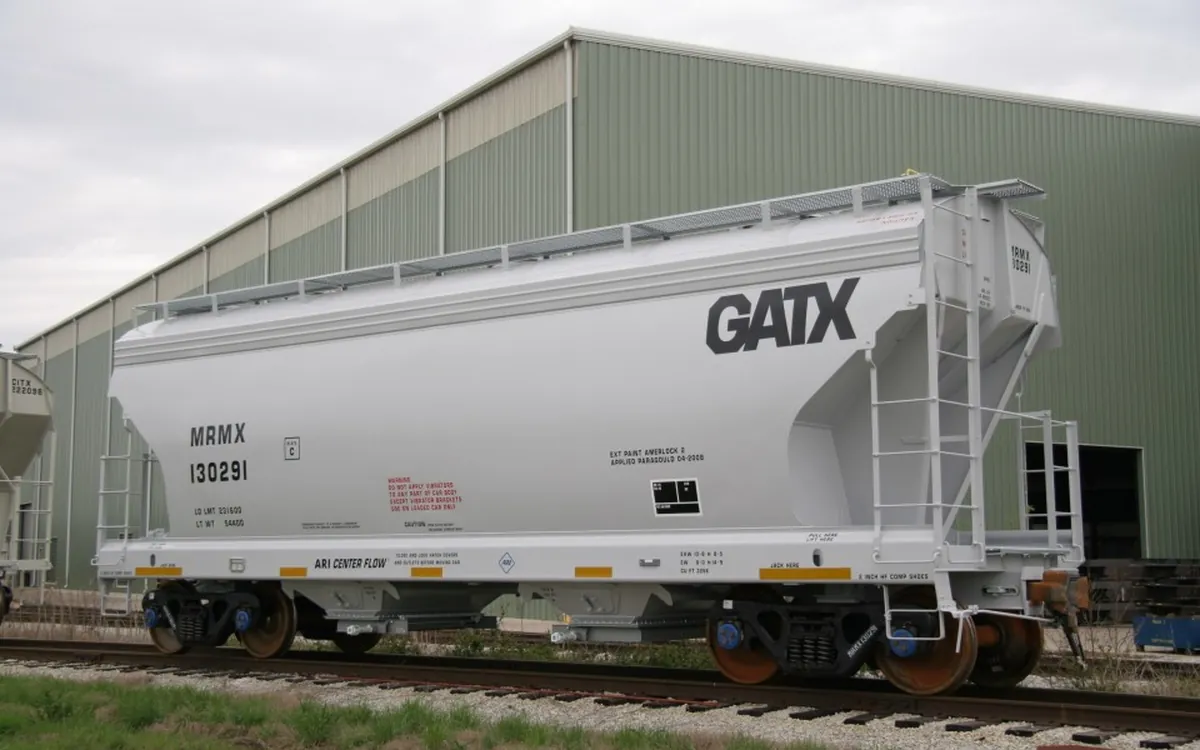
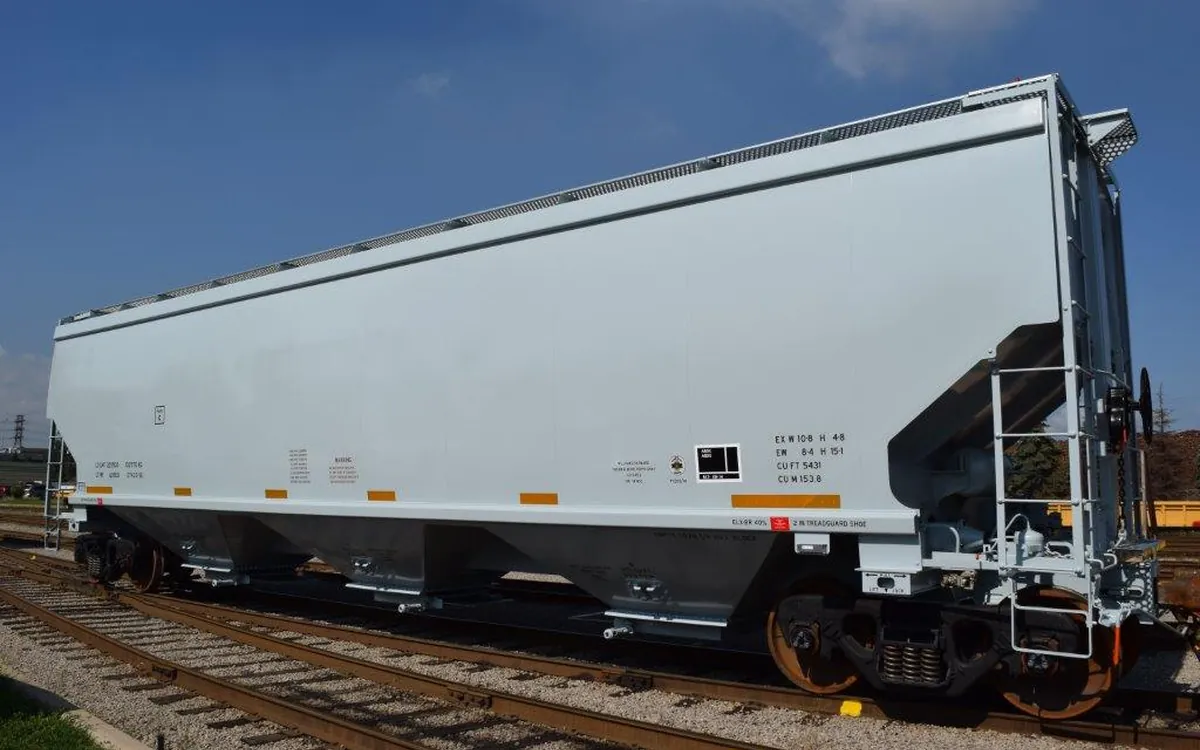
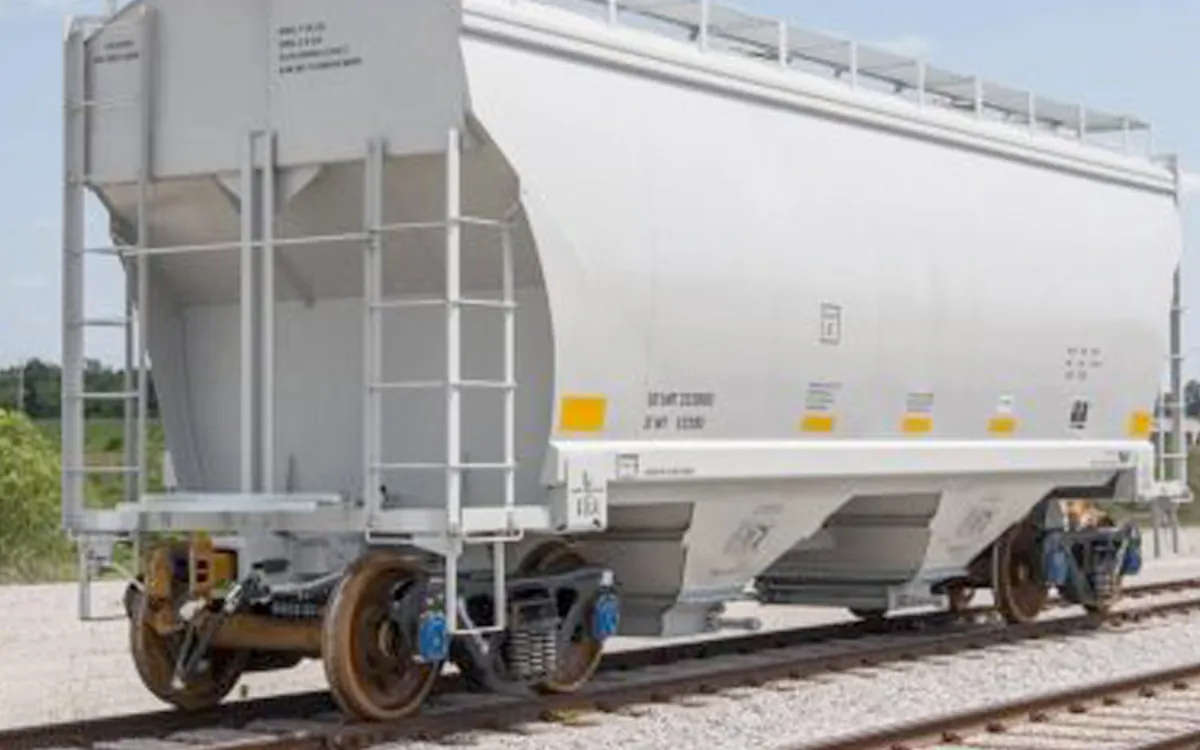
Hopper car with a roof and loading hatches along the top (one long slot or several round or square openings), for grain, cement, plastic pellets and other dry bulk. Two to four bays unload through chutes at the bottom.
What a covered hopper is
A hopper car (UIC: hopper wagon) has opening doors or gates on its underside or sides to discharge its load. Covered hoppers have a fixed roof and are used for cargo such as grain, sugar, fertiliser and Portland cement. Open hoppers without a roof carry coal and similar goods that tolerate weather.
In the UIC system the comparable wagons are opening-roof wagons with gravity discharge (class T, such as Tds) or special wagons of class U.
Loading and unloading
The metal roof carries waterproof hatches. They can be one long slot along the centreline or a pattern of round or square openings placed so the car loads evenly. Many covered hoppers have two to four separate bays, with chutes at the bottom that direct the load out.
Plastic pellets and fine materials like flour travel in pneumatic hoppers. Their bottom outlets connect to a hose leading to the plant's storage tanks, and air is blown in to fluidise the load. Some dual-purpose hoppers also have rotary couplers so they can be emptied by a rotary dumper.
Design and capacity
Early covered hoppers were two-bay cars much like open coal hoppers and suited dense loads such as cement or rock salt. Some existed in the 1910s and they were more common by the 1940s. Because they ran out of volume before weight with light goods like grain, later designs grew longer with higher sides and three or more bays.
From the 1960s, some designs carried the train forces through the sides and dropped the centre sill, which allowed wider outlets and better flow. Common North American net loads range from 80 to 125 short tons, with gross weights from 220,000 lb to 315,000 lb. Heavier wheel loads raise track and bridge maintenance.
Where they run
Grain unit trains of up to 125 cars are a common sight in North America. They haul corn, wheat and barley from the Great Plains, Illinois, Indiana and the Canadian provinces of Alberta, Saskatchewan and Manitoba to flour mills and export ports. The empties return as a whole train or in smaller groups on manifest trains.
Hopper cars have been used by railways worldwide whenever automated cargo handling has been desired, and they developed alongside automated loading and unloading facilities.
Covered hoppers suit any dry bulk that must stay out of the rain and flows by gravity: grain, sugar, fertiliser, cement, plastic pellets and flour. Open hoppers take the weather-tolerant goods such as coal, ore and gravel, and ballast hoppers drop track ballast directly below the car.
Related types
Open hoppers carry coal, ore and gravel. Ballast hoppers drop track ballast between the rails. In Europe, opening-roof wagons such as the Tds and Talns do the same job as the covered hopper.
Choosing a covered hopper
Match the car to product density: two-bay cars for dense cement, larger three- or four-bay cars for grain and other light goods. Fine powders and pellets need pneumatic outlets and a matching hose connection at the plant. For food products ask for cars kept in food service.
Variants
Questions shippers ask
What does a covered hopper carry?
Dry bulk that must be protected from weather, such as grain, sugar, fertiliser, cement and plastic pellets.
How is a covered hopper unloaded?
Through chutes at the bottom of each bay by gravity. Pneumatic cars use air and a hose to move fine products.
What is the difference between a covered and an open hopper?
A covered hopper has a fixed roof with loading hatches. An open hopper has no roof and carries coal and similar goods.