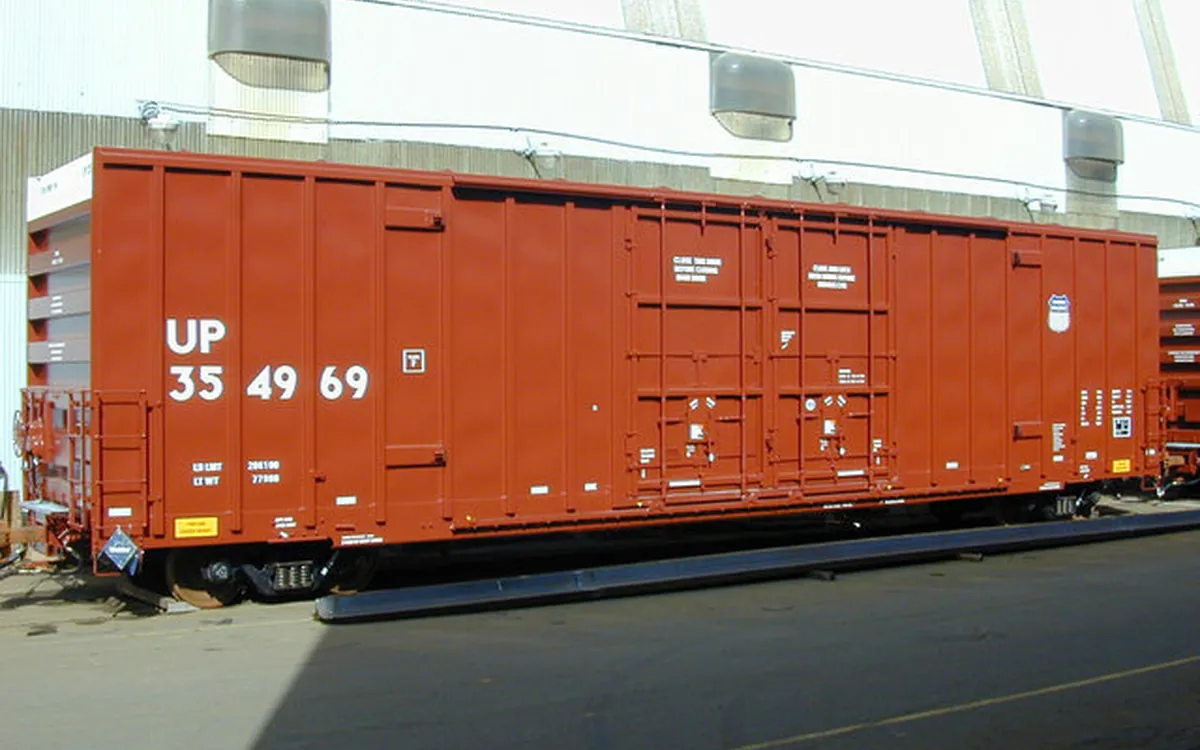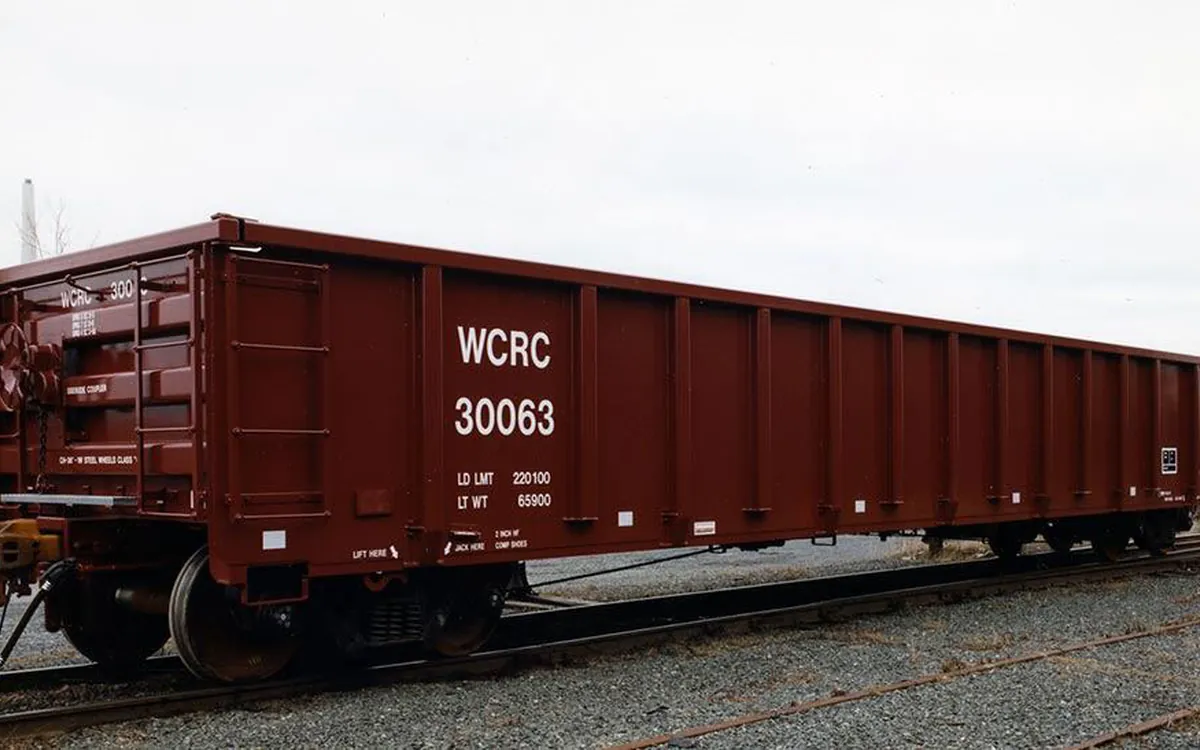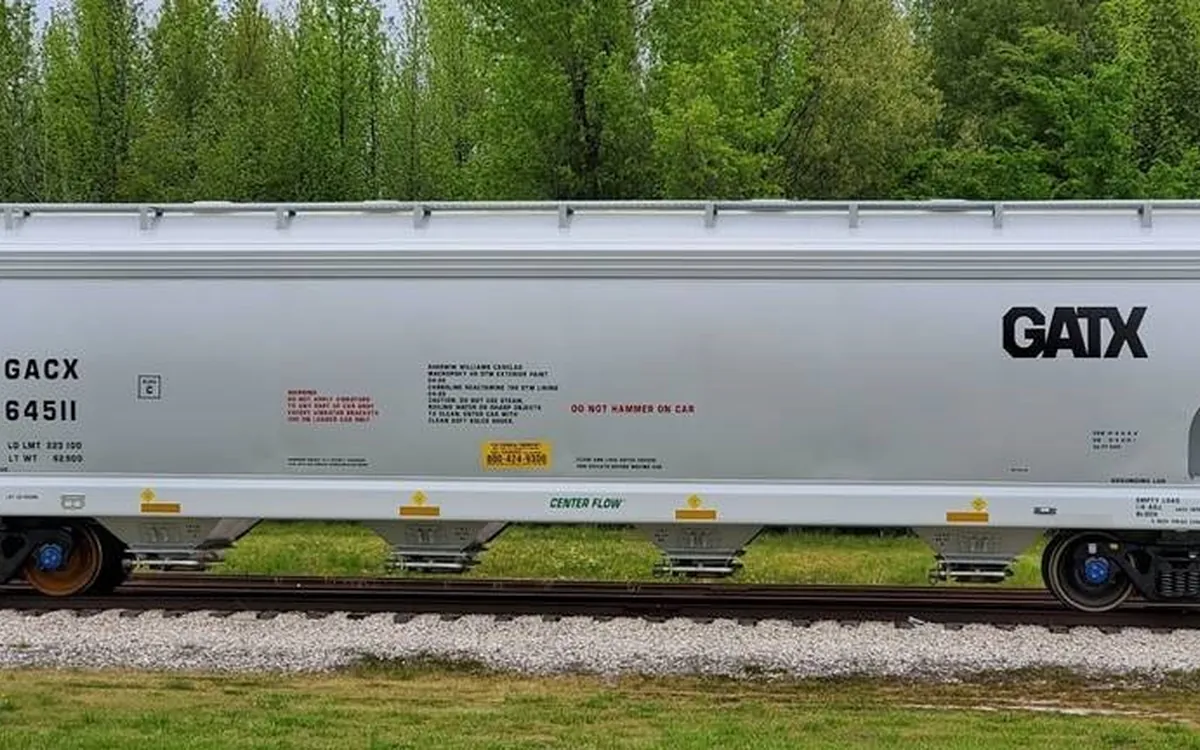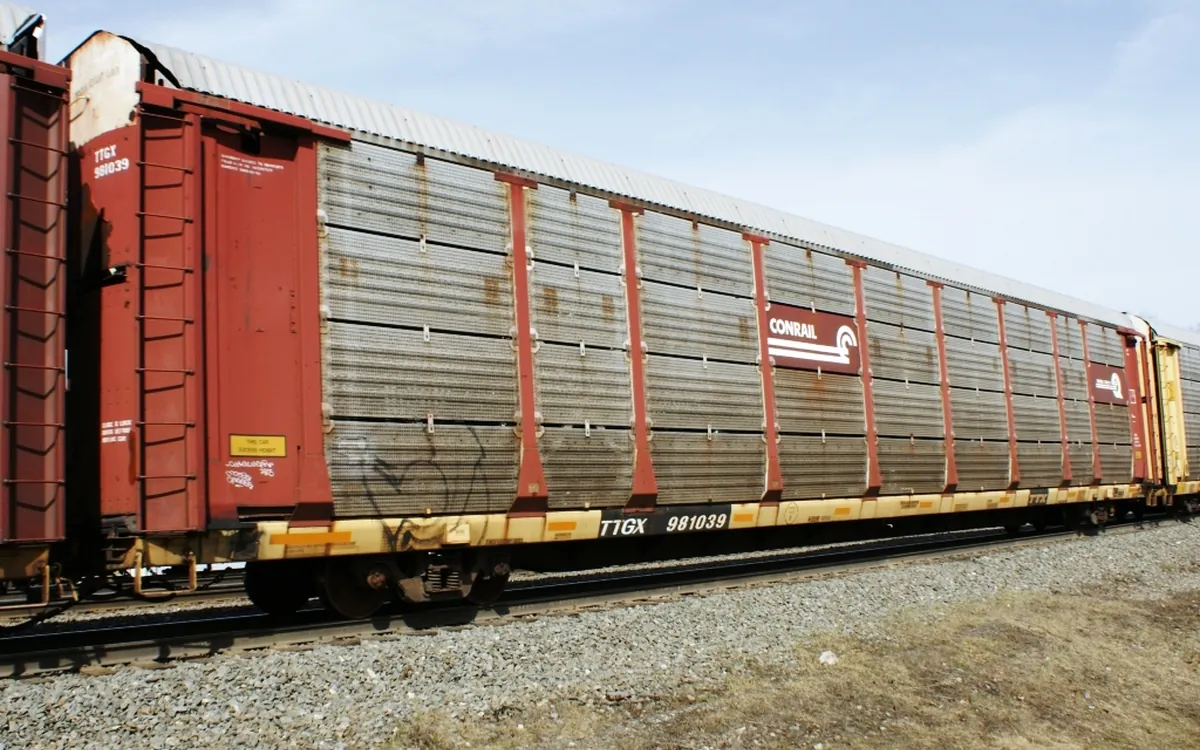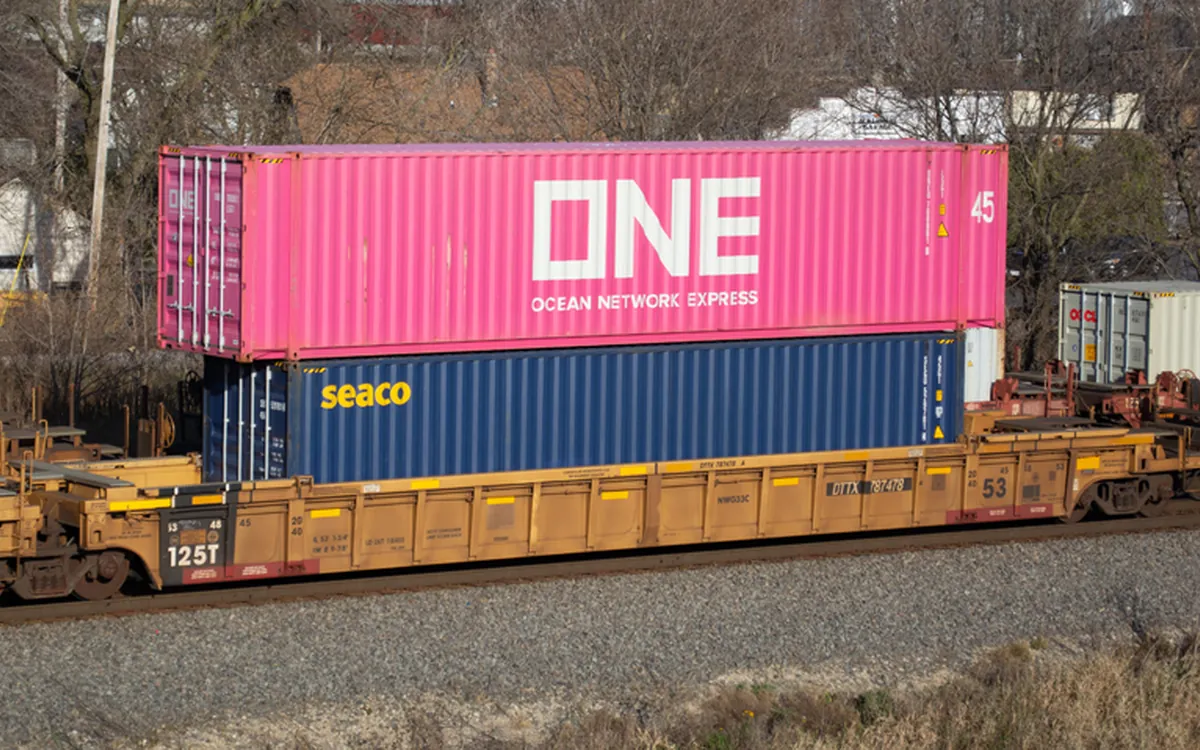
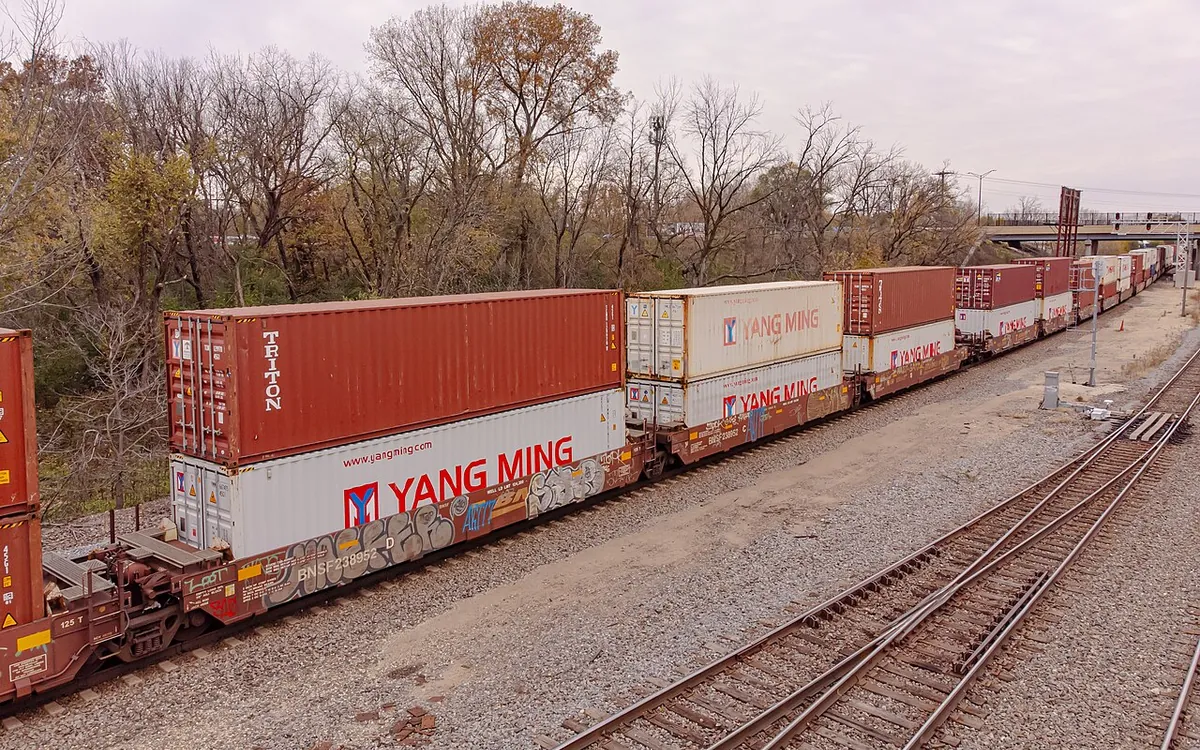
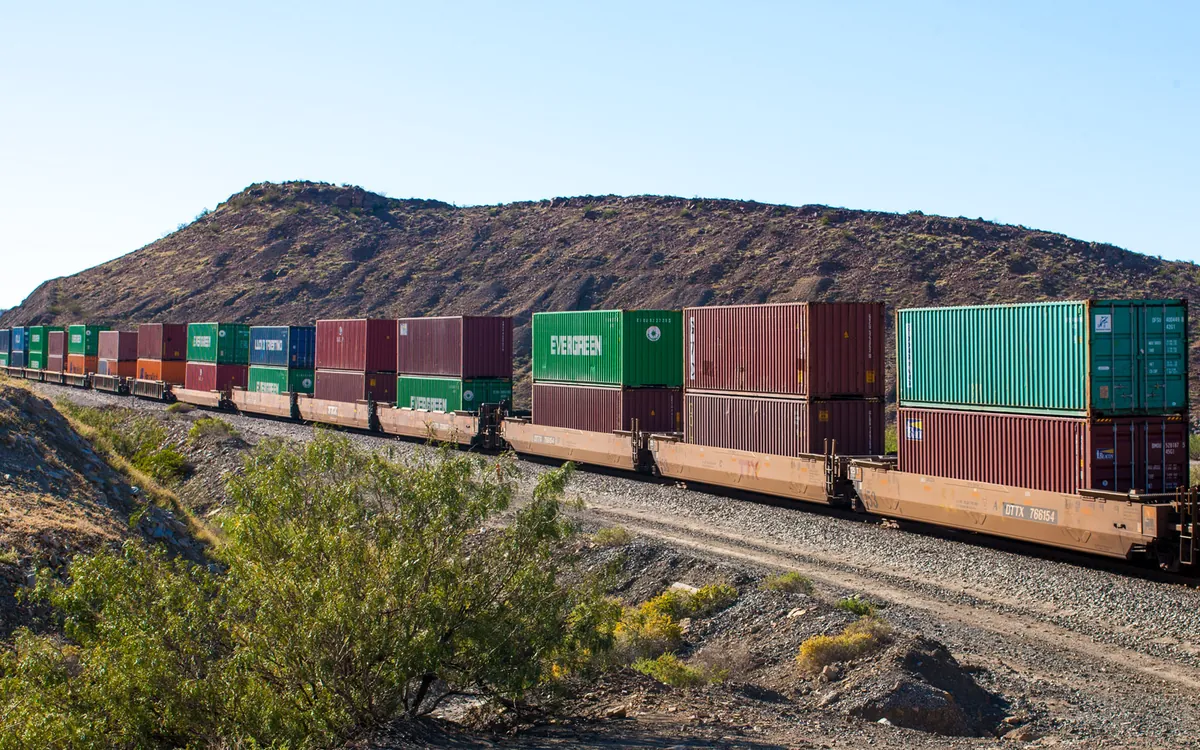
North American intermodal car with a "well" between the bogies, so two containers stack inside the loading gauge. Well lengths are often painted on the side so yard staff can match loads.
What a well car is
A well car, also called a double-stack car, is a railroad car built for intermodal containers. The well is a depressed section close to the rails between the trucks, so a container rides lower than on an ordinary flatcar. Where clearances allow, a second container sits on top.
Southern Pacific and SeaLand designed the first double-stack car with ACF Industries in 1977. In 1984 American President Lines worked with Thrall and Union Pacific, and the first all double-stack train ran from Los Angeles to South Kearny, New Jersey. Double stack now carries nearly 70% of US intermodal shipments.
How containers are stacked
The top container is held either by bulkheads built into the car or by four inter-box connectors. At the terminal, cranes unlock and lift off the top boxes, remove the bottom boxes, place the outbound bottom layer, then lock the new top layer.
Forty-foot containers are the standard unit, and longer 45, 48 and 53 ft boxes keep their load points 40 ft apart. So a 40 ft or longer box can sit on two 20 ft boxes, but a 20 ft box cannot sit on a 40 ft one. Every well can take two 20 ft containers in the bottom position.
Sizes and capacity
Well lengths of 40, 48 and 53 ft are most common, and some 45 and 56 ft wells exist. The size is often painted in large letters on the side so yard staff can match loads. Container heights range from 2.44 m to 2.908 m (high cube).
Articulated well cars typically carry 120,000 lb per well. US highway limits keep most containers under 60,000 lb, so two stacked boxes fit. Some single-well cars take two fully loaded 71,700 lb containers. Lower centre of gravity, lower tare and, on articulated cars, less slack action are the main advantages.
Car layouts and where they run
Many well cars are articulated sets of three to five units on shared trucks, others are single-well cars joined by drawbars under one reporting mark. Units are lettered A, B, then C to E. All-purpose well cars have hitches for semi-trailers too, and Econo Stack cars have end bulkheads but cannot take 53 ft boxes on top.
Well cars are most common in North America and Australia. They also run in China, Kenya on the Mombasa to Nairobi line, Panama and Saudi Arabia. In Britain the small loading gauge means intermodal well wagons are needed to carry 9 ft 6 in high containers on many routes.
Clearance and choke points
Double stack needs high clearance; the AAR Plate H gauge allows 20 ft 3 in. CSX lists four double-stack clearance levels above top of rail: 18 ft 2 in, 19 ft 2 in, 20 ft 2 in and 20 ft 3 in. Low bridges and tunnels still block some routes, and US railroads have run programmes such as the Heartland Corridor and National Gateway to remove them.
Planning double-stack moves
Check that the whole route is cleared for double stack and for the box heights you ship. Put heavy and 20 ft units in the bottom layer and long boxes on top. Match the box length to the well: 53 ft domestic containers need 53 ft wells or a top position.
Variants
Questions shippers ask
What sizes do well cars come in?
40, 48 and 53 ft wells are most common; some 45 and 56 ft wells exist.
Can a 20 ft container go on top of a 40 ft one?
No. Load points on 40 ft and longer boxes are 40 ft apart, so 20 ft boxes go in the bottom layer only.
How much clearance does double stack need?
A lot. The AAR Plate H gauge for double stack allows 20 ft 3 in, and CSX grades its routes from 18 ft 2 in up to 20 ft 3 in.