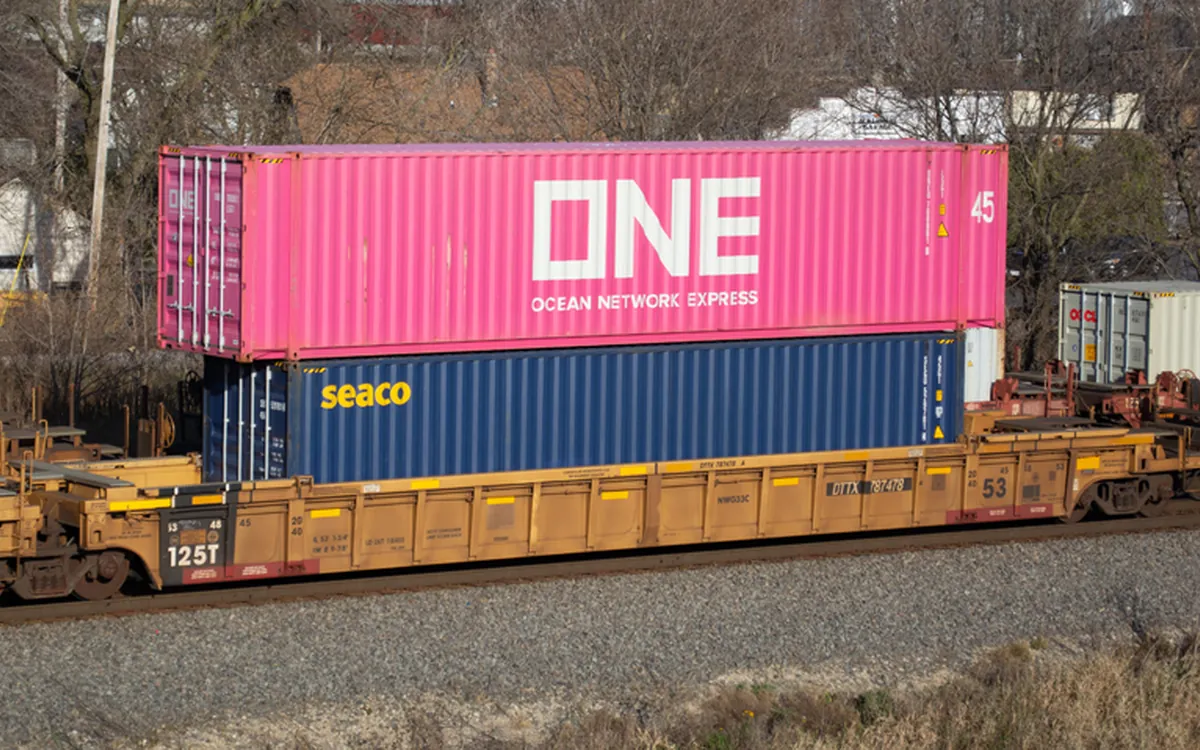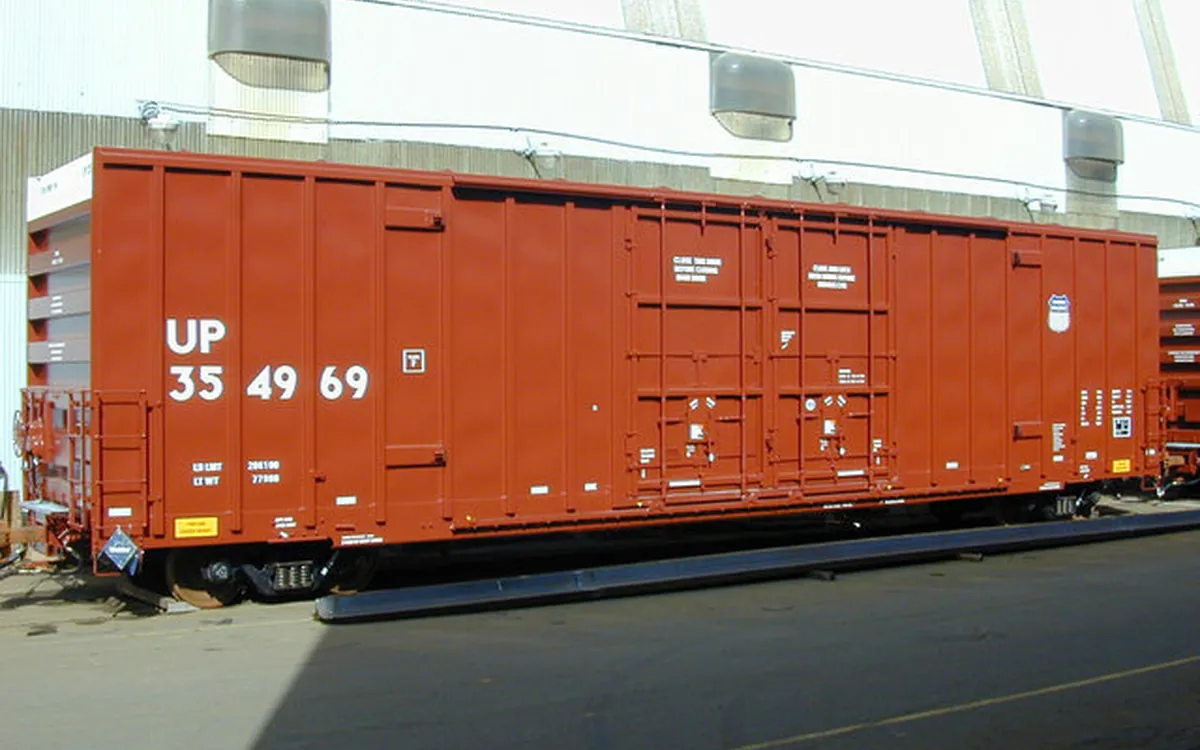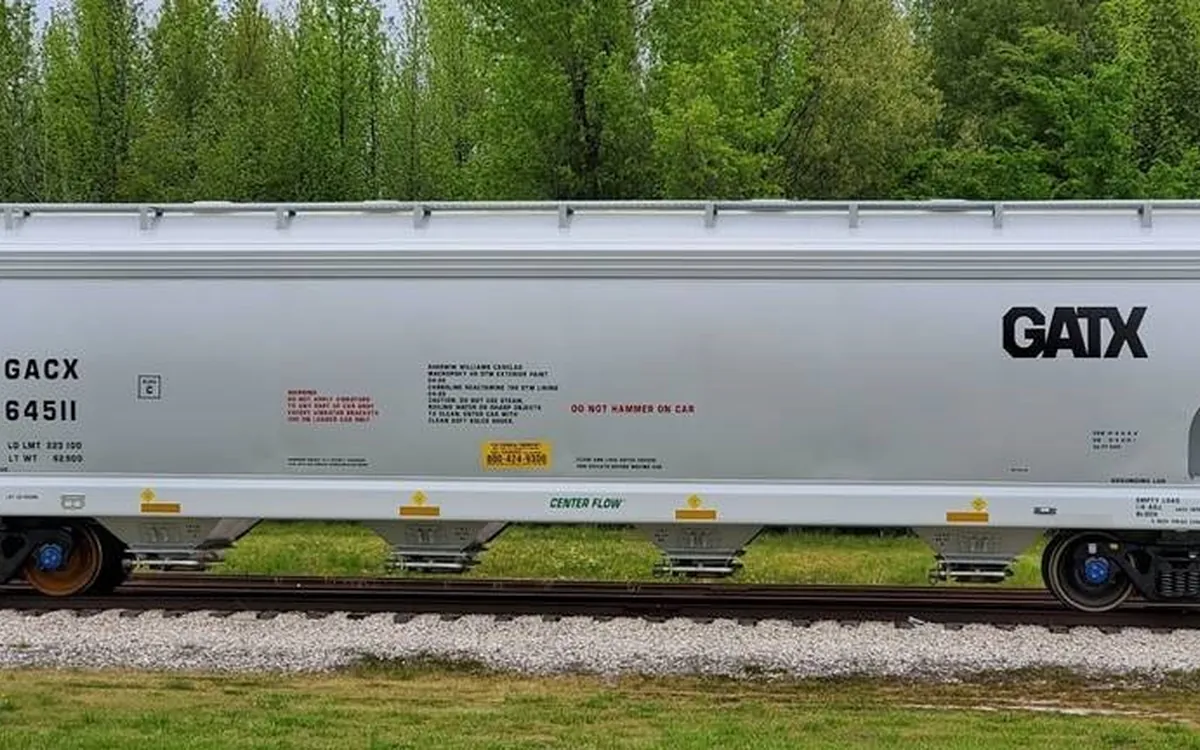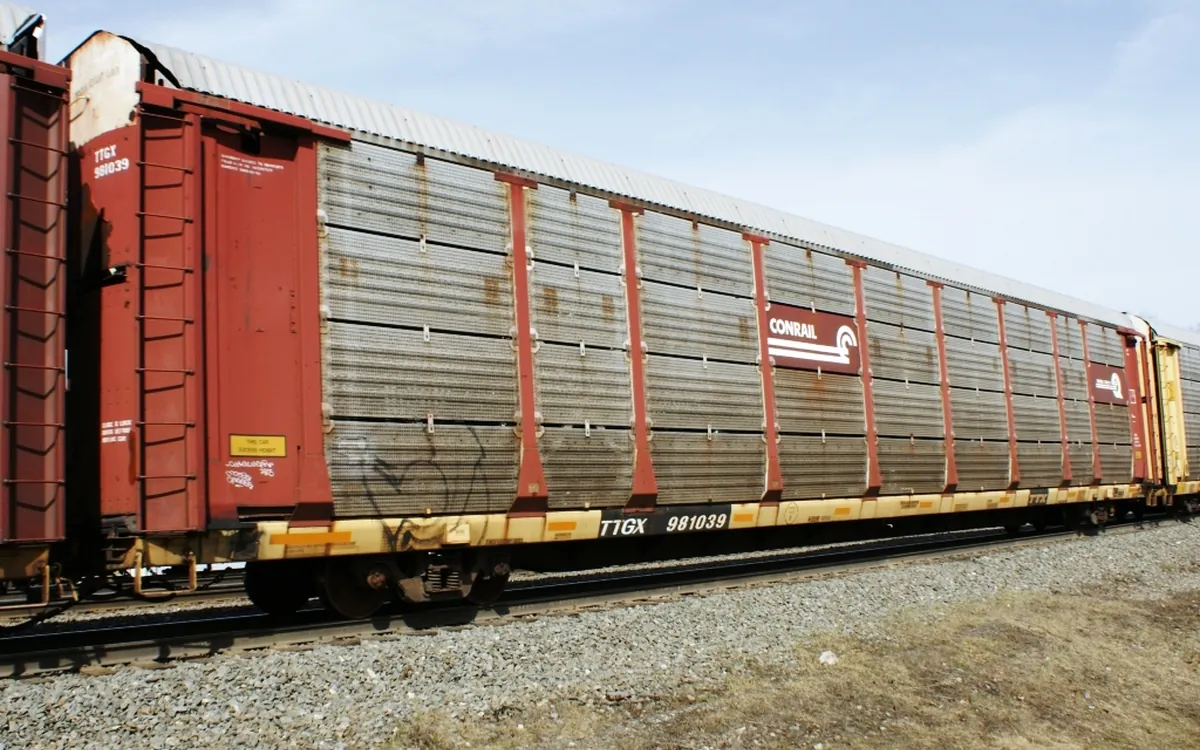





















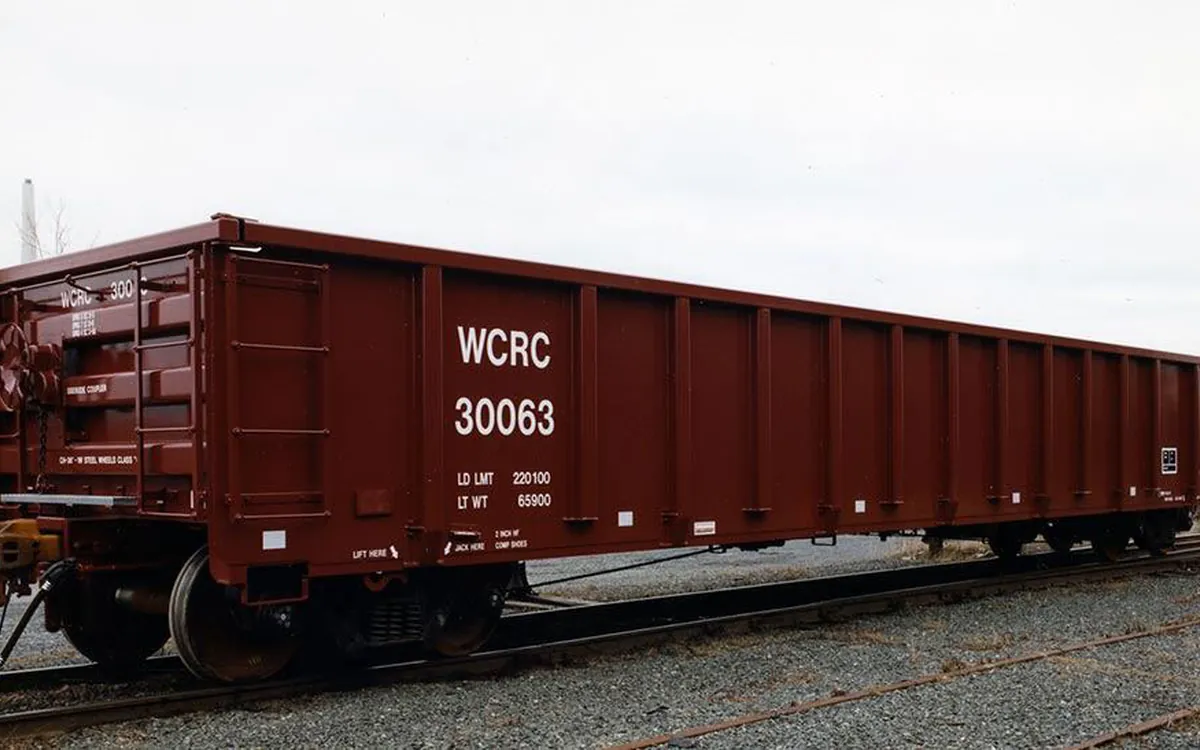
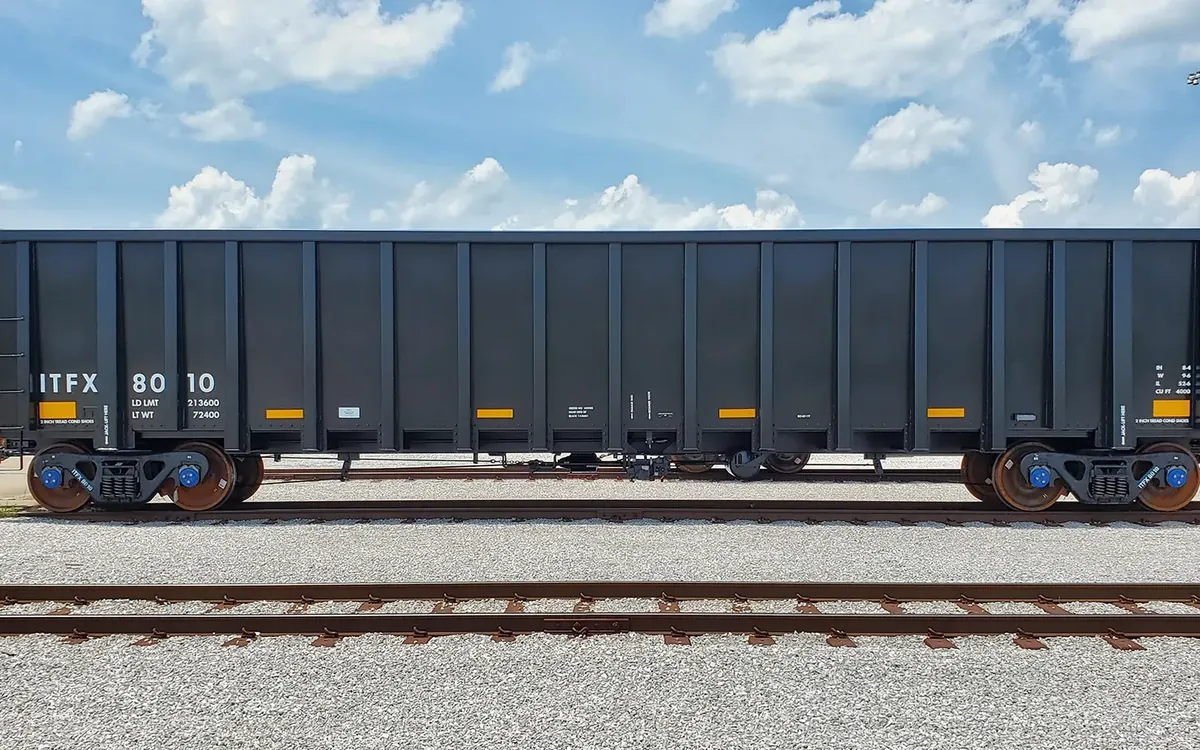
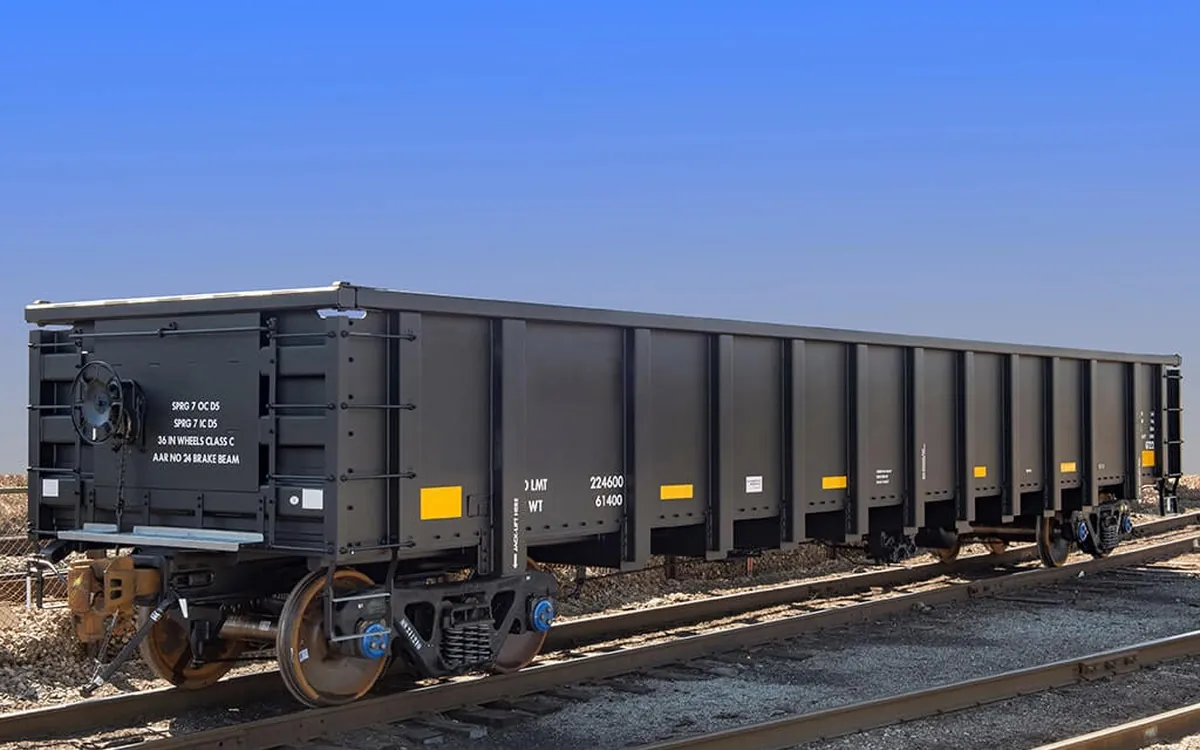
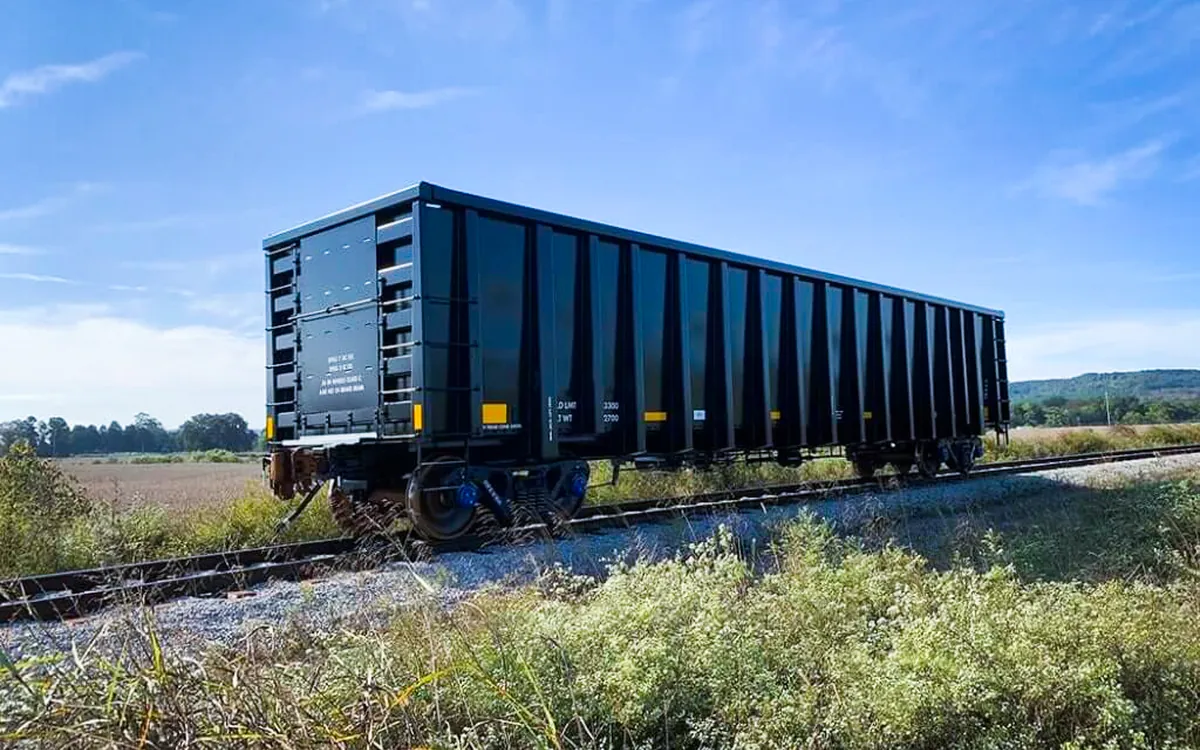
Open-top car with low side walls for loose bulk and dense loads such as steel plates, coils, scrap and prefabricated sections. The first North American gondolas of the 1830s carried coal.
What a gondola is
In North American railroad terms a gondola is an open-topped car used mainly for loose bulk materials. In the pre-container era it also carried general freight. The same terms are used in South America and in parts of Australia, such as the Pilbara mining railways.
Gondolas differ from hopper cars because they have no doors in the floor to empty the load. The European equivalent is the open high-sided wagon, UIC class E, such as the Eaos.
Loading and unloading
Low side walls make gondolas suitable for dense cargo such as steel plates or coils, and for bulky items such as prefabricated track sections. Loads go in from above by crane, magnet or loader.
Early gondolas had to be shovelled out by hand. Drop-bottom gondolas with floor hatches appeared around the 1860s. Since the 1950s and 1960s, high-sided coal gondolas have been emptied by rotary car dumpers, which clamp the car to a short piece of track and turn it upside down. Rotary couplers let a car be dumped while still coupled; a double rotary car has them at both ends.
A rotary coupler is free to turn, so a car can be dumped while it is still coupled. A double rotary car has rotary couplers at both ends and can be unloaded while it stays coupled to the cars on either side.
Sizes
The first North American gondolas of the 1830s were 30 ft or less long and carried 15 short tons or less. After the Civil War, steel sides and frames allowed cars of 40 to 50 ft, with capacity growing from around 30 to as much as 70 short tons by the early to mid 20th century.
Side height depends on the cargo: about 2 ft for dense bulk like sand, 6 ft or more for pipes, and 10 ft or more for light loads such as woodchips.
The drop-bottom gondola of around the 1860s had floor hatches that opened at the destination. Workers still had to shovel the cargo towards the hatches, so it was an improvement but still a manual process. High-sided coal gondolas only became common from the 1950s and 1960s, once stronger car bodies and rotary dumpers made them practical.
Cargo and use
Gondolas carry scrap, steel products, coal and other bulk. In the second half of the 20th century coal moved from open hoppers to high-sided gondolas, because a gondola without unloading gear holds more coal per car. Covered gondolas protect loads such as newly milled steel, and loose bulk is increasingly covered with airtight lids to reduce air pollution.
Specialised gondolas
Rotary gondolas, nicknamed bathtub gondolas for their shape, are built for rotary dumpers. Coil cars are gondolas modified for metal coils. Air-dump cars tip their whole body sideways with cylinders and carry rock or dirt for embankments; track ballast usually travels in bottom-door hoppers instead.
Choosing a gondola
Match side height to cargo density, and check how the receiver will empty the car: crane, magnet, grab or rotary dumper. For coal in unit trains, ask whether the cars have rotary couplers. For loads that must stay dry, ask for a covered gondola or coil car.
Variants
Questions shippers ask
What is the difference between a gondola and a hopper car?
A hopper has doors in the floor or sides to discharge the load. A gondola does not, so it is emptied by crane or rotary dumper.
What is the European equivalent of a gondola?
The open high-sided wagon, UIC class E, for example the Eaos.
What is a rotary dumper?
A machine that holds the car on a short section of track and turns it upside down to empty it.