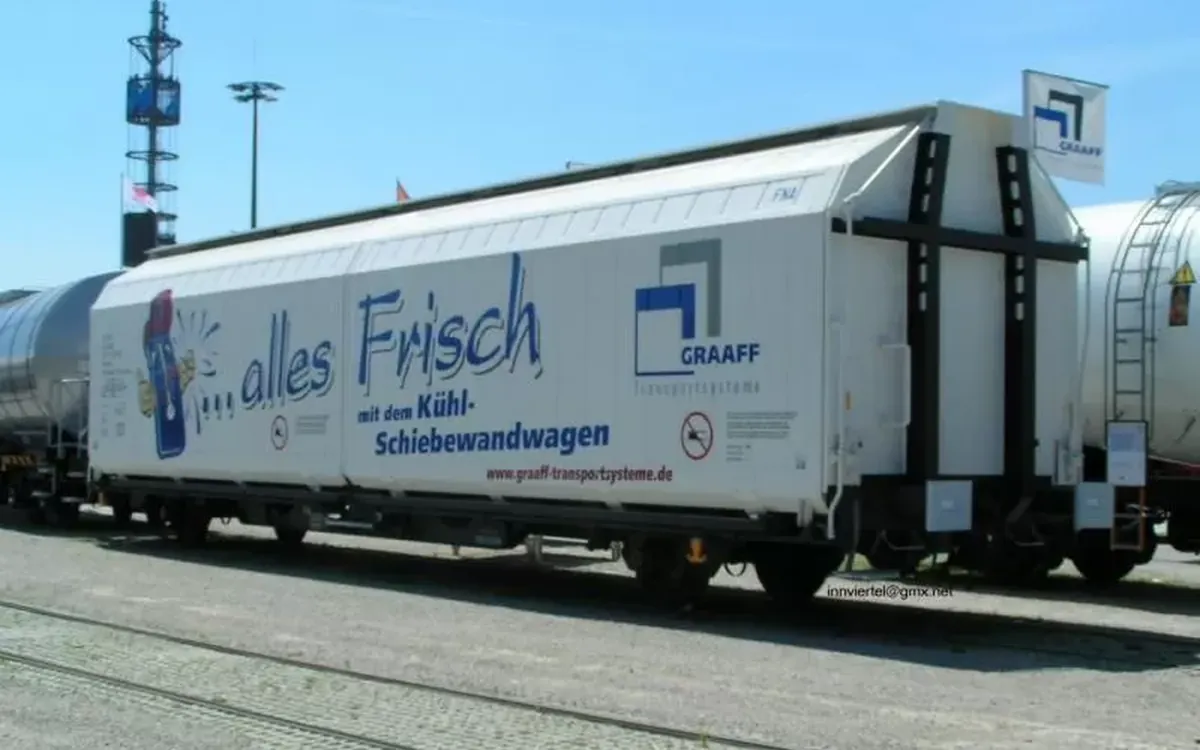
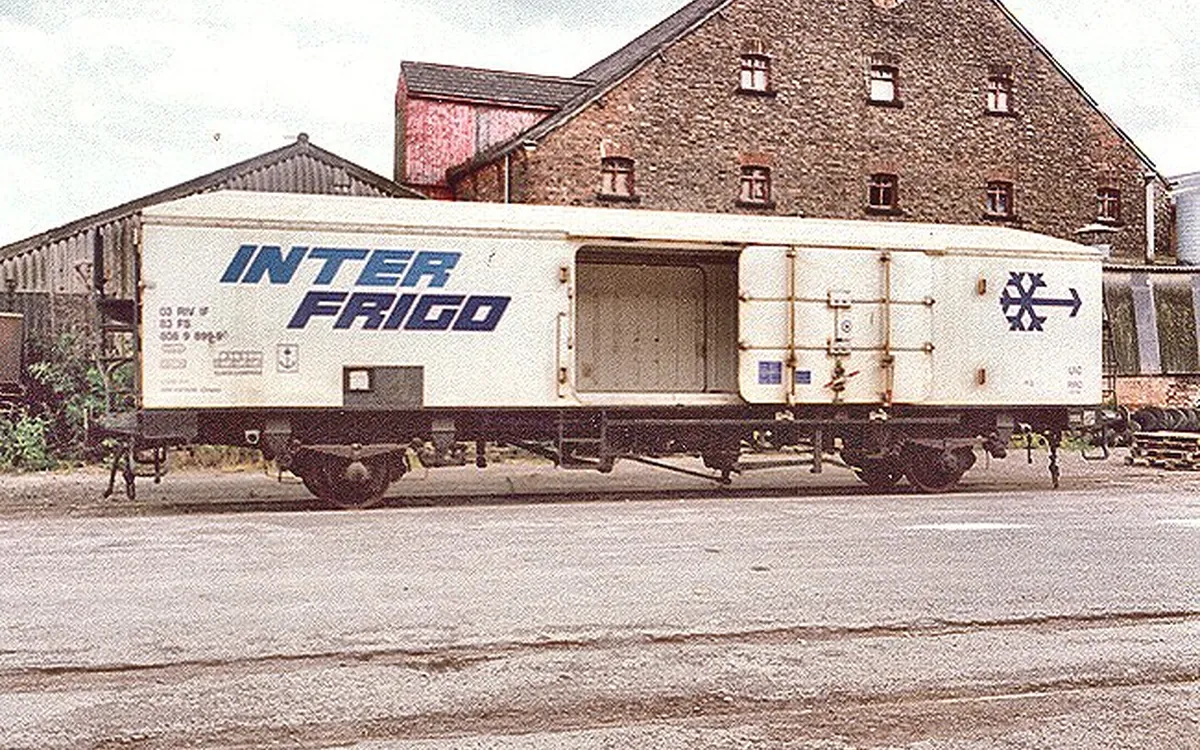
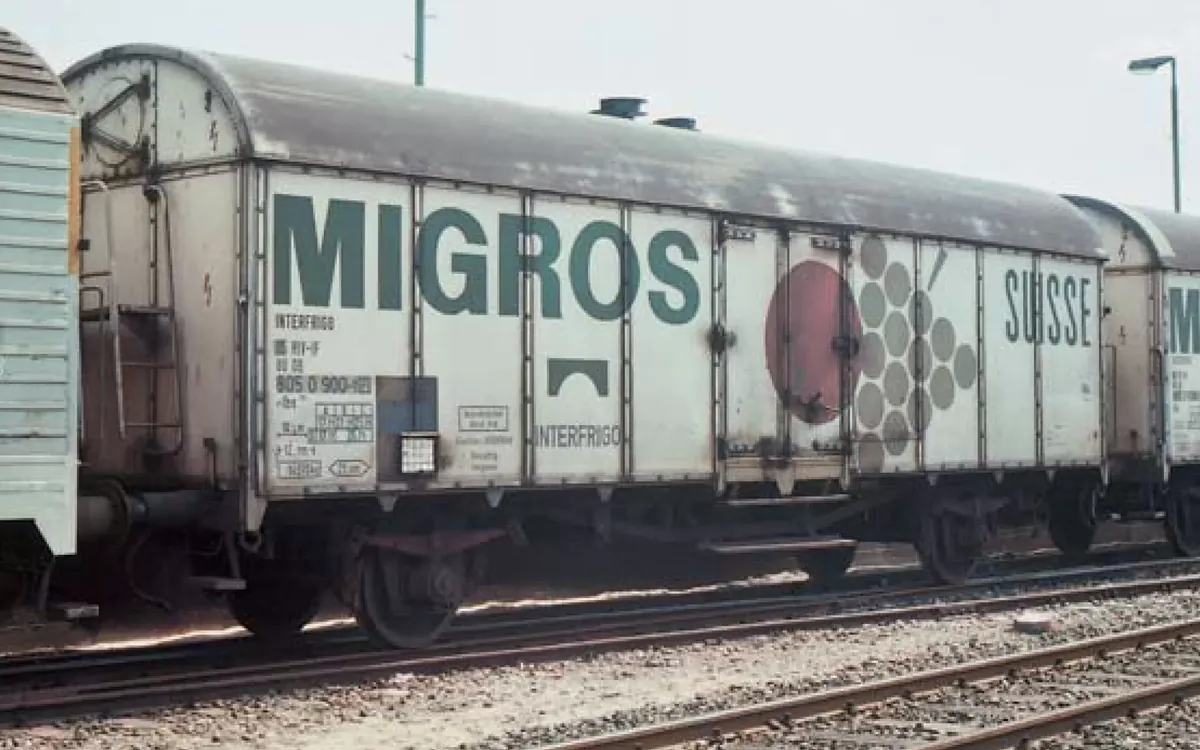
Insulated wagon, cooled by ice, liquid gas or a refrigeration unit. Deep-freeze wagons hold −10 °C or −20 °C for frozen food. Insulated sliding-wall wagons with a refrigeration unit (Hbbills-u) cover 0 to +20 °C.
What a refrigerated wagon is
A refrigerated wagon, also called an insulated or thermal wagon, has a closed box with thermal insulation. In the UIC system all such wagons belong to the special class I, with type number 8.
There are three groups: insulated wagons without cooling, wagons cooled by ice or dry ice in bunkers, and mechanical refrigerator wagons with their own cooling units. Some wagons are cooled by evaporating liquid gas.
How cooling works
Early wagons were cooled with water ice. In winter 1877 a design commissioned by the Chicago meat producer Gustavus Swift circulated air past the ice to cool the whole wagon, which made it possible to ship meat across the United States. Germany tested ice-cooled wagons from 1898 for butter.
Ice and dry ice were later joined by machine cooling. Wagons with ice bunkers spread the cold only by air circulation, so the temperature is not precise. Mechanical refrigerator wagons hold a set temperature for the whole trip, which protects the cold chain, but they are expensive to run and maintain and need a power supply.
Temperatures and capacity
Insulated wagons without coolant work between +4 °C and +16 °C for dairy, canned goods and fruit. Banana wagons with a gas evaporator hold +14.4 °C. Ice or dry-ice wagons reach +4 °C to −18 °C for meat, beer and sea fish, and deep-freeze wagons hold −10 °C or −20 °C. Mechanical wagons can be set anywhere from +20 °C to −30 °C.
The UIC standard two-axle reefers (Ibbs, Ibbgs) measure 14.02 m over buffers with an 8.0 m wheelbase and a loading length of 10.5 m or 11.0 m. Four-axle versions (Ias, Iags) measure 21.04 m or 22.24 m over buffers, with bogie centres of 15.8 m or 16.8 m and loading lengths of 16.4 to 18.0 m. Doors are 1.9 m high and 2.7 m wide.
Use today
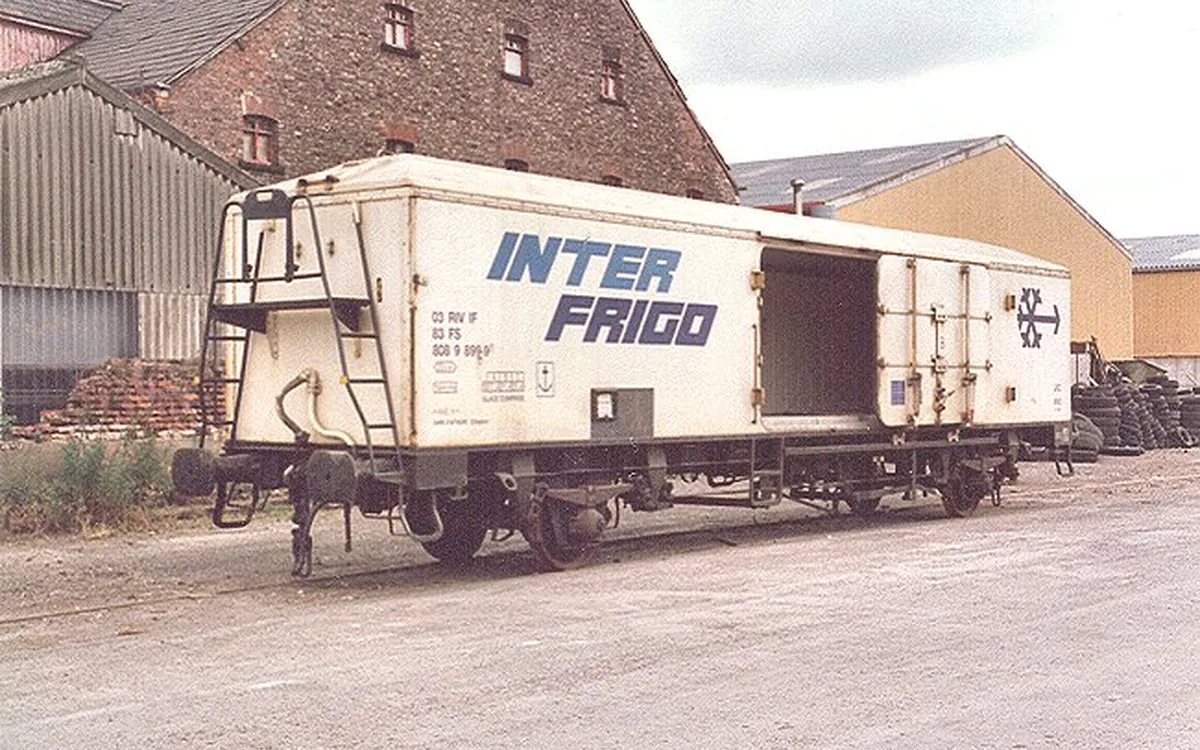
Most food traffic has moved to road or to refrigerated containers because of shorter transit times, and railway reefer fleets have shrunk. Until 2010 most European reefers were managed by Intercontainer-Interfrigo. White wagons were ordinary reefers, blue wagons with a white stripe were mechanical reefers.
In the long-distance traffic of the former Eastern Bloc countries, complete refrigerated trains run with a power car, an attendant car and several cooled wagons.
Class letters and related types
Basic class I means insulation class IN, air circulation by fan, a floor grate and ice bunkers of at least 3.5 m³. Index letters mark the differences: g for cooling equipment, gg for cooling with liquid gas, h for thick insulation, l for an insulated wagon without ice bunkers, c for meat hooks and d for sea fish. f marks the British loading gauge, as in Ibfs.
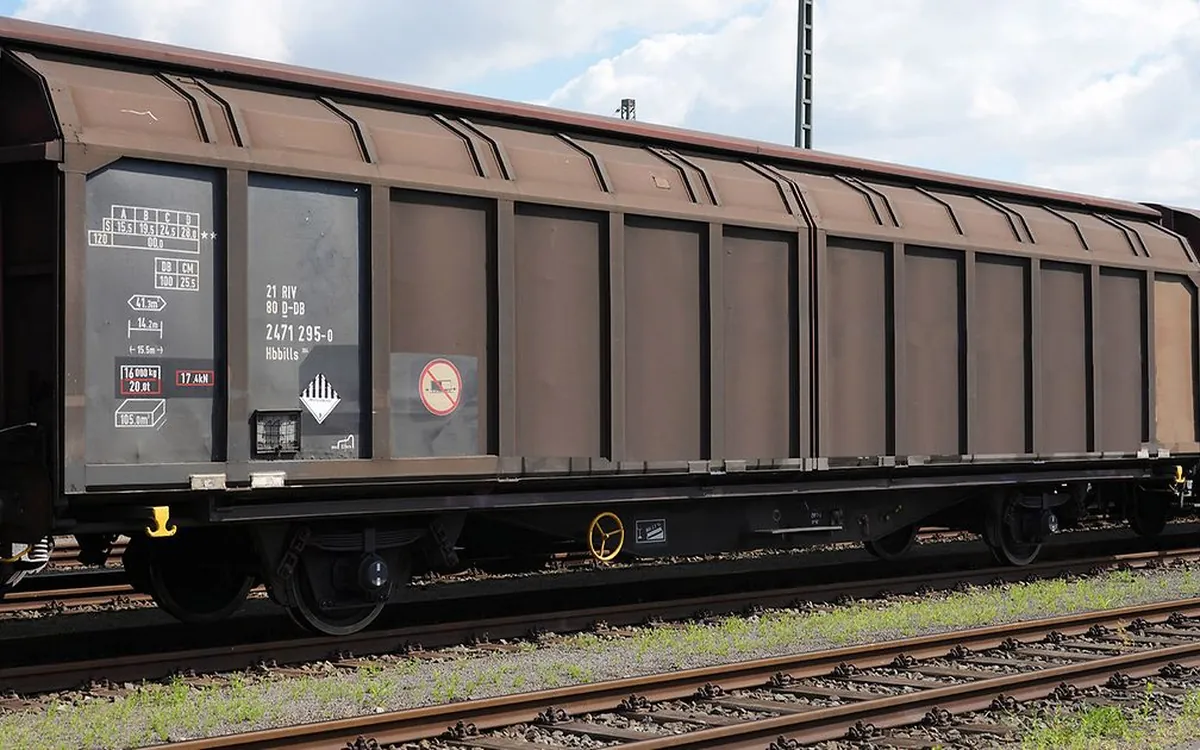
Insulated sliding-wall wagons with a refrigeration unit for 0 to +20 °C count as special covered wagons H, for example the Hbbills-u of Rail Cargo Austria and the Hbbills-uy of SBB Cargo.
Choosing a reefer
Match the cooling type to the product: insulated only for stable temperatures in mild weather, ice or dry ice for chilled meat and fish, mechanical cooling for frozen food on long routes. Check who supplies power to mechanical units and whether a refrigerated container on a container wagon is the more available option on your corridor.
Variants
Questions shippers ask
What temperature can a rail reefer hold?
It depends on the type: insulated wagons +4 to +16 °C, ice-cooled wagons +4 to −18 °C, mechanical wagons any set point from +20 to −30 °C.
What does class I mean?
I is the UIC class for refrigerated wagons. The basic form has IN insulation, fan circulation, a floor grate and ice bunkers of at least 3.5 m³.
Why are there fewer rail reefers today?
Most food traffic has moved to road or to refrigerated containers because transit times are shorter.