





















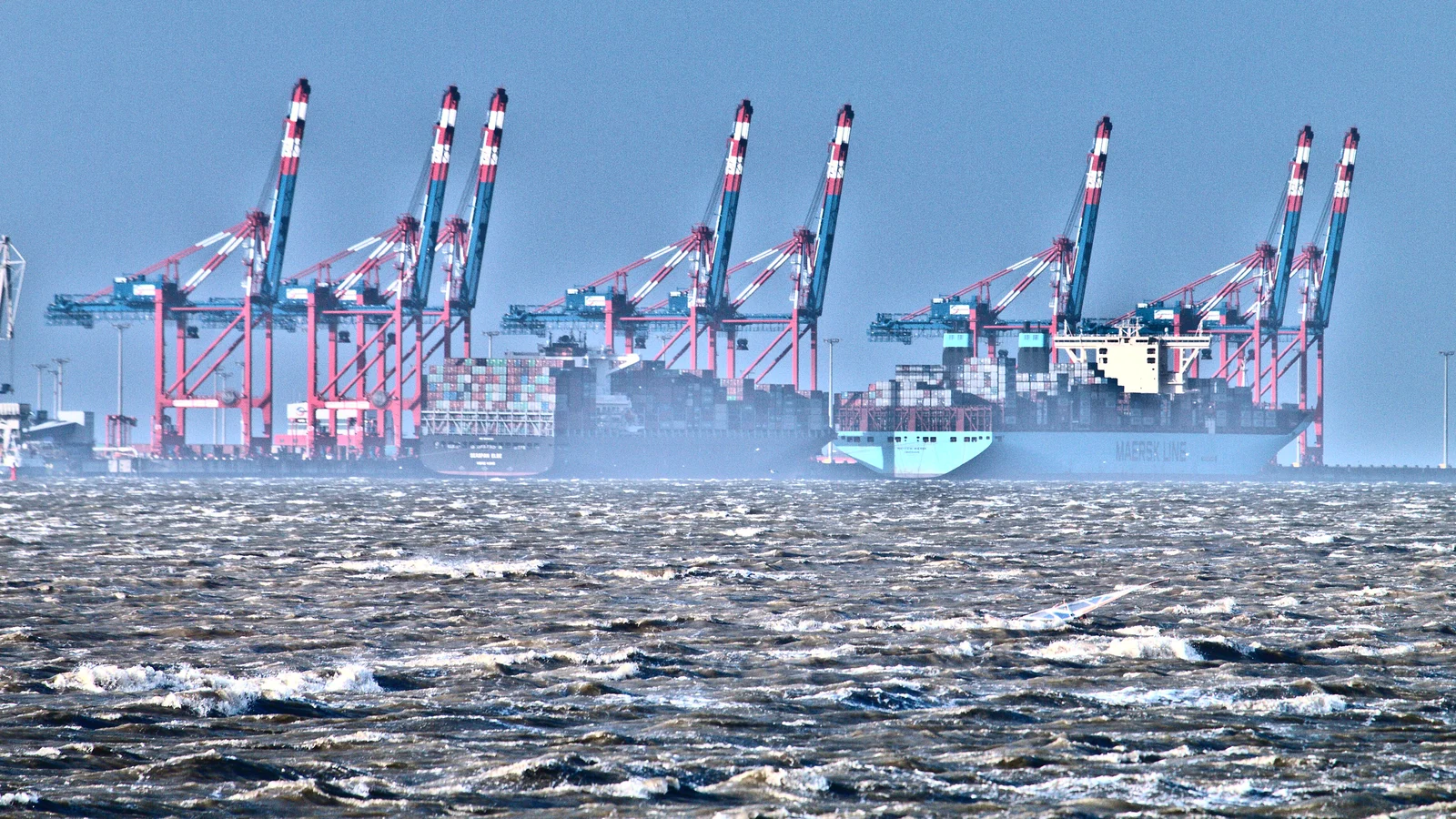
In September 2016 a woman in Australia was waiting for her wedding dress. It sat in a container on the Hanjin Milano, a ship due in Melbourne a fortnight earlier. The ship was still out in Bass Strait with about 300 containers aboard. Its owner had gone bankrupt, and the ship stayed away from port for fear of being arrested. Paul Zalai of the Freight and Trade Alliance told ABC News that nobody could say whether the cargo would come off in a day, a week or three.
Why cargo gets late at sea is rarely one big mystery. A date on a booking confirmation feels solid until the day it fails. A storm, a queue at anchor or a strike in a port nobody was watching can take it away from anyone. Some delays below start in your own paperwork. Where a case or a figure is quoted below, it links to its public source.
Port and lane numbers come from the Navo24 live shipping data and carry the week or date they were observed.
At sea, where it starts
Weather pushes the ship off course
Masters do not argue with a storm. The ship bends away from the planned course or runs for the nearest safe port, and a detour of even a day moves every date behind it. Lashings tear loose, a hull takes damage, and then repairs come before the voyage goes on. Winter makes all of this likelier.
That is the first answer to why cargo gets late at sea: the ship is already off schedule before anyone ashore knows.
Technical failure of the vessel
Engines, steering gear and generators all fail now and then. A ship that cannot move is towed to a yard, and a main engine is not fixed over a weekend. Your cargo sits on board the whole time, or is discharged and waits for another ship.
Hazards on the route
Ice, drifting objects, fishing nets, shallows and reefs all count. A grounding takes a ship out of service for as long as the salvage and the inquiry last. After a near miss the master may head for the nearest port for an inspection. Cargo then waits on board or is unloaded and sent on another ship, and that is a separate bill.
The ship is held in port
A ship can be kept at the quay by port state control, by customs, or by vets and environmental inspectors, until the deficiency is fixed. How long depends on the deficiency, and every container on board waits with the ship.
No berth available, so the ship waits at anchor
A full quay means a queue at anchor, and the queue is added straight to your transit time. In the Navo24 port congestion data, 97 ports were marked “severe” in early November 2026, though only some of them report a measured wait. At Beira (MZBEW) ships stood about 9.7 days for a berth in the week to 3 November, after 14.5 days a week before. Durban (ZADUR) stood at roughly 7.5 days in the same week. Seeing that queue before the ship arrives is half the fight, and container tracking shows port congestion next to the ETA.
A missed feeder connection
Transshipment puts one box on two schedules. If ship one runs late, ship two leaves without it, and the next sailing could be days off. Before booking, ask the carrier where the box changes ships and how often that second leg runs in point-to-point schedules. After that, take tracking updates by webhook, so a late first leg reaches your team as a changed ETA and does not wait for the next manual check.
Equipment failure in the port
Cranes break. So do gate systems and terminal software. You cannot influence any of it. What you can do is read your cargo insurance and ask whether it pays for delay or only for damage.
Customs holds the box on the way
Customs checks the paperwork at the port of export and at the port of import. A box with a wrong or missing document can be held until someone fixes it. Remember that customs release is not carrier release. Meanwhile the ship sails on, and the box leaves later. A box that sits at the terminal also starts a demurrage clock. Thanks to the carrier’s published free time and the days left on each container, someone can act before the invoice does.
A conflict sends ships the long way round
In January 2024 Maersk said it would divert all its vessels on Red Sea routes around the Cape of Good Hope “for the foreseeable future”. Reuters said the longer route can add about 10 days to journey times, and Hapag-Lloyd put the delay at between one and three weeks, depending on the area. The longer route also takes more fuel and crew time, which is why it showed up in freight rates as well as in transit times.
Loading, rescue and crew
Weather during loading
In a typhoon or a hard wind the terminal cranes stop, even if the sea looks calm. Containers stay in the yard until the work starts again. The ship may sail with part of its planned load, and your box is one of those left behind.
The ship joins a rescue
Under SOLAS Regulation V/33 a master who is in a position to help must, barring special circumstances, proceed to people in distress at sea with all speed. Your cargo arrives late by as long as the detour took. Can any schedule be built around a rescue? Hardly, since nobody can plan for one.
A crew member needs urgent help
A medical case on board can mean a deviation to the nearest port. The ship lands the patient, completes the port formalities and sails again. The time lost is small for one ship, but on a tight rotation it passes down the line to every later port.
Bankruptcy of a carrier or owner
When a carrier stops paying, ports can refuse its ships and creditors can seize them. Hanjin Shipping filed for receivership in 2016, and on 8 September the BBC put the cargo stranded on its vessels worldwide at $14bn, with ports refusing to take them unless port fees were guaranteed. Ships full of other people’s boxes sat offshore while shippers looked for a way to get them unloaded.
That is the wedding dress story from the top of this article: the cargo was fine, and the owner of the ship was the problem. Would you want to be the forwarder who has to explain that to a client?
Criminal cases on board
If a crew member is caught smuggling or commits another offence, the authorities can detain the ship during the investigation. It stays at the quay as long as the case needs, and so does everyone else’s cargo on board.
Piracy
A hijacked ship is held until the pirates release it. For the cargo on board that can mean weeks. Even ships that are not attacked may take a different route to stay away from the danger zone.
Pollution of port water
A fuel or oil spill from any ship, large or small, can mean arrest and a stop to work in that part of the port. Clean-up comes first. The ship at fault is held for the investigation and the fine, and the berths around the spill lose working time, so ships in the queue wait whether they caused it or not.
Stability problems
According to Maritime NZ, wrong container weights can collapse stacks, overstress the hull and make a ship unstable. Stowage is planned from declared weights. A wrong figure in a booking is therefore more than a clerical slip, and in our view it is a reason a box can be held back. If you load the container yourself, the load planner works with the centre of gravity, axle and floor limits of the load.
A container fire can stop a whole ship
One box can stop a whole ship. The Yantian Express, on its way from Colombo to Halifax, had a fire in one deck container on 3 January 2019. The fire burned for about three weeks. In the end the ship was towed to the Bahamas. The investigation, as CBC reported, found that the fire may have started when coconut charcoal, in a container mislabelled as coconut pellets, ignited by itself. The ship had been due in Halifax on 4 January.
A container with no verified weight
Since 1 July 2016 SOLAS has required a verified gross mass before a container goes on board. The rule is blunt: “A container must not be loaded if it does not have a VGM”. The shipper provides the number. If it is missing when the terminal closes the box for the ship, the box stays on the quay, and a VGM mismatch can bump a box just the same.
Schedules, ports, canals and rivers
Weekends and holidays
Some ports and customs offices close on Sundays and public holidays. A box that lands on Friday evening may sit until Monday before anyone can release it.
Blank sailings
Golden Week 2025 came with 544,000 TEU of extra cancelled capacity on the Transpacific and Asia-Europe trades, per Sea-Intelligence, although total cuts stayed near the historical norm. If yours was among the cancelled sailings, the box waits for a later ship.
Canals and straits
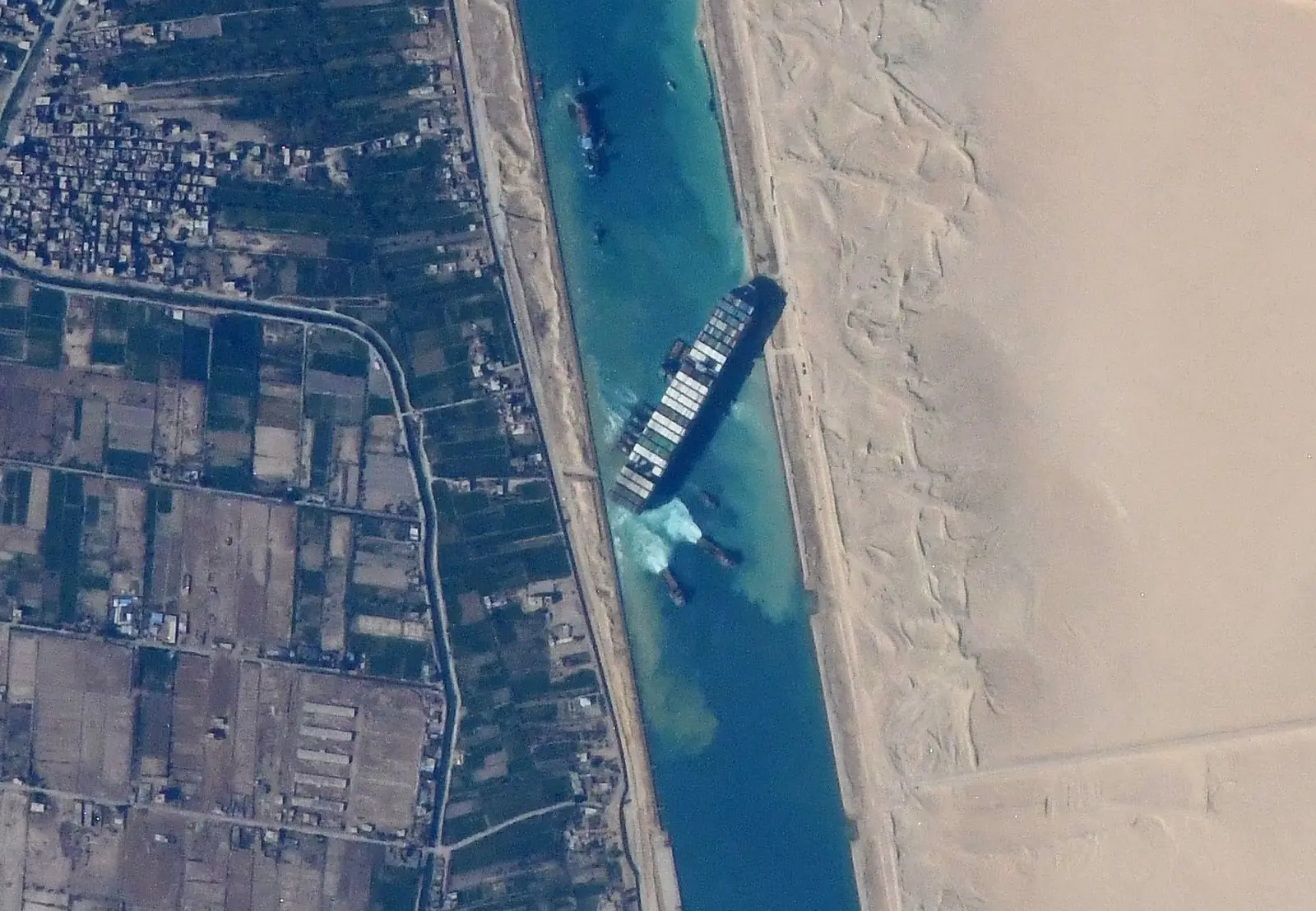
World shipping has only a handful of chokepoints. Block one and everything behind it stops. Six days of standstill began on 23 March 2021, when the Ever Given went aground in the Suez Canal. The stern was refloated on 29 March, according to the final investigation report. Ships behind it waited, or turned around and took the long way.
Chinese New Year
Maersk says the effect of Chinese New Year on logistics starts well before the holiday and can last up to six weeks. Factories typically cut output 2 to 3 weeks before it and may not resume full capacity until mid-March, according to Maersk’s 2026 guide. Goods are late leaving the factory, which means they are late on the ship too.
Strikes
The ILA dockworkers’ strike at US East Coast ports in October 2024 lasted just three days, and the workers were back on 4 October. Sea-Intelligence said it would take some time to clear the backlog of vessels and containers, and that the impact was likely to be closer to a week of capacity loss. A short stoppage still leaves a queue of ships behind it.
Overbooking and rolling
A confirmed booking is not a guarantee. The line can still leave your container on the quay and roll it to the next ship, for example because the vessel is full. Which carrier on your lane runs late most often? Ratings built on observed arrivals show each carrier’s record. Check who runs late before you pick a sailing.
A shortage of empty containers
In January 2021 companies waited weeks for containers and paid premium rates to get them. Resilience360 put spot rates from Asia to North Europe 264% above the year before in December. Without an empty box the cargo does not leave the warehouse.
A cyberattack on a terminal
On 10 November 2023 DP World Australia found unauthorised access to its corporate network and cut it off from the internet to contain it. Land-side port operations were affected. They restarted on 13 November, and the backlog of 30,137 containers was cleared by 20 November. What the IMO and the Coast Guard ask operators to do about attacks like this is in our piece on maritime cybersecurity.
Low water on the river
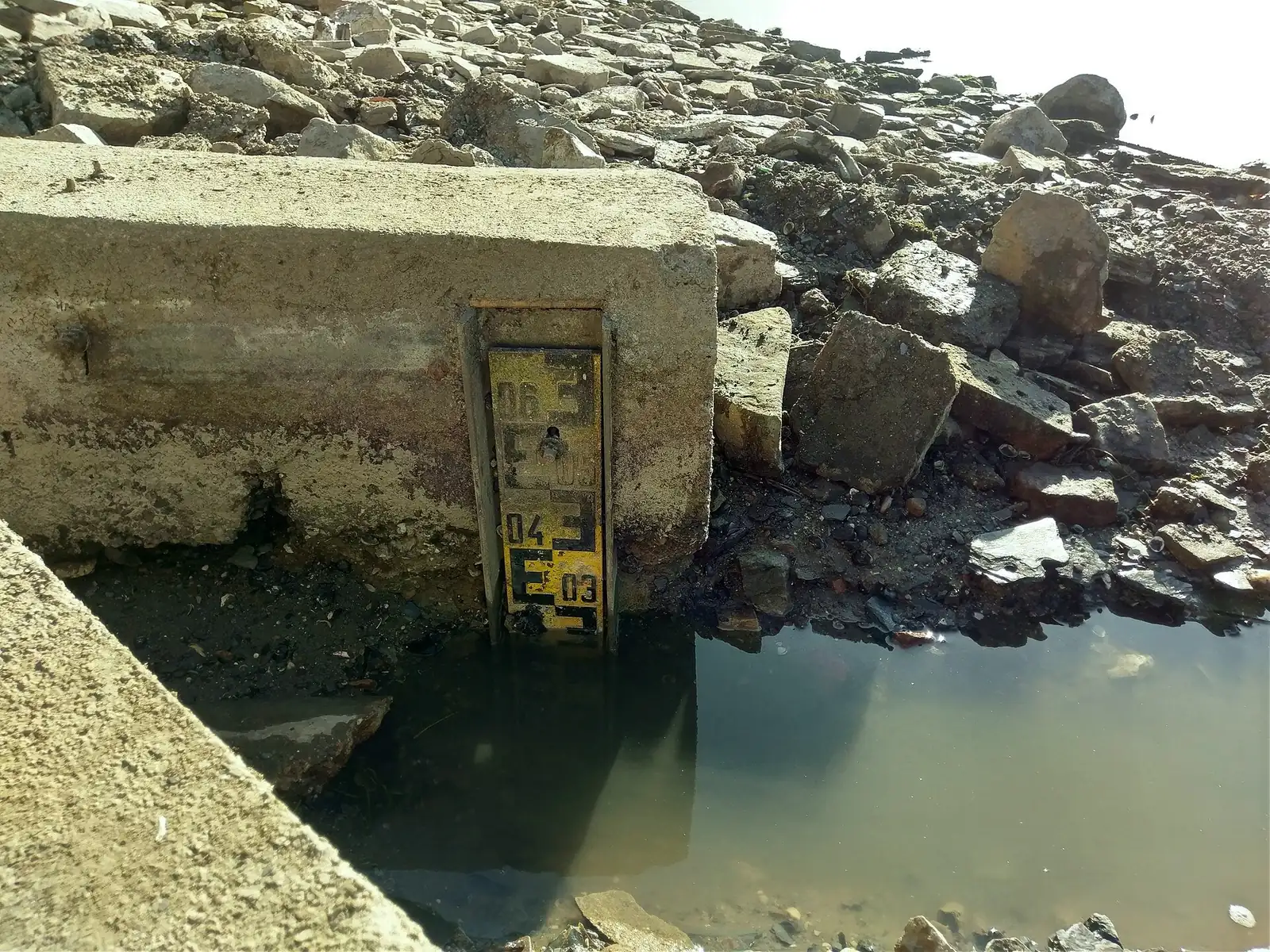
Not every leg is by sea. In August 2022 the Rhine gauge at Kaub fell to 37 cm, where about 41 cm is needed to operate at reduced loads. The Loadstar reported the river closed to barge traffic for the first time in four years. Many barge operators were running at 20% capacity. Contargo raised its low water surcharges to €589 per 20ft box and €775 per 40ft for levels below 50 cm, figures that The Loadstar quoted a source calling “nuts”.
One lane, measured
Of everything above, carrier reliability is one you can measure before you book. On Shanghai to Rotterdam (CNSHA to NLRTM), the Navo24 reliability API returned 10 carriers in early November 2026. The minimum for a ranking is 20 observed sailings, and only two carriers on this lane reach it. OOCL has 167 observed sailings, and 49.7% of them arrived on time, with an average delay of 38.3 hours. CMA CGM has 21 observed sailings, barely above the minimum sample: 4.8% on time, 179 hours late on average. The method behind these figures is described in the on-time carrier ranking.
What you can still change
You will not stop a typhoon. What you can change is how late you hear about it. Too often the first sign is a call from the consignee, days after the line knew. Read the carrier’s observed delay before you book, and check the box’s weight before it is packed.
Frequently asked questions
What is the most common reason for cargo delays at sea?
Port congestion and missed connections at transshipment ports are the most common in practice. On 7 November 2026 our API flagged eight ports at severe waiting level, with Beira at about 9.7 days for a berth.
How long can a storm delay a container ship?
A detour adds hours, sheltering in a port adds days. Damage from the storm can add weeks if repairs are needed.
What is container rolling?
Rolling means the line leaves your container behind after the booking was confirmed and moves it to a later ship, usually because the vessel is full.
How can I reduce the risk of a delayed shipment?
Choose a carrier with a good on-time record on your lane, avoid peak weeks, ask for the vessel name and check the port's berth wait, and insure the cargo including delay.