





















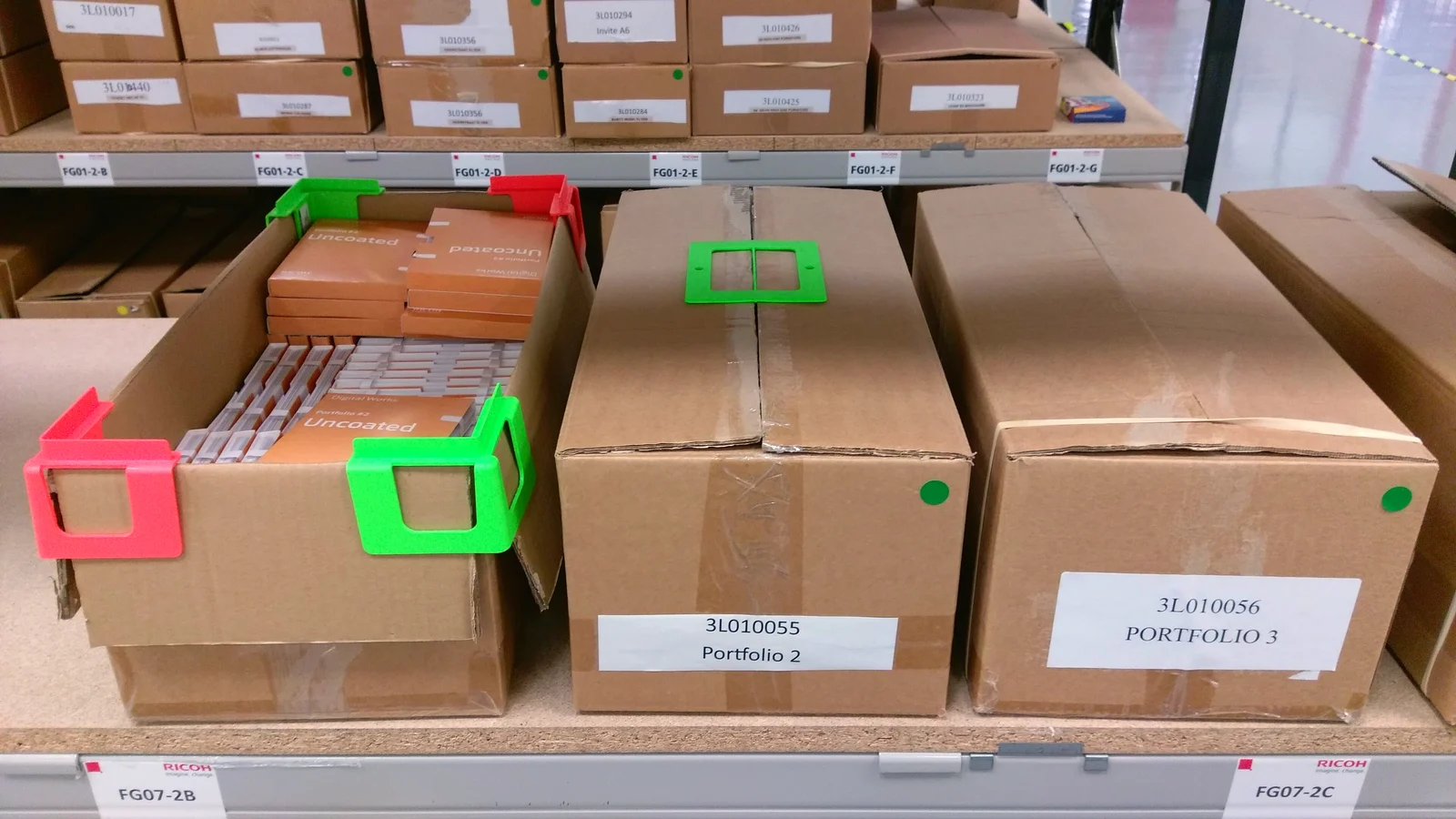
A seller who imports goods in a carton and ships them to customers in that same carton pays for it twice: once by the container, then by the parcel. Pack one 10 kg product in a large carton and the parcel formula says 44 pounds. Pack it in a small one and it says 21. The scale reads 22 either way, if the product fits both. The FedEx Service Guide 2026 puts the rule in one line: length times width times height, divided by 139.
How dimensional weight shipping is billed
The guide gives the volume of each package in inches, divided by 139. If that figure exceeds the actual weight, charges may be assessed on it. Any fraction of an inch rounds up to the next inch. Where the rule is applied per shipment, the guide says to work out the volume of each piece, add the volumes and divide the total by 139. FedEx applies the rule to all shipments in customer packaging and may apply it to its own packaging too. The guide’s footnote names one exception: International Deferred Freight shipments divide by 166. Reuters used the same number for the UPS ground change in December 2014.
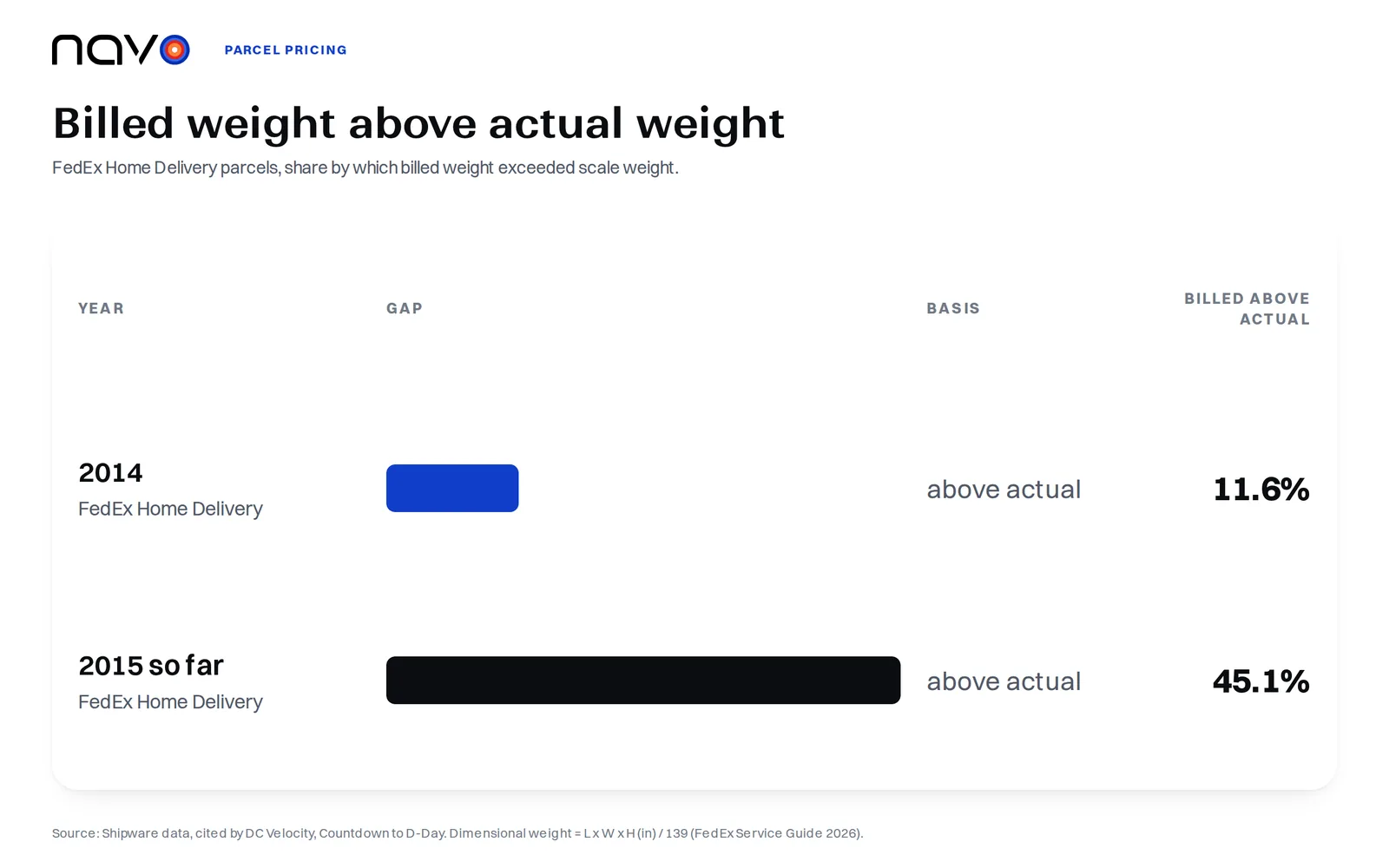
FedEx announced on 2 May 2014 that FedEx Ground would apply dimensional weight to all shipments from 1 January 2015. In September 2015 DC Velocity printed figures from the consultancy Shipware: according to Shipware data the billed weight of FedEx Home Delivery parcels ran 45.1 percent above actual weight in 2015, against 11.6 percent in 2014. At UPS ground services the gap was 16.4 percent, up from 12.8. The figures are from 2015 and show where the rule started to bite.
One 10 kg product, three cartons
On 17 November 2026 three cartons went through the Navo load planner, each holding the same product at 10 kg packed. The product is a test input, assumed to fit all three. Sizes in inches: 24 x 16 x 16, 22 x 14 x 14 and 20 x 12 x 12.
The planner filled a 20-foot container with 265, 402 and 616 cartons. Volume use went from 80.4 to 85.9 to 87.8 percent, and payload use from 9.4 to 14.2 to 21.8 percent. The smallest carton packs 2.3 times as many into the same container. That is the sea leg: an importer orders a carton size, and the planner says how many fit a 20GP. The parcel leg follows when the customer’s order leaves the warehouse in the same carton, and there the formula below sets the bill.
Dimensional weight shipping can turn the same three cartons into three different bills. The large carton is 6,144 cubic inches, and 6,144 divided by 139 is 44.2 pounds. The middle one gives 31.0, the small one 20.7. The scale reads 22.05 pounds for all three. Where dimensional weight applies, the large carton can be billed on volume at 2.0 times what the scale says, and the middle one at 1.4 times. Only the small carton bills on the scale.
Cutting the volume figure carton by carton
Dimensional weight shipping starts with the scale. Weigh the packed carton and convert kilograms to pounds, because the 139 divisor works in inches and pounds: multiply by 2.2046. Then measure the outside of the carton and round each side up to the next whole inch, as the guide does. Multiply the three sides, divide by 139 and compare the result with the scale. If the rule is applied per shipment, add the volumes of the cartons first and divide the total once.
Take two inches off each side and run the sum again. In the test, going from 24 x 16 x 16 to 22 x 14 x 14 cut the volume figure from 44.2 to 31.0 pounds, almost 30 percent. Pack the product first, then measure. The guide says dimensions can change in transit and FedEx may adjust the charge at any time, so measure the carton as it is taped, not as it was designed.
Before ordering the next print run of cartons, list your five best-selling products and the smallest carton each one fits with filler removed. Run both legs on that list: the planner for the container count, and length times width times height divided by 139, or by the divisor in your contract, for the parcel.
Frequently asked questions
When did the dimensional weight divisor drop from 194 to 166?
DC Velocity quotes Steiner, who spent 17 years at UPS including global pricing, saying the carriers cut their divisors to 166 from 194 in 2011. That cut applied to all shipments except ground parcels under three cubic feet.
Did UPS use dimensional weight for small ground parcels?
Reuters reported on 29 December 2014 that UPS would no longer charge U.S. ground packages under 3 cubic feet by weight alone but by their dimensional weight, starting Monday.
Which divisor applies to a contract account?
The FedEx Service Guide 2026 publishes 139 as the general formula. DC Velocity quotes Martinez of Shipware saying some larger shippers were given a higher divisor in their contracts, so ask your account manager which one your agreement uses.