





















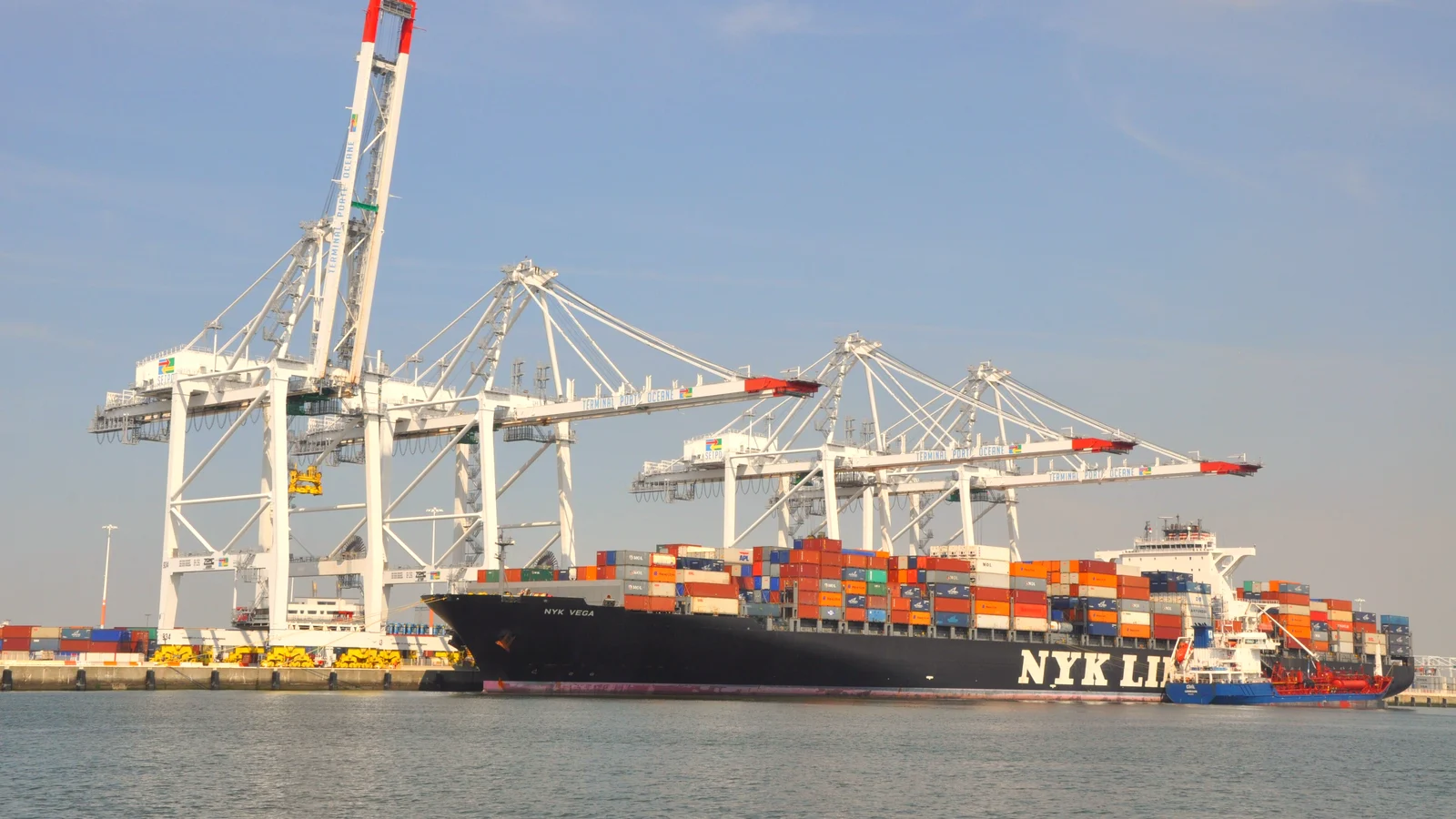
On the morning of 30 October, AFP found no trucks at either of the two gates of the port of Le Havre. François Brisot, who leads the CGT’s port workers there, told the agency that nothing was being loaded or unloaded.
The French port strike called for Tuesday 17 November is the third in eighteen days. The CGT’s national ports and docks federation has asked dockers and port staff to stop for 24 hours, and Le Marin reports that most French ports are expected to come to a standstill.
Empty gates, and a smaller count from the port authority
Haropa Port, which runs Le Havre and Rouen, gave AFP a different picture on the same day, 30 October: one cruise call cancelled and eight calls delayed at Le Havre, France’s largest container port. Brisot described the gates, and Haropa described vessel calls.
The 30 October French port strike was uneven. At Dunkirk the container terminal worked while the bulk, liquid and fuel terminals did not. According to AFP’s report, the container terminal there was untouched, and the bulk, liquid and fuel terminals were, in the words of Ludovic Dewynter of the CGT in Dunkirk, “totalement bloqués” (totally blocked).
Tony Hautbois, the general secretary of the CGT dockers, had predicted a 95% standstill. The union speaks for 95% of dockers and 87.5% of all port handling staff nationally.
Who is stopping on Tuesday, and why
The call began as a public-sector pay dispute. Six civil-service unions started it, and CGT leader Sophie Binet then asked for walkouts across the private sector too. At the Grand Port Maritime de Nantes-Saint-Nazaire, Kuehne+Nagel’s alert says, dockers are called out over pay, working conditions and the handling of military cargo, and the effect at each terminal depends on local talks.
The 13 November talks did not settle it. After meeting Prime Minister Sébastien Lecornu, the public-sector unions called it “une réunion pour rien”, as Ouest-France put it, and its public-service branch of the CFDT, one of the unions that had waited for the outcome, joined the call.
Three calls in eighteen days
| Date | What happened or is called | Reported by |
|---|---|---|
| 30 October | 24-hour stoppage at French ports; about 14,000 port workers, 7,500 of them dockers, were called out | AFP, Le Marin |
| 5 November | 24-hour stoppage in the national day of action | Le Marin |
| 17 November | Third 24-hour call from the ports federation | Le Marin |
CGT-Transports has called a week of action from 16 to 20 November across logistics, buses, taxis and airports, and an existing rail strike notice runs from 8 October to 15 December, according to Kuehne+Nagel. A box that clears the quay on Tuesday still has to leave by road or rail. A rail strike notice is in force, which is a legal option to strike and not a confirmed stoppage.
The backlog from the earlier strikes has not cleared either. The Wine and Spirits Shippers Association wrote on 13 November that all French port terminals are expected to be closed on the 17th, with no gate-in or gate-out, and that carriers will need to issue revised instructions where cut-off dates and times change. The same note says the French customs system outage was repaired on 6 November, flows are slowly returning to normal, and some backlog from the earlier port strikes remains.
What to settle with the carrier before Monday
Cut-offs come first. Wait for the carrier’s revised notice for each sailing, and book road slots around the whole 16-20 November window, since Tuesday may not be the only lost day.
Then the clock. A day of closed gates can push a full container past its free time. Forwarder News notes that some carriers extend free time for strike days if asked in writing, so check the demurrage and detention terms on each live booking and ask before the invoice arrives.
Last, early December. The ports federation has called three stoppages since 30 October, and the rail notice runs to 15 December. A French routing quoted for early December is worth pricing with a second option through Antwerp-Bruges or Rotterdam.