





















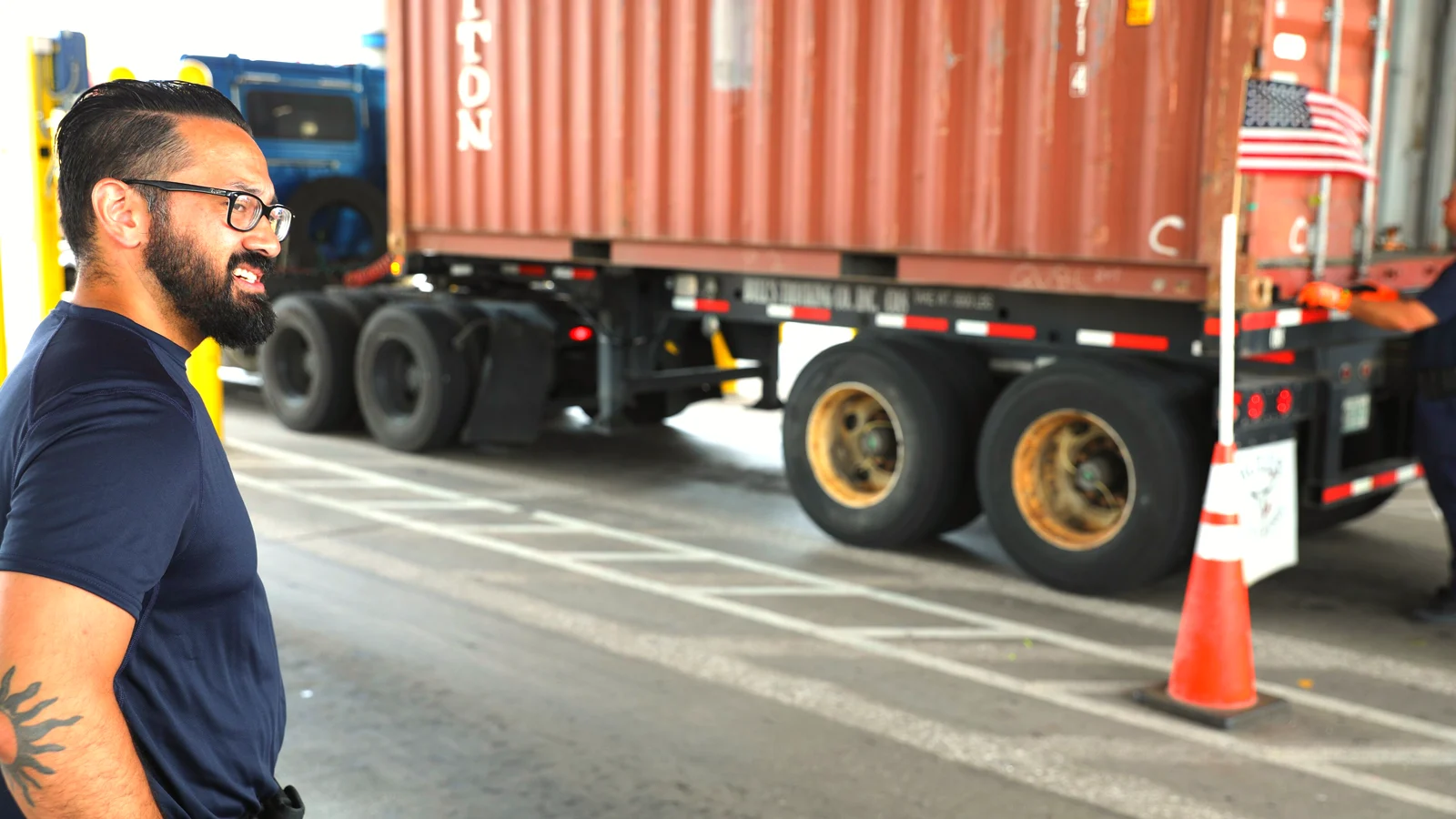
Under Australia’s shipping container cleanliness standards, a container has to be free of biosecurity risk material inside and out, and DAFF requires treatment of a contaminated box at the importer’s expense. New Zealand sends sea containers through a transitional facility for inspection, and a 2024 Auckland case shows what happens when that step is skipped.
Australian DAFF shipping container cleanliness standards
The Department of Agriculture, Fisheries and Forestry (DAFF) says the interior and exterior of a container must be free of any biosecurity risk material. It lists some of the most significant risks: Giant African Snail, soil, plant material such as grain, which can carry khapra beetle, and animal products.
Where a container comes from decides how closely it is read. For countries on its Country Action List (CAL), the department inspects the external surfaces of every sea freight container originating from CAL countries with the snail, and requires the interior of boxes from snail target areas to be free of it. Empty CAL containers get an internal inspection too, by a biosecurity officer at the wharf or, where the port has an empty container park approved arrangement, at that park after the external inspection.
DAFF states that thorough cleaning of the interior before loading and of the exterior before shipment can alleviate the need for treatment on arrival, and that thorough internal and external cleaning of empty containers is a valid alternative to methyl bromide fumigation. Any contaminated container or cargo detected entering Australia needs treatment at the importer’s expense before release. A box bound for a rural unpacking address, unless it is hard-frozen, faces a rural tailgate inspection, and the paperwork shown there can include packing and cleanliness declarations.
Cleaning at the port of loading also has a voluntary route, aimed at containers from CAL countries. The Sea Container Hygiene System works like this: participating sites clean and treat containers externally with an insecticide at the port of loading. Onshore inspections for participants can fall to as low as five per cent, a performance-based benefit DAFF says reduces inspection, cleaning and treatment fees and dwell time on the wharf.
New Zealand: the Auslink case and the transitional facility check
MPI says that under New Zealand’s Biosecurity Act all sea containers arriving must be sent from the port of first arrival to an MPI Approved Transitional Facility for inspection and unpacking. Auslink International New Zealand Limited ran such a facility and was contracted to do the checks on fifteen sea containers between December 2021 and April 2022.
MPI’s investigators found that none of the required checks had been done in full. Thirteen of the fifteen boxes went on to what the director of investigations, Gary Orr, described as a grass paddock on a farm that could never be approved. A container that has not had complete checks and is placed on grass risks exotic pests getting into soil or vegetation, MPI says. It later confirmed that no exotic pests were found in or on the fifteen containers.
On 11 June 2024 the Manukau District Court sentenced Auslink and its manager, Christopher James Manning, on eight charges each under the Biosecurity Act. Auslink was fined $16,250 and Manning $12,000 (New Zealand dollars). The charges were the missing checks and delivery to unapproved locations.
Silent holds in container tracking data
A tracker records events, and the flag below comes from the gap since the last one. On 16 November 2026 a query of Navo’s container tracking API for one account, a list of 1,500 containers, returned 20 with an Australian destination, twelve of them for Melbourne. One, a T.S. Lines box from Nansha, was discharged on 9 November with Melbourne as its destination, and it carried the API’s own flag, inferred_silent_hold, labelled “Possible customs delay”. The flag is an inference that a box discharged three or more days ago and not yet released for pickup may be held. Nothing in the data says whether biosecurity is the reason.
The action attached to the flag is to ask the carrier for the availability status and to ask the customs broker whether any holds are pending. DAFF warns that third-party systems do not carry its CAL cargo impediment details and should not be relied on to decide when to collect from the wharf. The data cannot say whether the box is waiting on a biosecurity check or on something else. The record shows seven days after discharge with nothing newer than the discharge event.
Frequently asked questions
What happens to an empty container found contaminated in Australia?
Empty containers are inspected by the department or a biosecurity industry participant at an empty container Approved Arrangement site. If contamination is found, the container has to be cleaned or treated by an approved method before it can be delivered or used to pack export product.
What has to be true before a full container is released from an Australian wharf?
Among the conditions DAFF lists for release from the wharf are an exterior free of soil, animal and plant material, goods, packaging and interior free of biosecurity risk material, timber packaging that meets the treatment and bark requirements, and no prohibited packaging. Release also depends on the goods not being subject to further biosecurity intervention.
Does the timber in a container's own floor and frame have to be treated for Australia?
Exposed timber used in the construction of a container must be free of active infestation and should be permanently treated. Timber that is permanently and totally encapsulated in a way that excludes insect infestation does not necessarily need chemical treatment.