Ship-to-shore crane
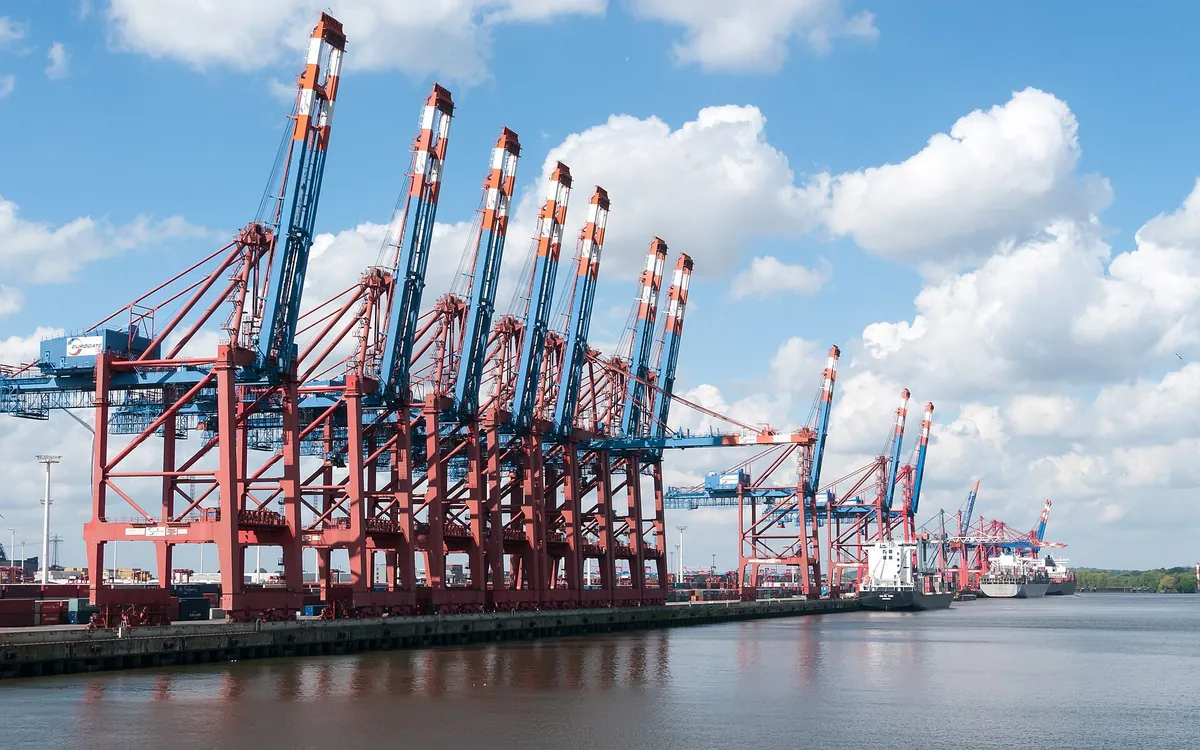
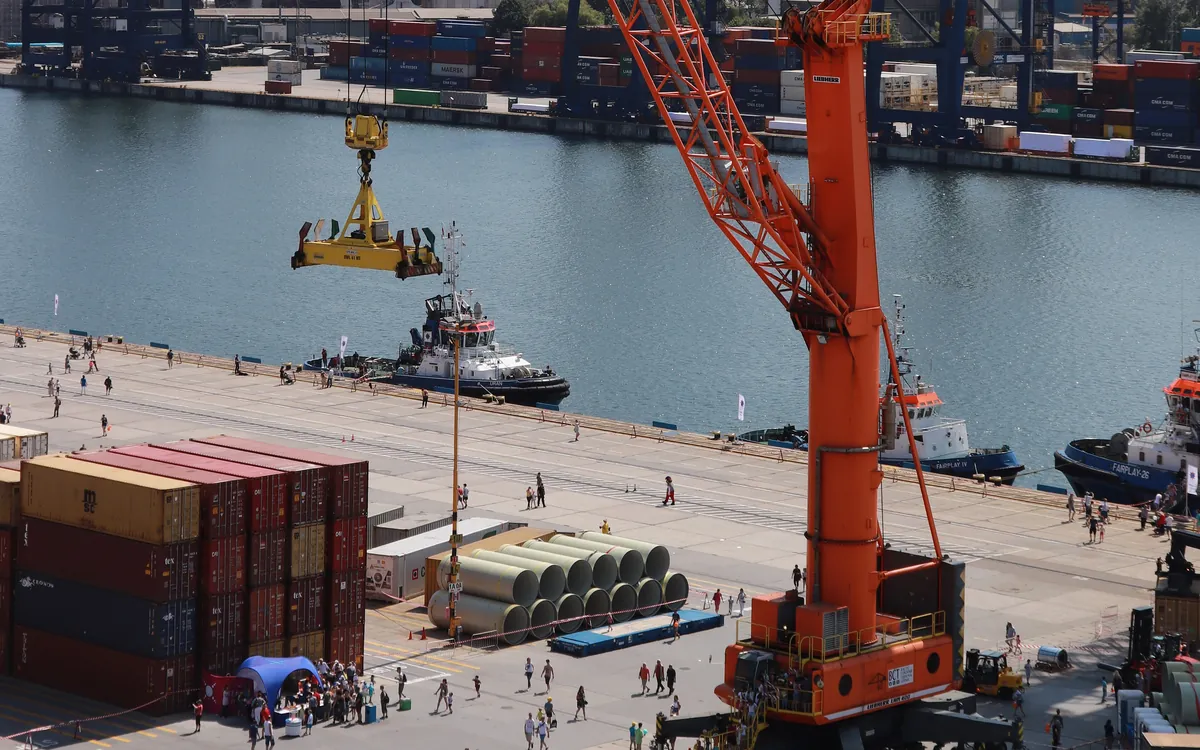
Loads and discharges the ship. Runs on rails along the berth; the trolley travels out over the vessel on the boom. Crane size follows the widest ship it must reach across.
The machines that load and discharge ships at every kind of terminal: containers, dry bulk, oil and chemicals, gas, reefer cargo, breakbulk and RoRo. What each one does, where it works, and its capacity from the maker’s own datasheet.
Ship-to-shore craneSTS
Rubber-tyred gantry craneRTG
Rail-mounted gantry craneRMG / ASC
Straddle carrierSC
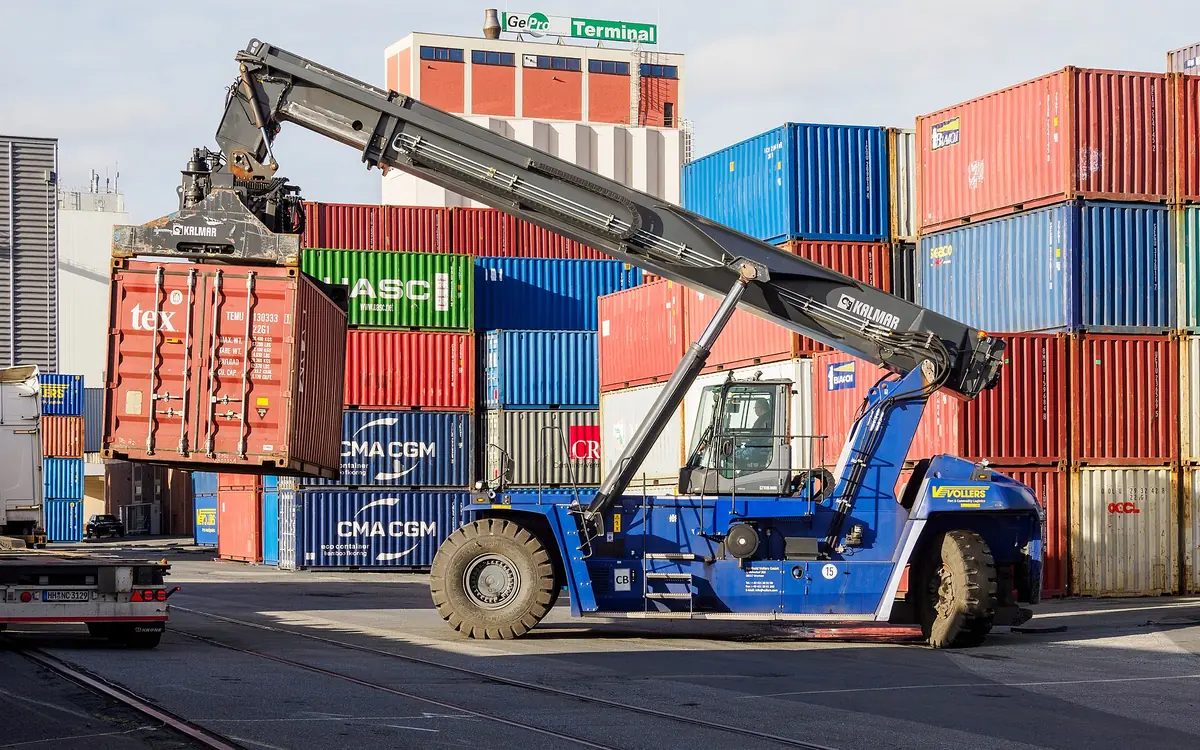
Reach stackerRS
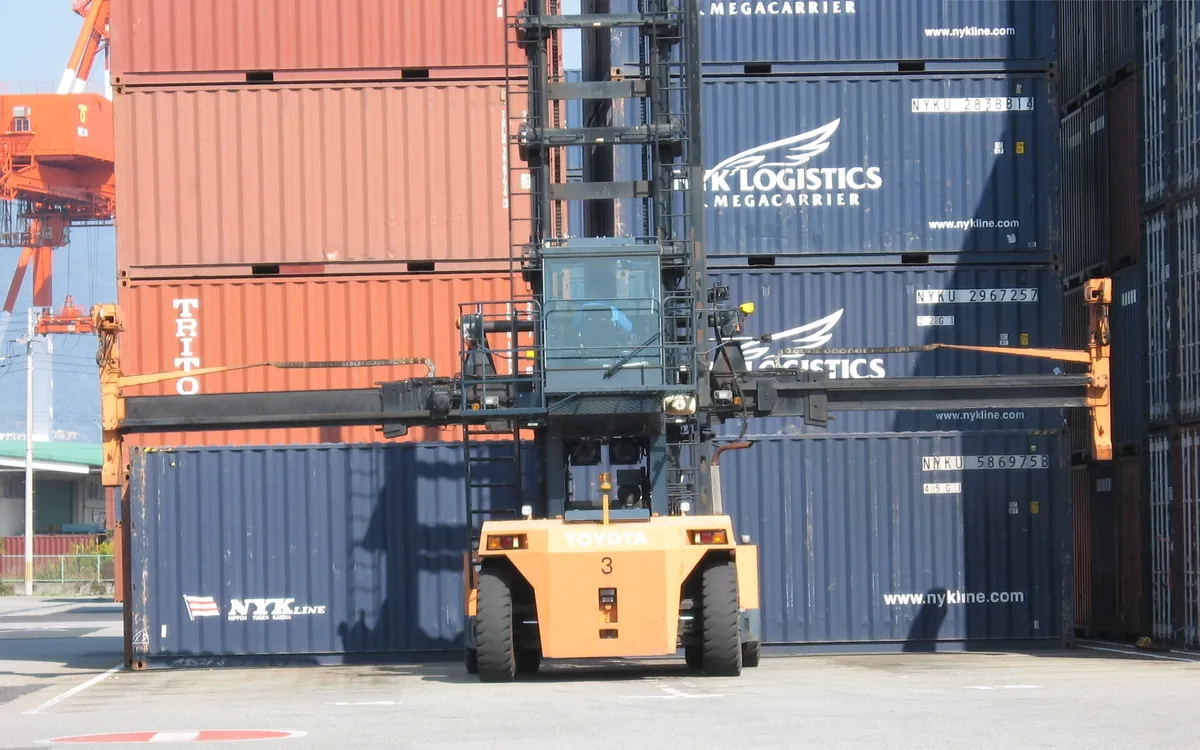
Empty container handlerECH
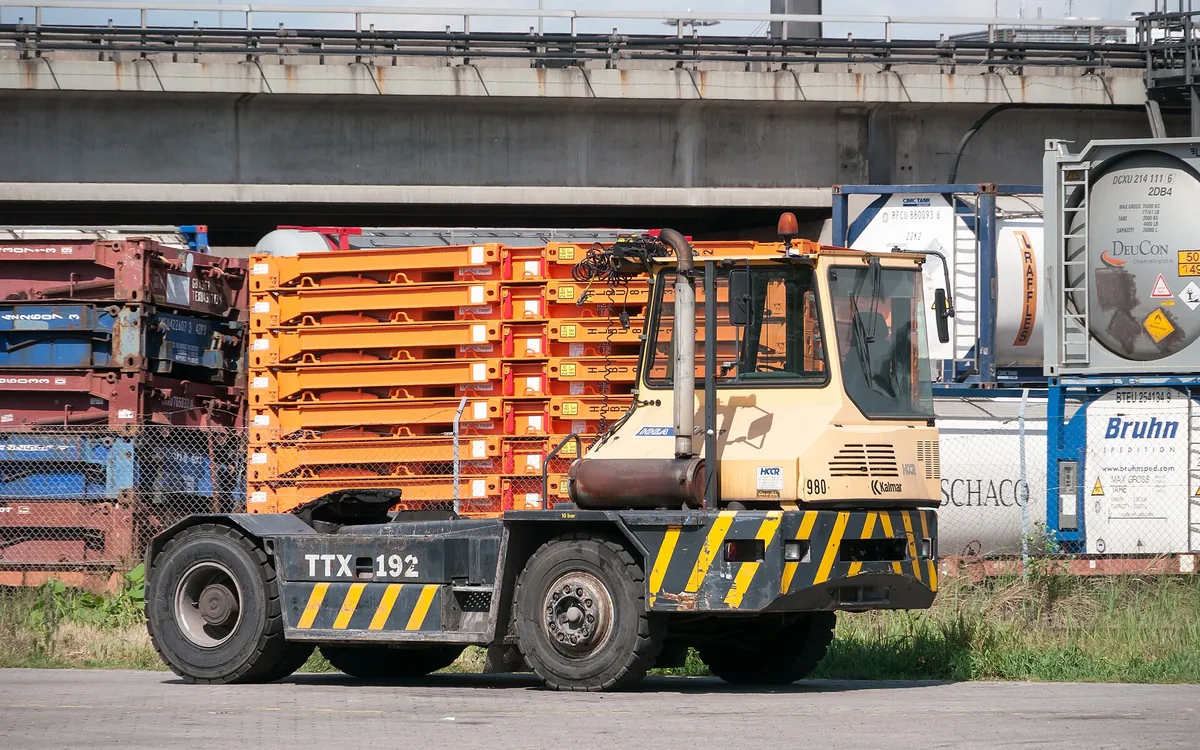
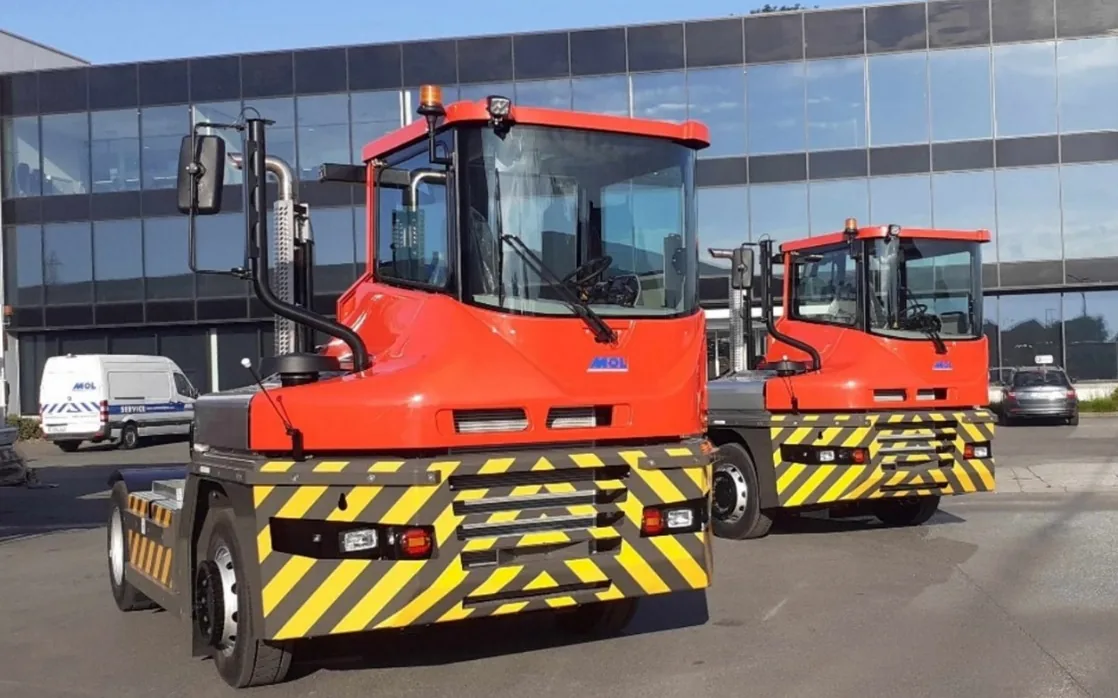
Terminal tractorTT, yard truck
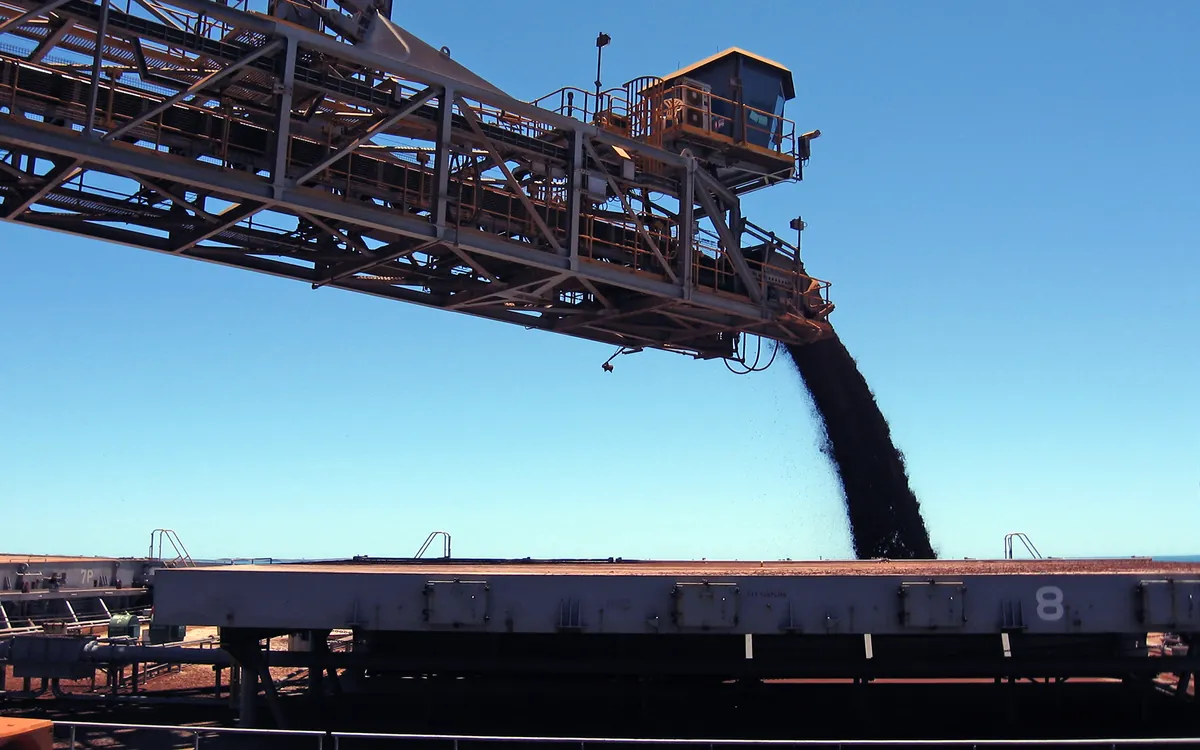
ShiploaderSL
Grab ship unloaderGSU
Continuous ship unloaderCSU
Pneumatic ship unloaderVacuum unloader
Bucket-wheel reclaimerBWR, stacker-reclaimer
Mobile harbour crane with grabMHC
Eco hopperDust-controlled hopper
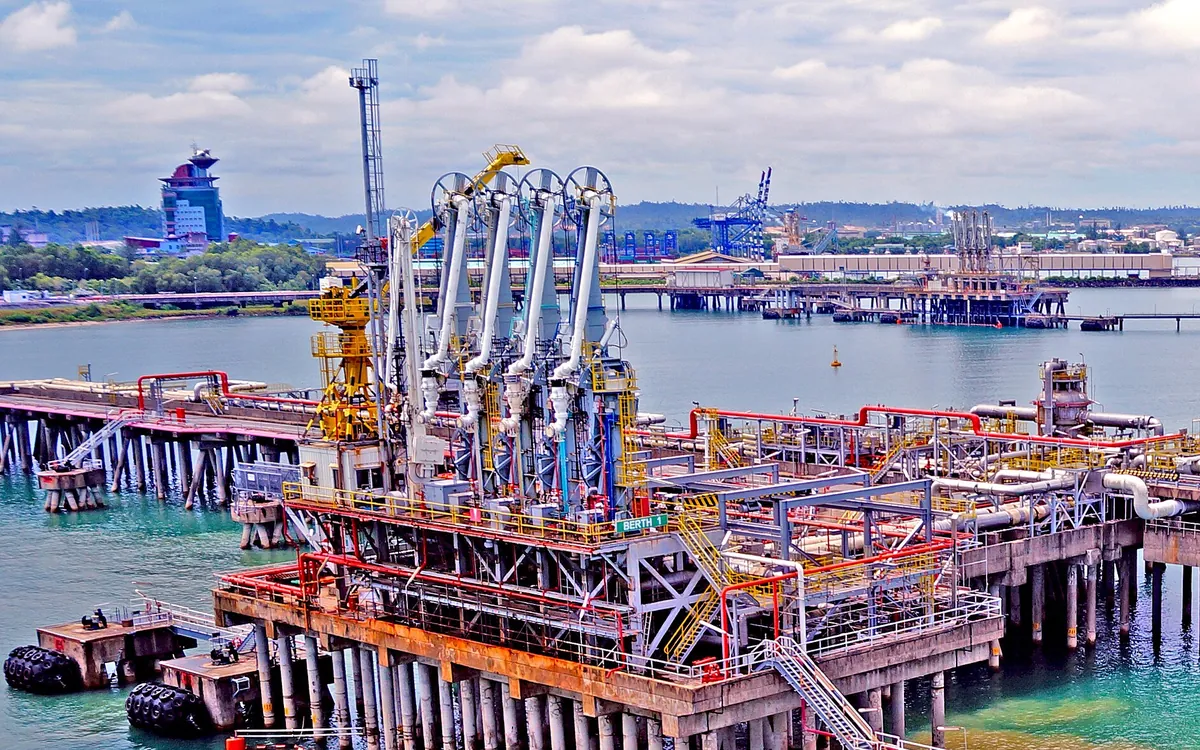
Marine loading armMLA
Quick release mooring hookQRH
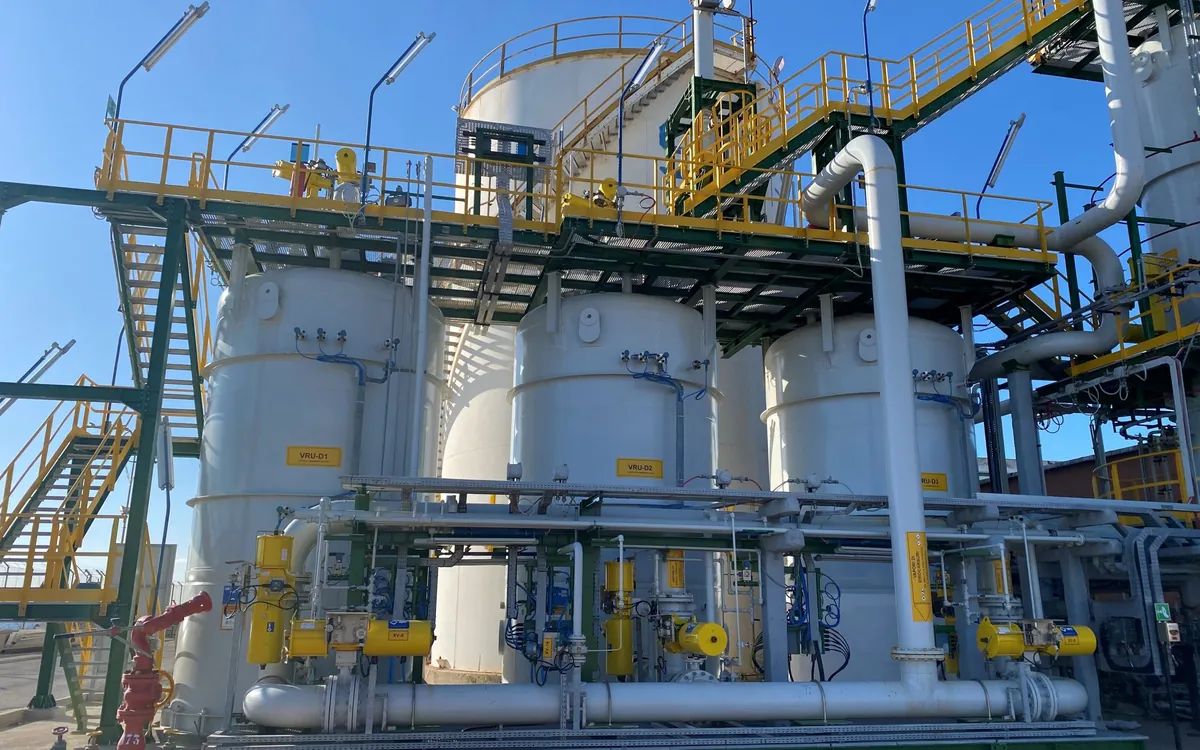
Vapour recovery unitVRU
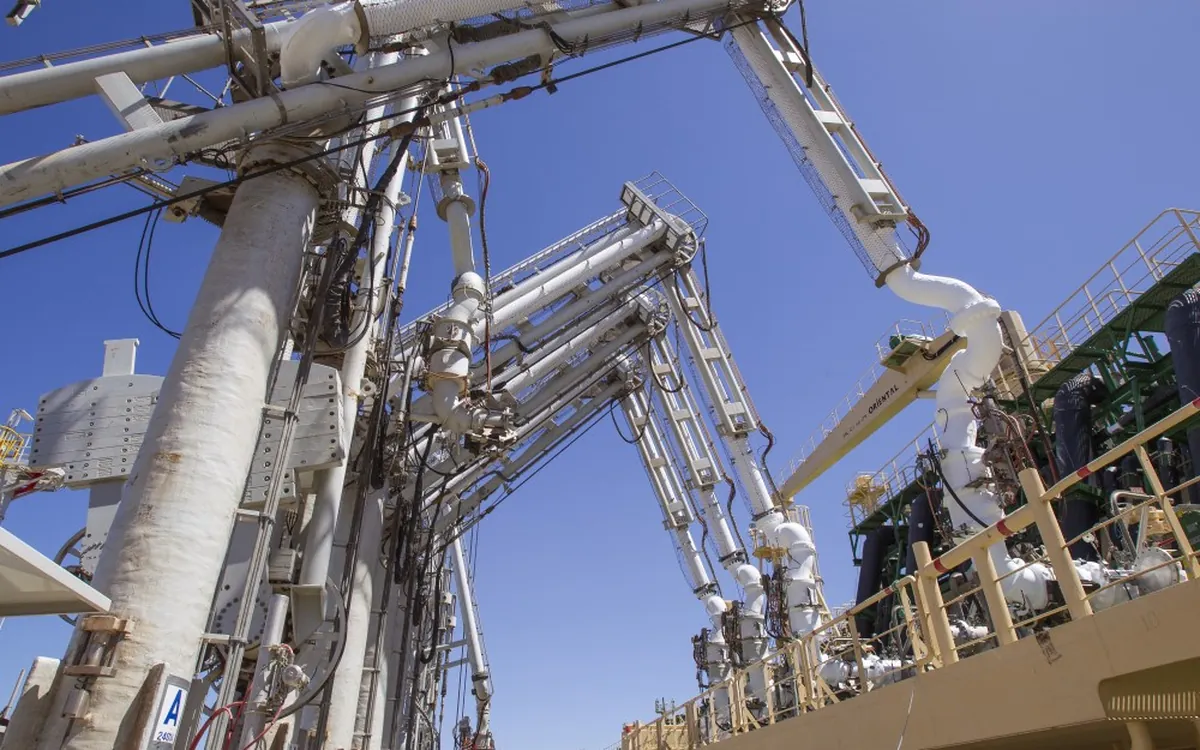
Cryogenic loading armLNG MLA
High-pressure gas armHPNG arm
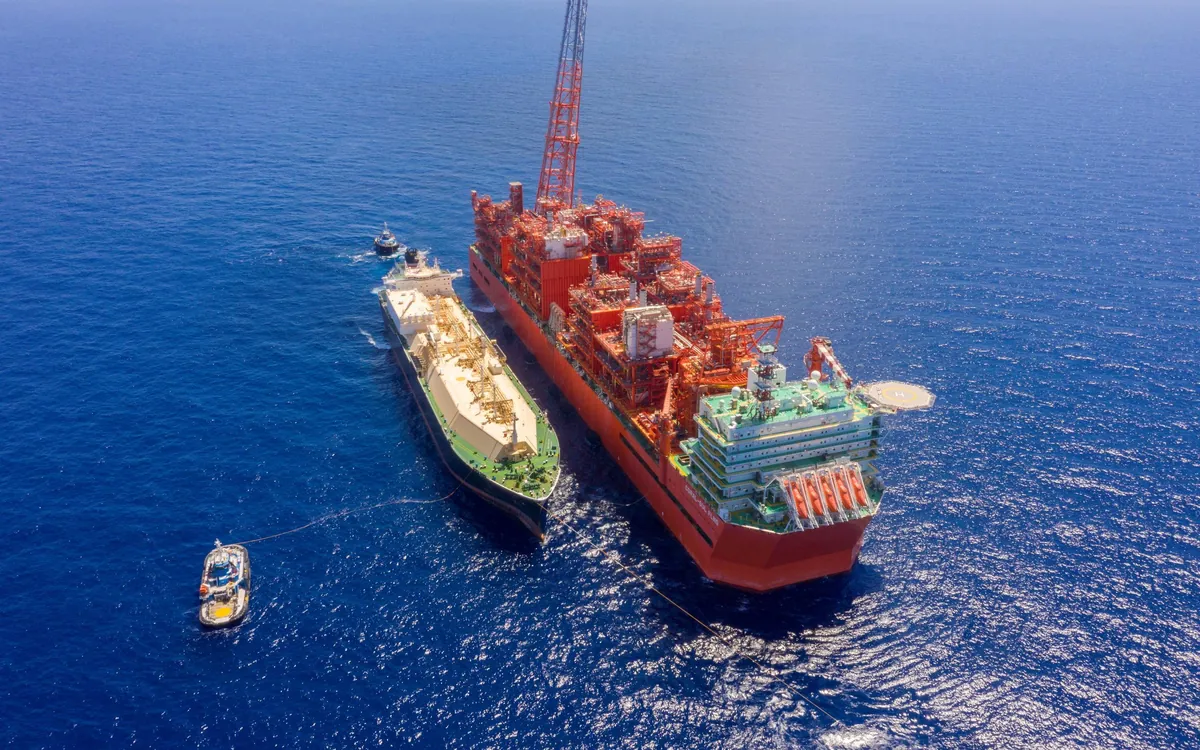
Side-by-side LNG transfer armOffshore MLA
Reefer outlet assemblyROA, reefer plug
Remote reefer monitoring unitRCM
Stacker crane (cold store)AS/RS
Mobile harbour crane (heavy lift)MHC
Portal slewing cranePortal crane
Heavy forkliftFLT
LinkspanShore ramp
Roll trailerMAFI trailer
RoRo tractorTug masterThe machines that move a box from ship to yard to truck or train: cranes on the quay, gantries or straddle carriers in the yard, tractors in between.
Loads and discharges the ship. Runs on rails along the berth; the trolley travels out over the vessel on the boom. Crane size follows the widest ship it must reach across.
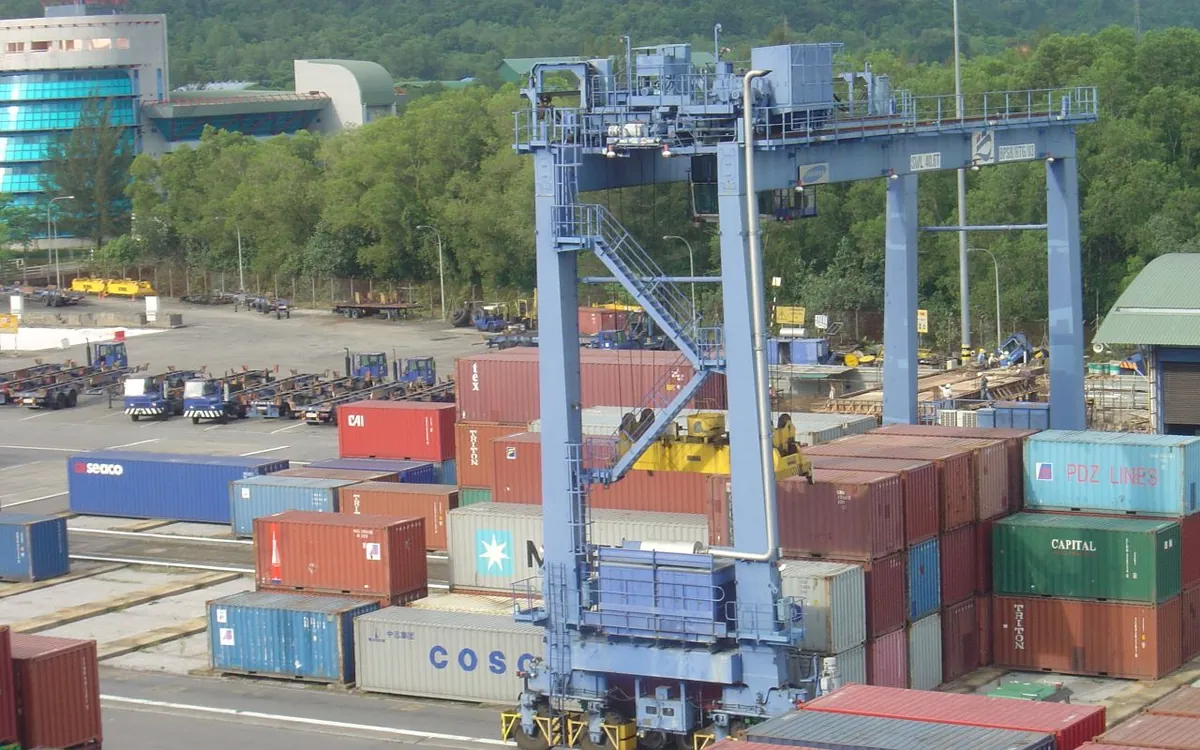
Stacks containers in yard blocks several rows wide, with a truck lane under the legs. On tyres, so it can change blocks.
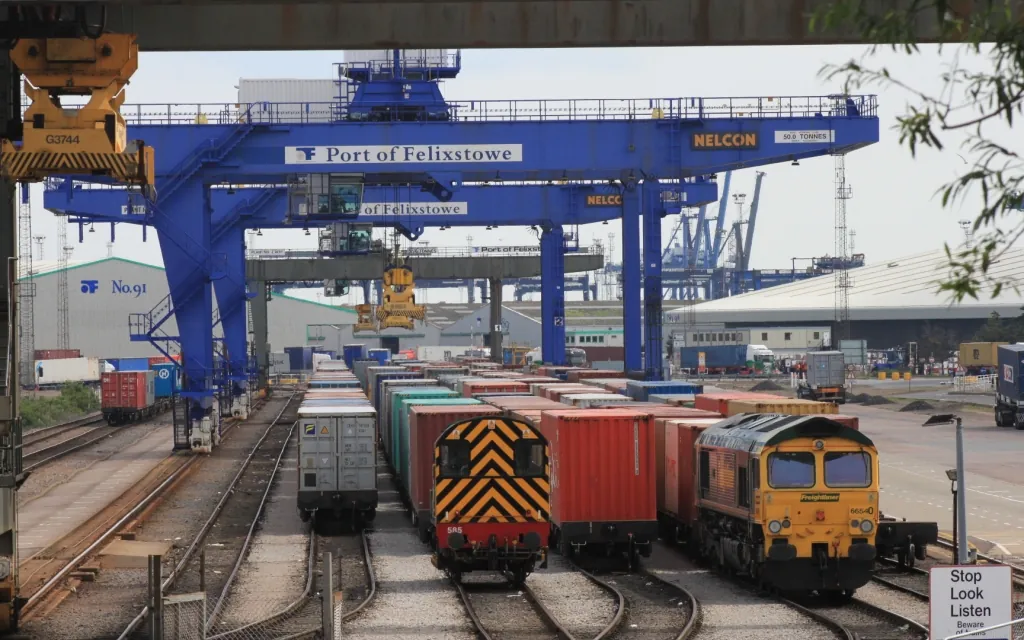
Gantry on rails over a fixed block or over rail tracks. Wider spans and cantilevers than an RTG; automated versions (ASC, ARMG) run most new yards.
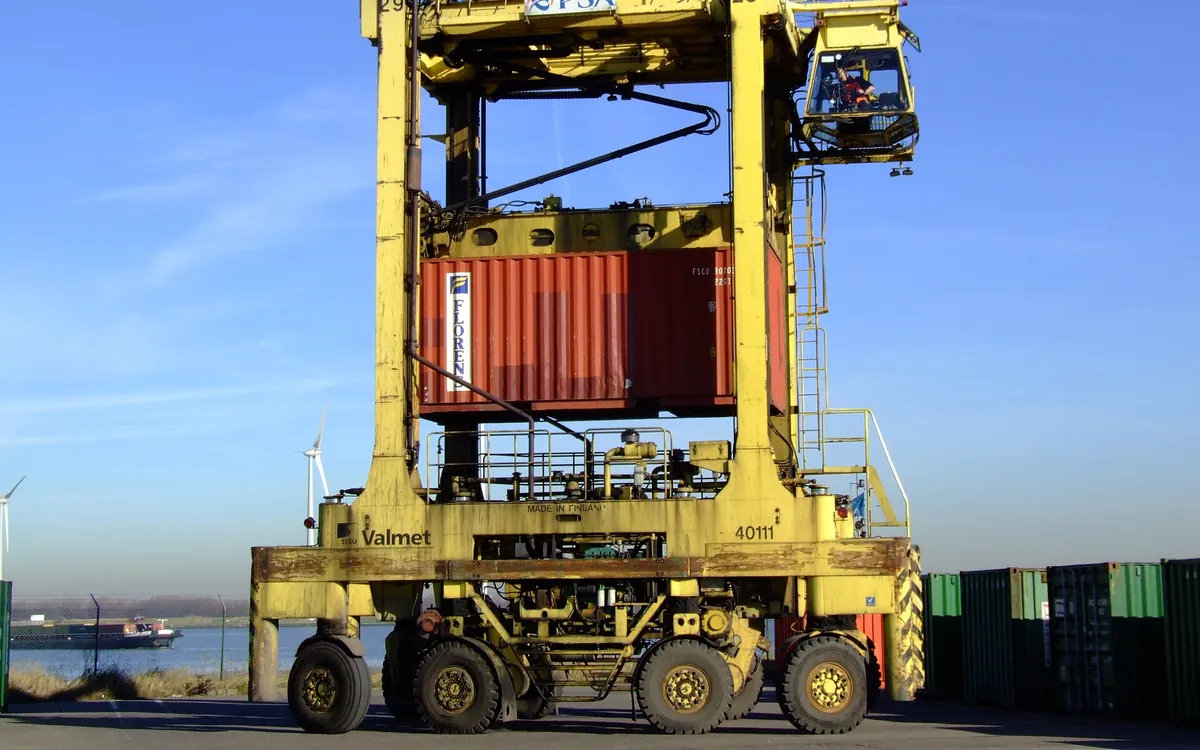
Drives over a container, picks it up between its legs and carries it. One machine does the quay transfer and the stacking.
Counterbalanced truck with a telescopic boom. Picks containers from the top and can reach over the first rows of a stack.
Masted forklift with a side or top spreader for empties only. Light lift, very high stacks.
Short tractor with a lifting fifth wheel that shunts trailers and terminal chassis inside a terminal. Not road legal in most ports.
Coal, ore, grain, fertiliser and cement. Export berths load through conveyors and shiploaders; import berths discharge with grabs, continuous or pneumatic unloaders and stack the cargo in a yard.
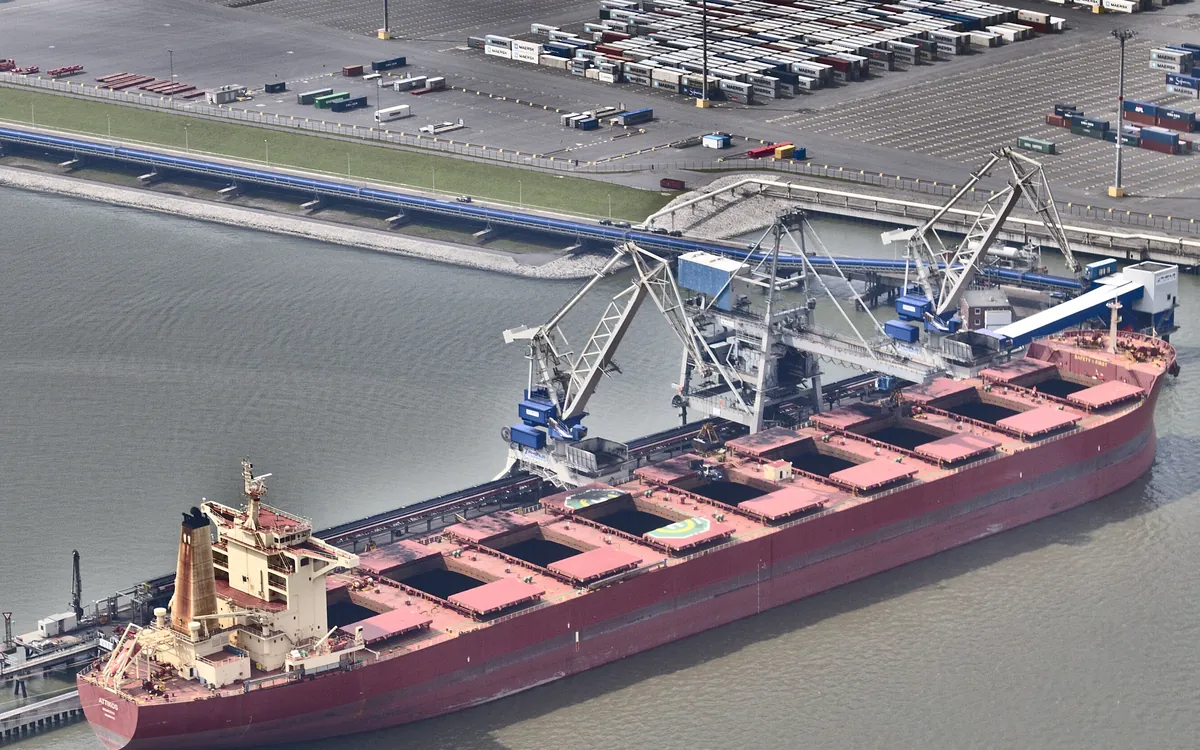
Takes bulk off the yard conveyor, carries it out over the hatch and trims the cargo through a telescopic chute. Fixed types travel on rails or slew from a pivot; mobile radial telescopic loaders run on wheels or tracks.
Rail-mounted gantry whose trolley runs a four-rope grab from the hold to a hopper built into the portal. The standard way to discharge coal and ore from large bulk carriers.
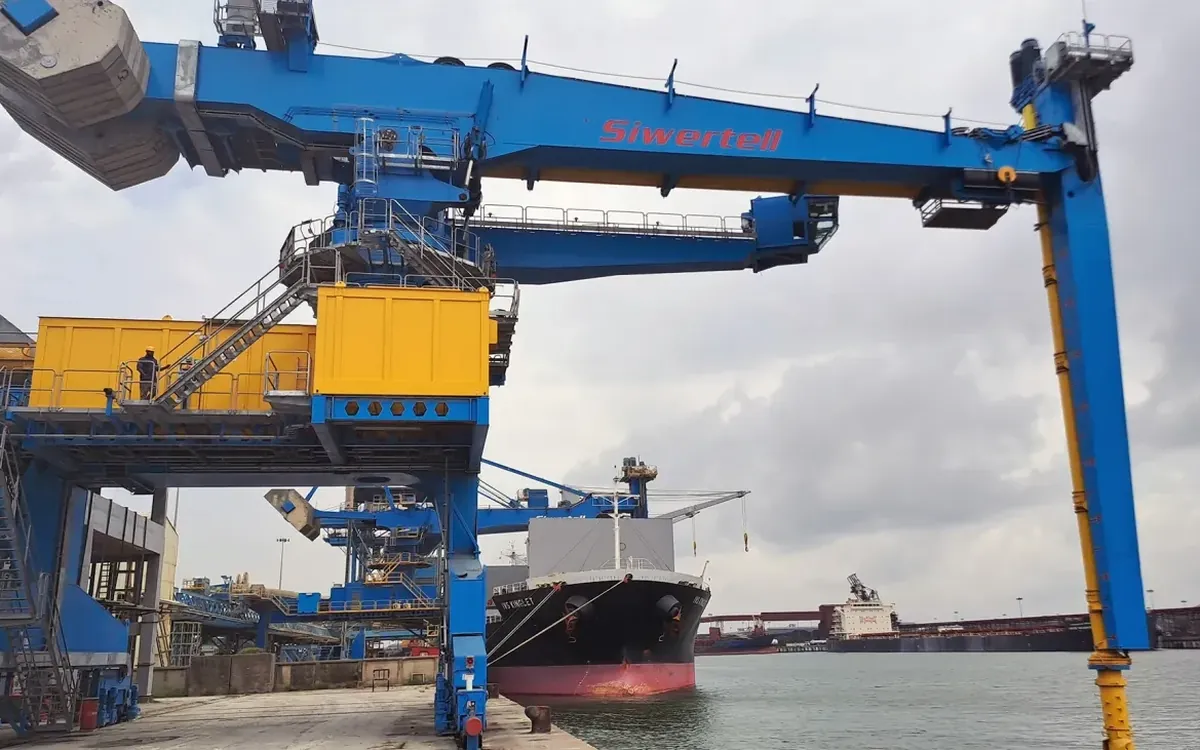
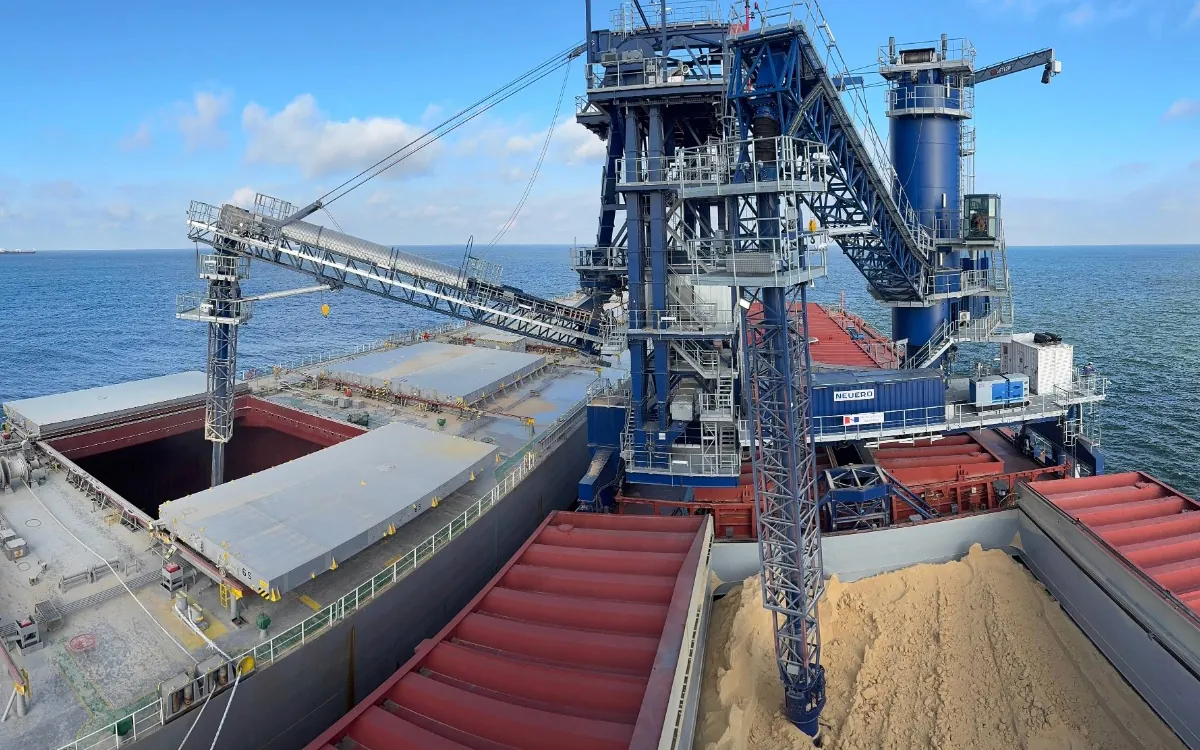
A vertical screw or chain conveyor hangs from a slewing boom into the hold and lifts the cargo inside a closed casing, so dust stays in. Output is a steady flow rather than grab cycles.
A turbo blower pulls a vacuum and sucks free-flowing cargo up a telescopic pipe into a filter receiver; an airlock then drops it onto the quay conveyor or into trucks. Low dust and gentle on grain.
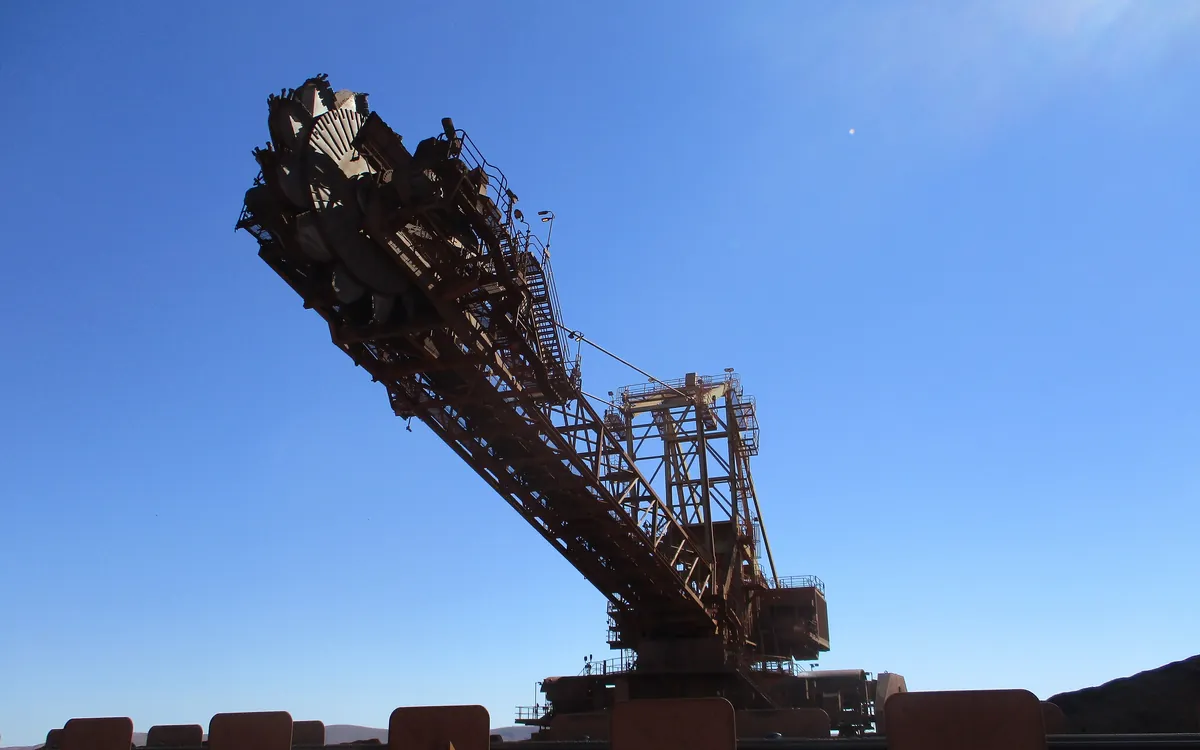
Rail-mounted machine that cuts into the stockpile with a rotating bucket wheel on a slewing boom and drops the material onto the yard conveyor. Combined stacker-reclaimers also build the piles.
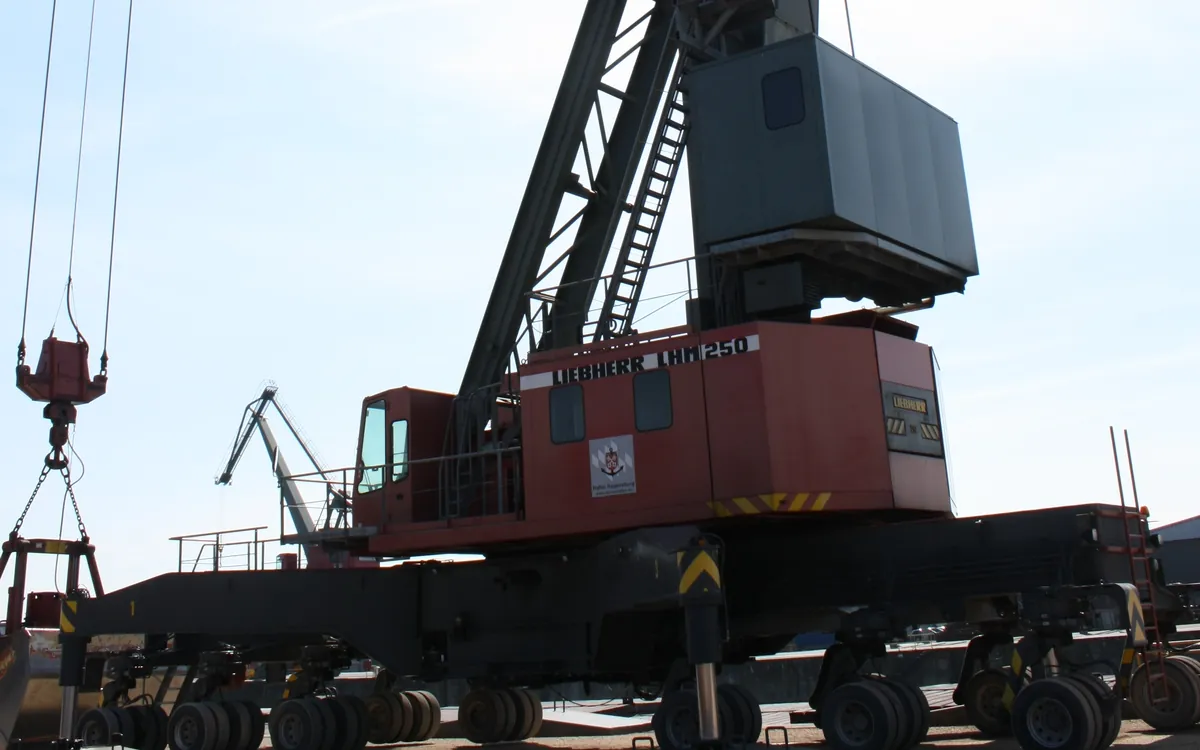
Rubber-tyred crane with a tower and lattice boom that drives along the quay and works a four-rope grab. Handles bulk without rail tracks, then switches to hook or spreader for other cargo.
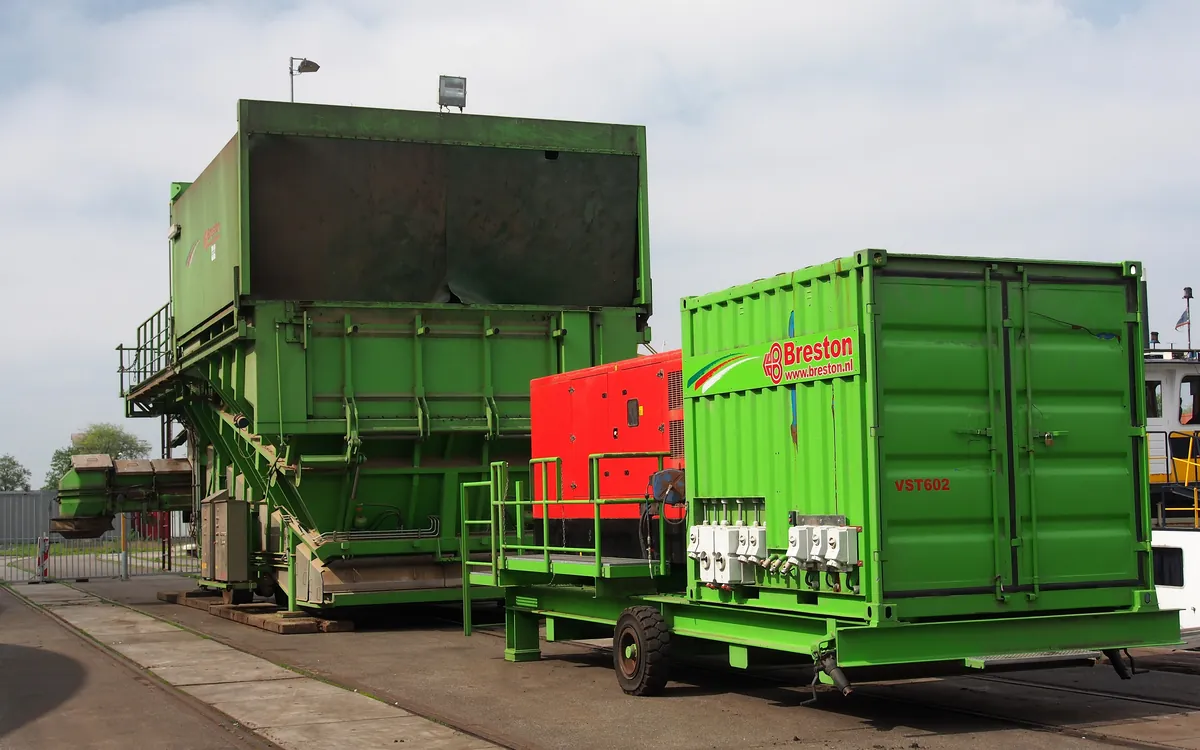
Receiving hopper the grab discharges into, with flaps, seals and filters that keep the dust in. It feeds a conveyor or trucks and can be moved off the quay when not in use.
Crude oil, refined products and chemicals move through pipes, not cranes. The jetty carries the loading arms, the mooring hooks and the vapour handling that keeps hydrocarbons out of the air.
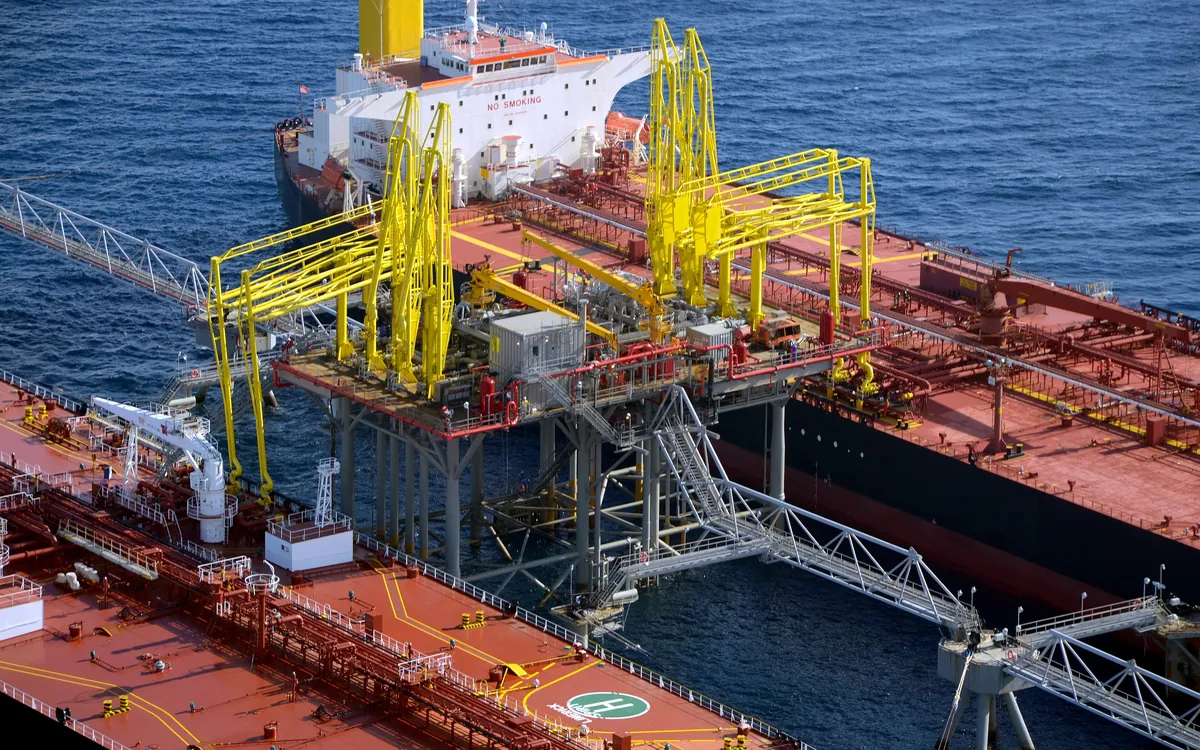
Articulated steel pipe on a riser, balanced by counterweights, that connects the jetty pipeline to the tanker manifold. Swivel joints follow the ship with tide and draft; an emergency release system separates it fast.
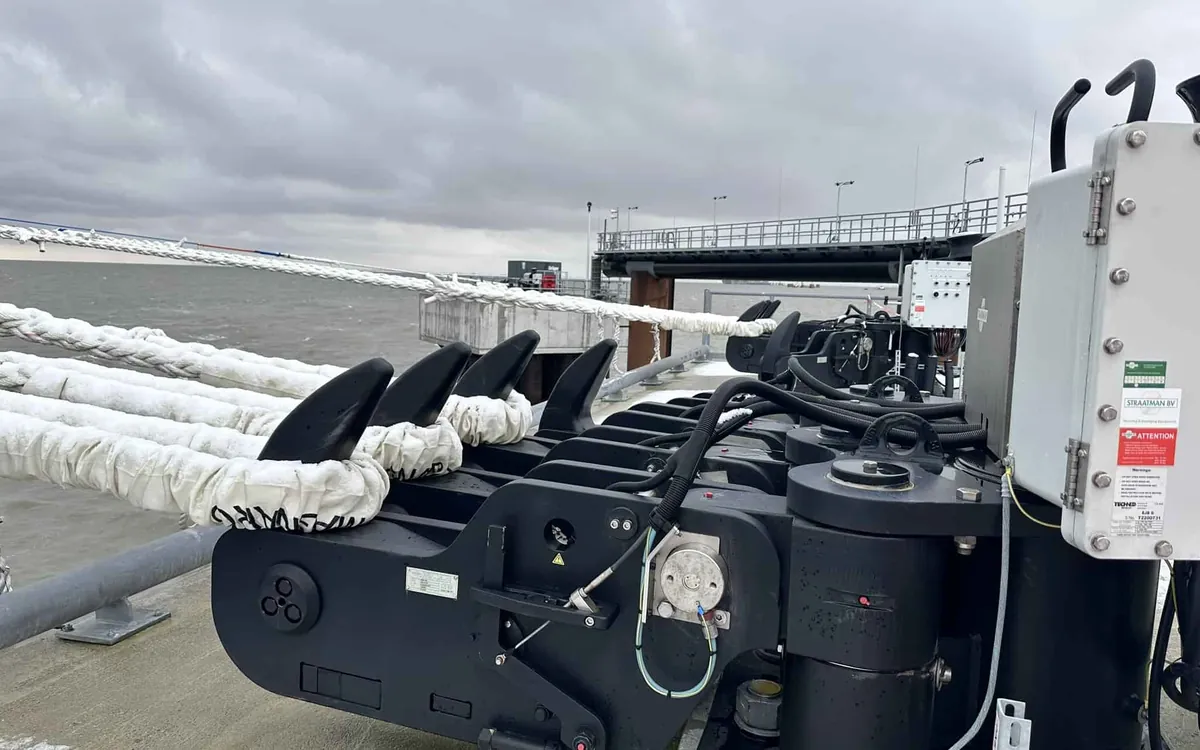
Hooks on the dolphins that hold the tanker’s mooring lines and let go under full load, by hand lever or remote release, when the ship has to leave in an emergency.
Captures the hydrocarbon vapour pushed out of a tanker’s tanks while it loads. Activated carbon holds the vapour, vacuum pumps strip it off, and it goes back as liquid product.
Liquefied gas needs cryogenic arms that stay tight at very low temperatures. FSRU and floating LNG terminals add high-pressure gas arms and ship-to-ship transfer.
Stainless steel loading arm for liquefied gas at cryogenic temperature. An LNG berth runs several liquid arms plus a vapour return arm, each with a cryogenic emergency release system.
Rigid arm that sends regasified natural gas from a floating storage and regasification unit (FSRU) into the onshore grid. Built for gas pressure rather than a cold liquid.
Loading arms on a floating LNG plant that reach across to an LNG carrier moored alongside. A tensioned targeting line guides the arm onto the manifold while both hulls move.
Refrigerated containers need power and monitoring from the moment they land until they leave the gate. Fruit, meat and pharma may then go into a port cold store.
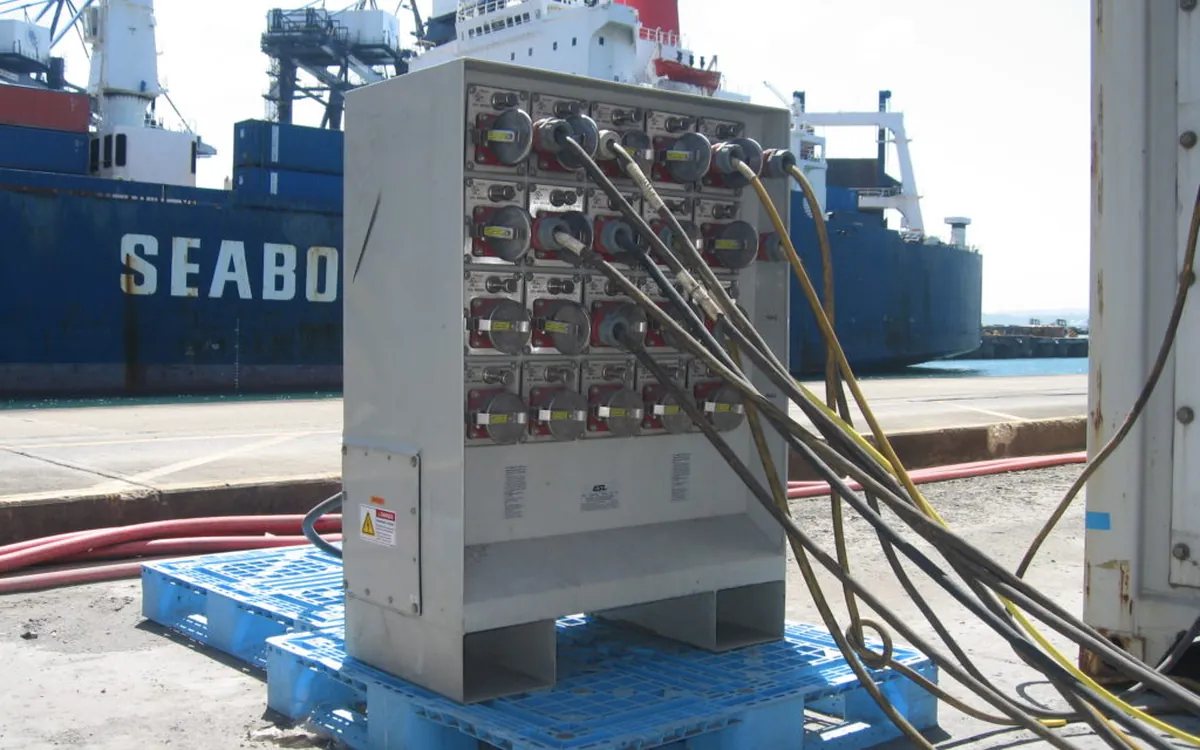
Safety-interlocked power sockets that feed refrigerated containers in the yard. Mounted in gangs on reefer racks, pedestals, poles or bollards; a plug cannot be pulled while the socket is live.
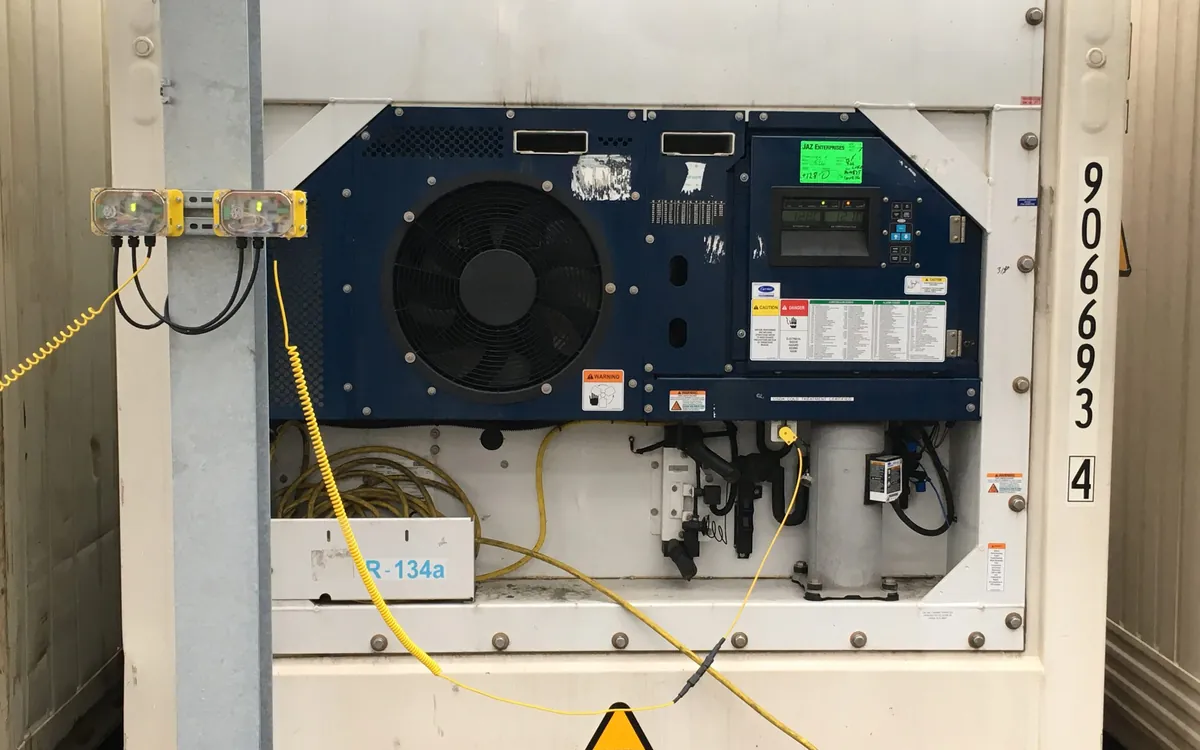
Telematics modem in the reefer controller slot that reports the unit’s data and position over the cellular network and lets the operator control the reefer and run pre-trip inspections remotely.
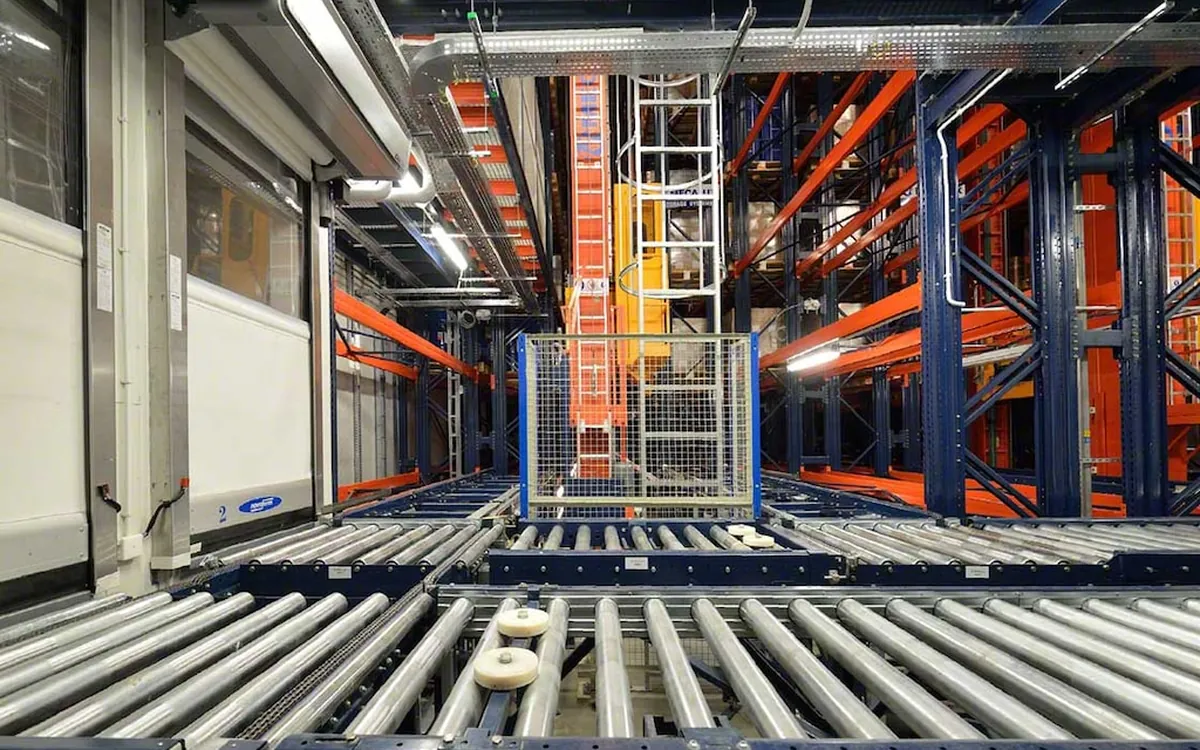
Automated crane that runs in the aisle of a high-bay pallet warehouse and stores and retrieves pallets, so nobody has to work inside the freezer.
Steel, timber, machinery and heavy pieces lifted one at a time by hook: versatile cranes on the quay, heavy forklifts on the apron.
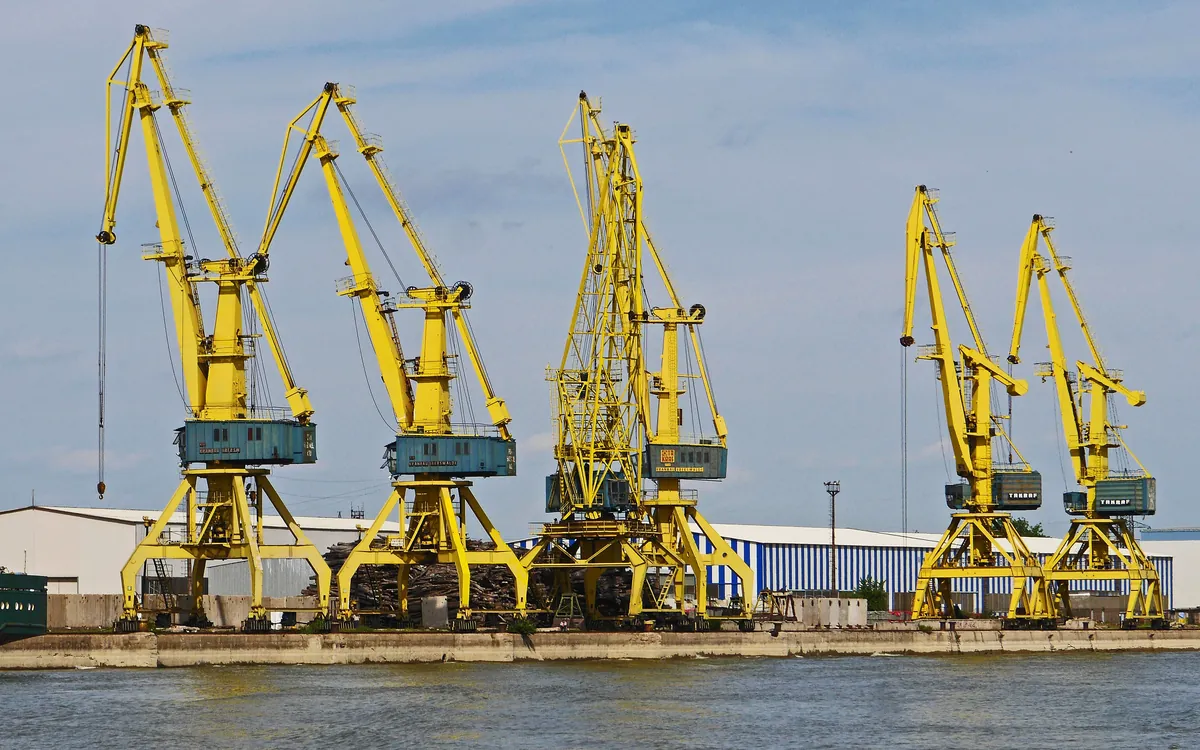
The rubber-tyred harbour crane on hook duty for steel, machinery and project cargo. Two cranes can lift one piece together with synchronised controls.
Slewing crane on a rail-mounted portal, so trucks and trains pass underneath. Common on narrow quays; handles bulk with a grab, general cargo and containers.
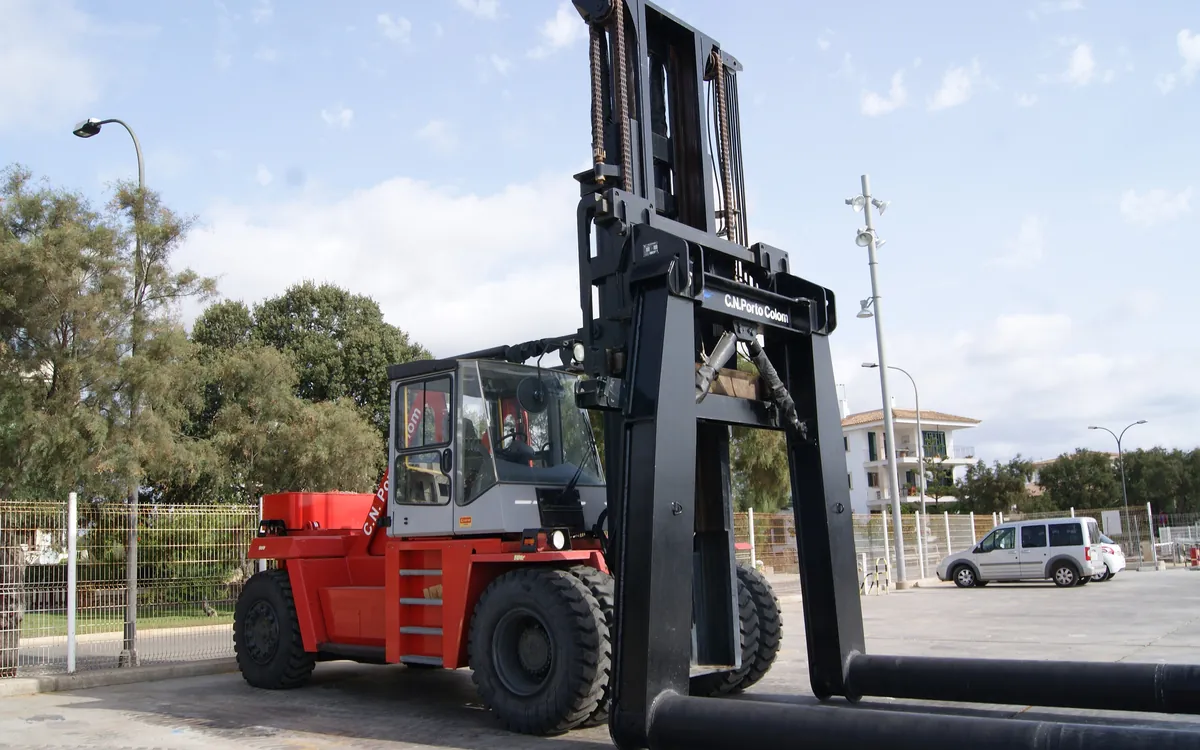
Counterbalanced forklift for steel, timber, paper rolls and machinery, usually with sideshift and fork positioning. The workhorse between the hook and the shed.
Cargo drives on and off over the ship’s ramp: cars and trucks on their own wheels, everything else on roll trailers pulled by tug masters.
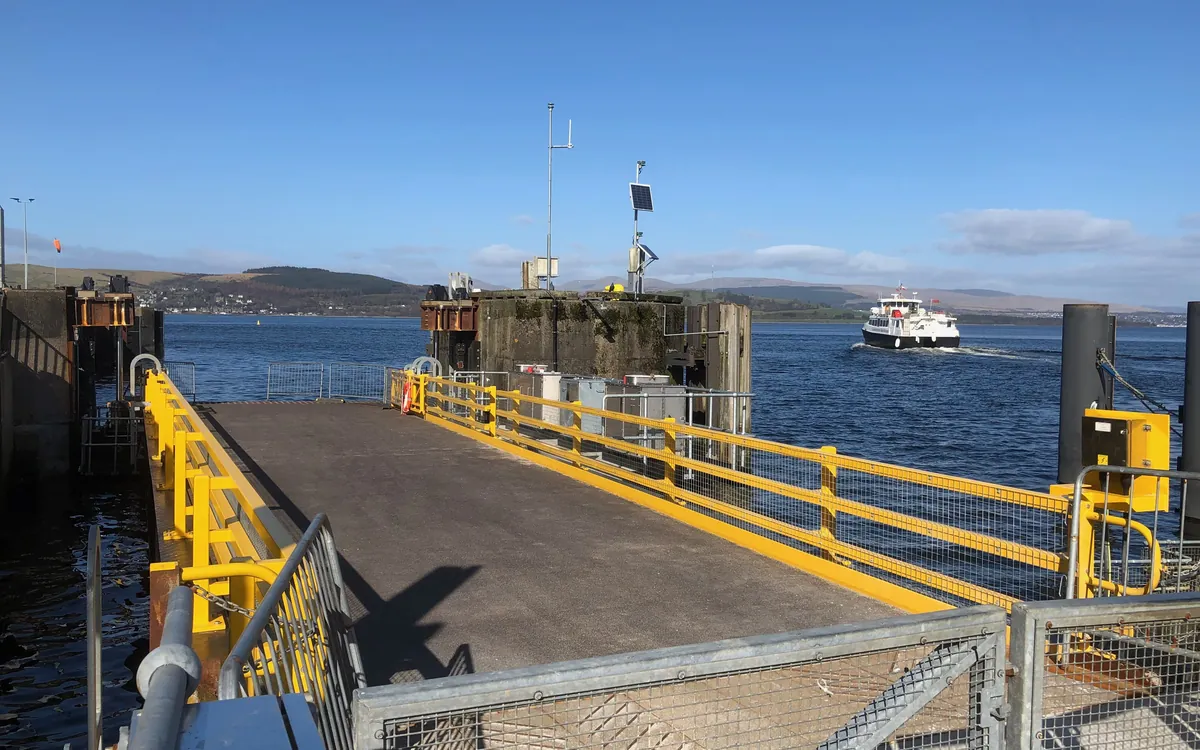
Hinged bridge between the quay and the ship’s ramp or deck that follows the tide, so vehicles drive straight on and off.
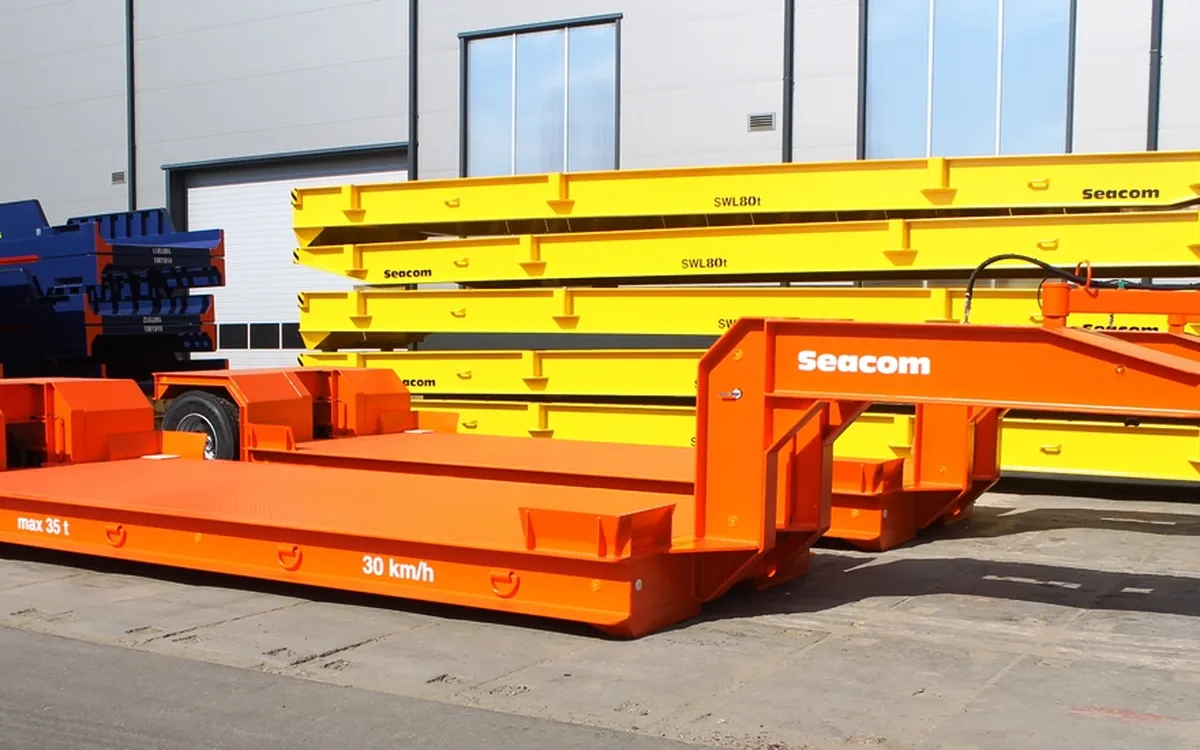
Low platform on small solid tyres that a tractor tows on and off the ship through a gooseneck. Carries cargo that cannot roll on its own: steel, machinery, stacked containers.
Four-wheel-drive terminal tractor built to pull heavy trailers up steep ship ramps. A 180° swivelling seat lets the driver face either way.
Terminal chassis and trailers are in Truck and Trailer Types. Container sizes and tare are inContainer Types. Drawings are schematic, not to scale. Photo credits are under each photo.
Container, B/L or booking number. 240+ carriers, live status and ETA.