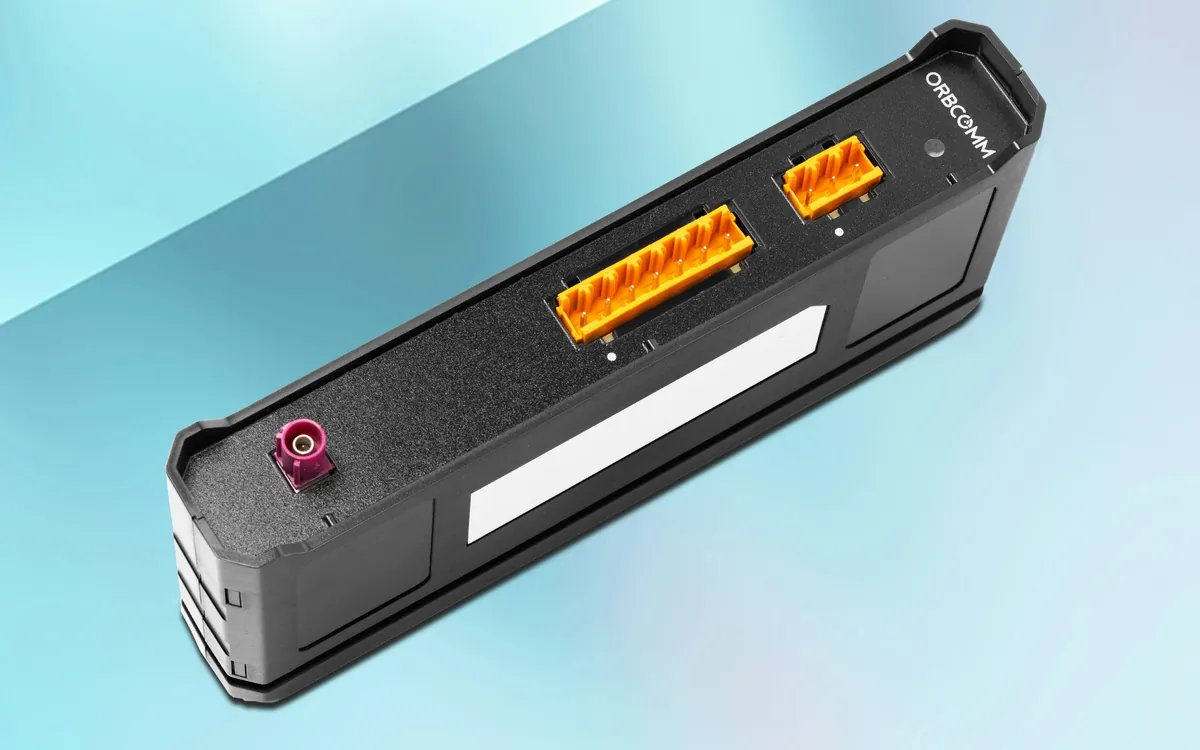
Telematics modem in the reefer controller slot that reports the unit’s data and position over the cellular network and lets the operator control the reefer and run pre-trip inspections remotely.
What an RCM unit does
RCM stands for remote container management. The unit reads data from the reefer controller, adds a GNSS position and sends both to the operator's platform. Wikipedia describes the result as a continuous track and trace record of the container's temperature, with alerts when the reading leaves the set range and the option to change set points or switch the unit on or off remotely.
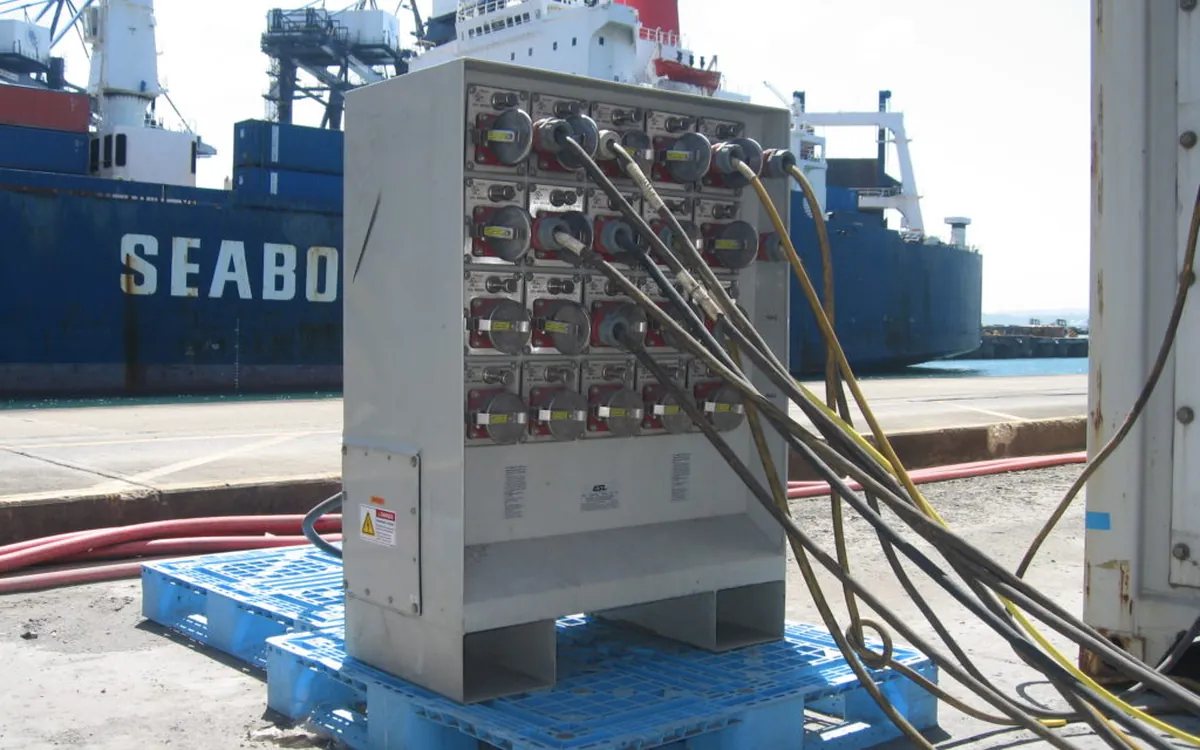
For a terminal, the benefit is visible on the reefer block: fewer manual temperature checks, faster response to alarms and a log that shows when a container was without power.
How it works: the ORBCOMM CT 3600 as an example
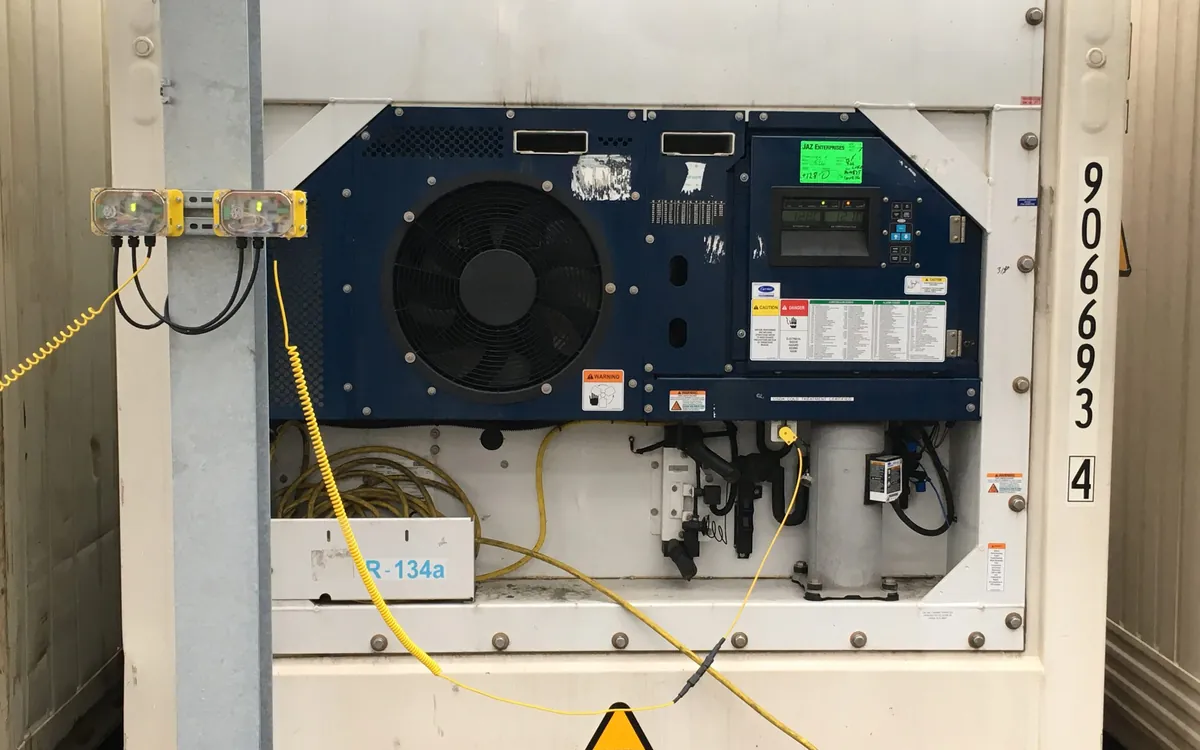
ORBCOMM's CT 3600 sits inside the reefer cabinet in the RMM/PLM expansion slot on a bracket, so it needs no drilling through the container wall and is hard to tamper with. ORBCOMM says it installs in about half the time of its predecessor.
It connects over 4G LTE Cat 1 with fallback to 3G and 2G, and positions itself with GPS, GLONASS, BeiDou, Galileo and QZSS. A cabled cellular, GPS and Bluetooth antenna is mounted inside the cabinet. The modem runs on 15 to 36 V AC or 9 to 32 V DC, and an internal 3.6 Ah battery keeps it reporting when the reefer is unplugged, for example on a truck or during a transfer in the yard.
Key figures
The CT 3600 is rated for minus 40 °C to 85 °C. It is sealed to IP54 with connectors mated and tested for shock and vibration to MIL-STD-810H and to the AAR S-9401 rail standard. The housing measures about 172 × 81 × 26 mm.
Memory holds more than 2,000 messages and more than 5,000 onboard geofences of 12 points each, plus unlimited geofences in the back end. It also stores reefer software files before updates and data log downloads before they are sent. A 3-axis accelerometer detects motion.
Where it is used
Shipping lines and container lessors fit RCM units across their reefer fleets. The data follows the box from the packing site through the port, on board and to the consignee. Geofences report when the container enters or leaves a terminal or depot, which helps measure dwell and turn times.
Typical cargo is the same as for any reefer: chilled and frozen food, fruit, meat, fish, flowers and pharmaceuticals, where a temperature excursion can spoil the whole load or trigger a claim.
Remote pre-trip inspection and control
Before an empty reefer is released for loading, it needs a pre-trip inspection (PTI) to check that the machinery holds temperature. With an RCM unit the PTI can be started and read remotely, so the depot does not need a technician at the box. Set points, defrost settings and other parameters can be changed from shore when a booking changes.
Alerts can be tuned per cargo, so a shipper of bananas and a shipper of frozen fish get warnings at different thresholds.
Trends
Coverage is moving from a share of the fleet to nearly every reefer box. ORBCOMM's VIACHAIN platform reports more than 1.6 million connected assets across containers and trailers. As 2G and 3G networks close, LTE units such as the CT 3600 replace older modems, while the 3G and 2G fallback keeps them working where LTE coverage is thin.
How to choose: pros and limits
Look at network bands for the trade lanes, the battery life when the box is unpowered, compatibility with the reefer controllers in the fleet and how the data reaches the line's or terminal's system. Pros: fewer claims, fewer manual checks and remote PTI. Limits: coverage at sea depends on ship gateways or satellite links, and a modem cannot fix a mechanical fault, only report it.
Variants
Questions shippers ask
What does RCM mean for reefers?
Remote container management: a telematics unit that reports reefer temperature, alarms and position and allows remote control.
Can a reefer be controlled remotely?
Yes. With an RCM unit the operator can change set points, switch the unit on or off and run a pre-trip inspection from shore.
Does the unit work when the reefer is unplugged?
Units such as the ORBCOMM CT 3600 have an internal battery that keeps reporting position and status when external power is off.
Does an RCM unit help in the port?
Yes. Terminals see alarms and power-off events without walking the stack, and geofences show when the box arrives or leaves.