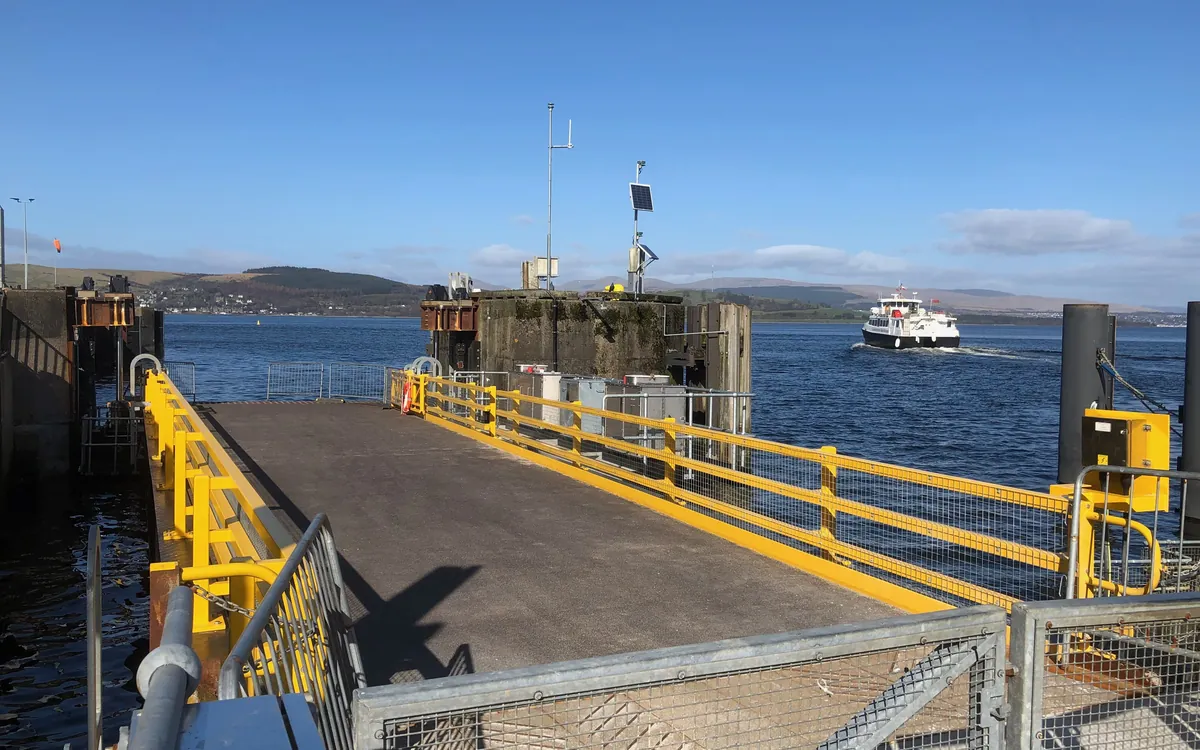
Hinged bridge between the quay and the ship’s ramp or deck that follows the tide, so vehicles drive straight on and off.
What a linkspan is
Wikipedia describes the linkspan as a type of drawbridge used to move vehicles on and off roll-on/roll-off vessels, allowing for changes in water level. It is hinged at the quay and supported at its outer end, which can be raised, lowered or left floating. The ship lowers its own bow, stern or side ramp onto the linkspan, or rests the linkspan on a ledge at the deck threshold.
MacGregor, which took over the TTS linkspan range, describes the job as levelling the height difference between quay and cargo deck for safer and faster loading.
History
The first linkspans came with train ferries at the end of the 19th century. Each rail berth was built for one class of ship. In the mid 20th century, road RoRo ferries with stern ramps came into service, but ship ramps alone were too steep where the tide was large. Shore linkspans solved that and allowed RoRo services in tidal waters such as the English Channel.
How it works and the main types
A mechanical support linkspan is raised and lowered by hydraulic cylinders or similar gear. The operator selects a level, a parking cleat unlocks and the bridge moves and locks. Where the tide is small it can stay at one level; where it is larger it follows the water.
An integral tank linkspan is supported at its widened outer end by a floating section that is part of the bridge, with a ballast system to match the freeboard of the vessel. A submerged tank linkspan uses an underwater tank as a counterweight, with no wires or mechanism. Pontoon (floating) linkspans rest on a separate pontoon and pass berthing forces to fenders, which suits ports with high tidal range. A fully mobile linkspan is buoyant, moored with ropes to existing bollards and can turn any stretch of quay into a temporary RoRo berth.
Key figures: gradients and length
Gradient sets the length. For railway traffic Wikipedia gives a maximum of 1:25 (4%), so a 2 m tide already needs a linkspan of at least 50 m; larger tides lead to two-span designs. Road vehicles accept steeper slopes, so road linkspans can be shorter for the same tide.
Large ferry ports use double-deck linkspans that load two vehicle decks of one ship at once, as at Dover. Linkspans can also carry passenger walkways.
Where it is used and what cargo
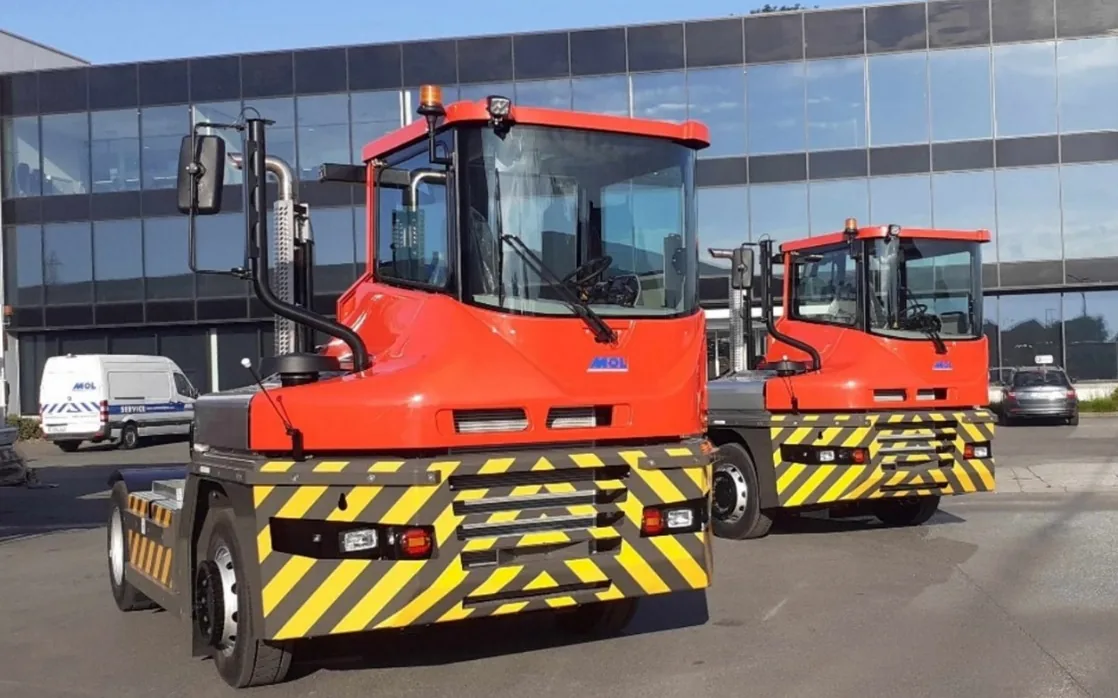
Every RoRo and ferry port with significant tidal range relies on linkspans: cars and passengers, accompanied trucks, unaccompanied trailers moved by terminal tractors, roll trailers with static cargo, new vehicles, rail wagons on train ferries and heavy machinery that drives aboard. Freight rates for cargo through these terminals can be compared at rates.navo24.com.
How to choose: pros and limits
The choice depends on tidal range, exposure to waves and swell, the fleet of ships that will call and their ramp positions, and how quickly the berth must be built. Mechanical and tank linkspans suit fixed ferry routes; integral tank types take ships with varied beam, freeboard and ramp layouts; fully mobile units need no civil works. Limits: each design has a range of freeboard and ramp loads it can serve, and every linkspan needs regular inspection of hinges, bearings and hydraulics because traffic loads cycle many times a day.
Variants
Questions shippers ask
What is the difference between a linkspan and a ship's ramp?
The ship's ramp belongs to the vessel. The linkspan is the shore bridge it lands on, adjusted for tide and freeboard.
Why are rail linkspans so long?
Trains need gentle slopes, up to 1:25. With a 2 m tide that already means at least 50 m of linkspan.
Can a linkspan be moved?
Fully mobile linkspans are buoyant and can be moored at different points along a quay.
Who uses linkspans?
Ferry and RoRo ports, train ferry berths and some passenger terminals.