




















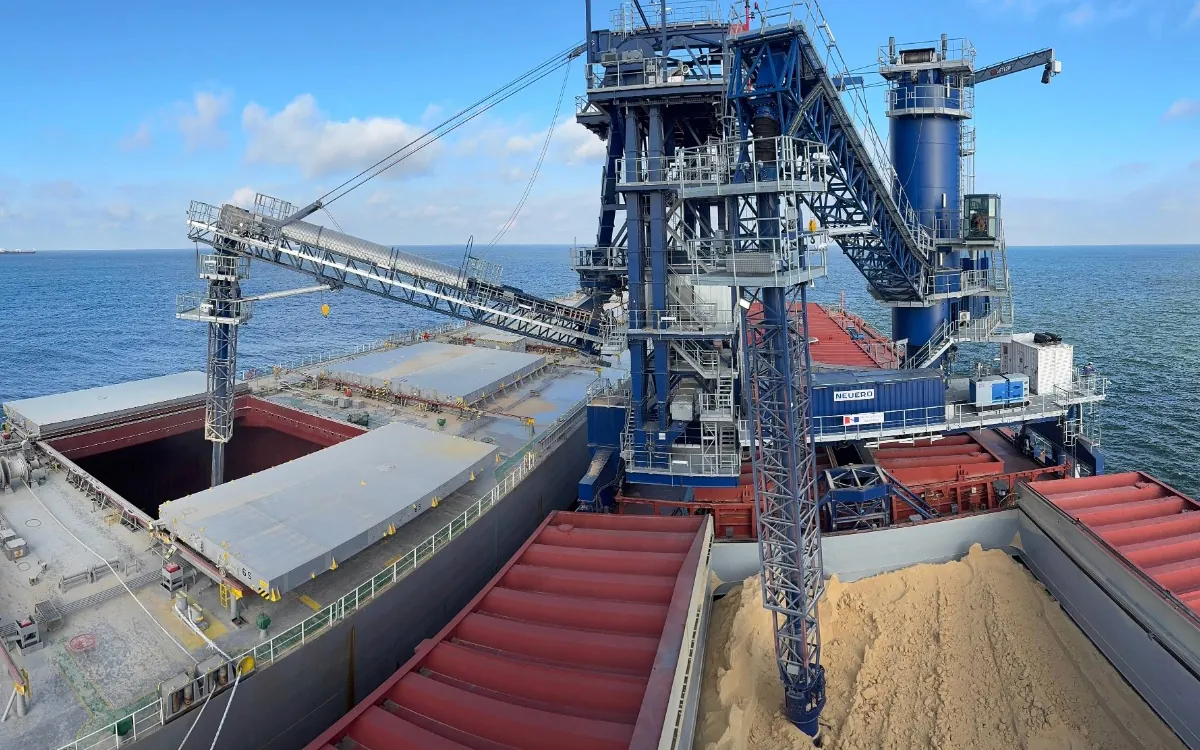
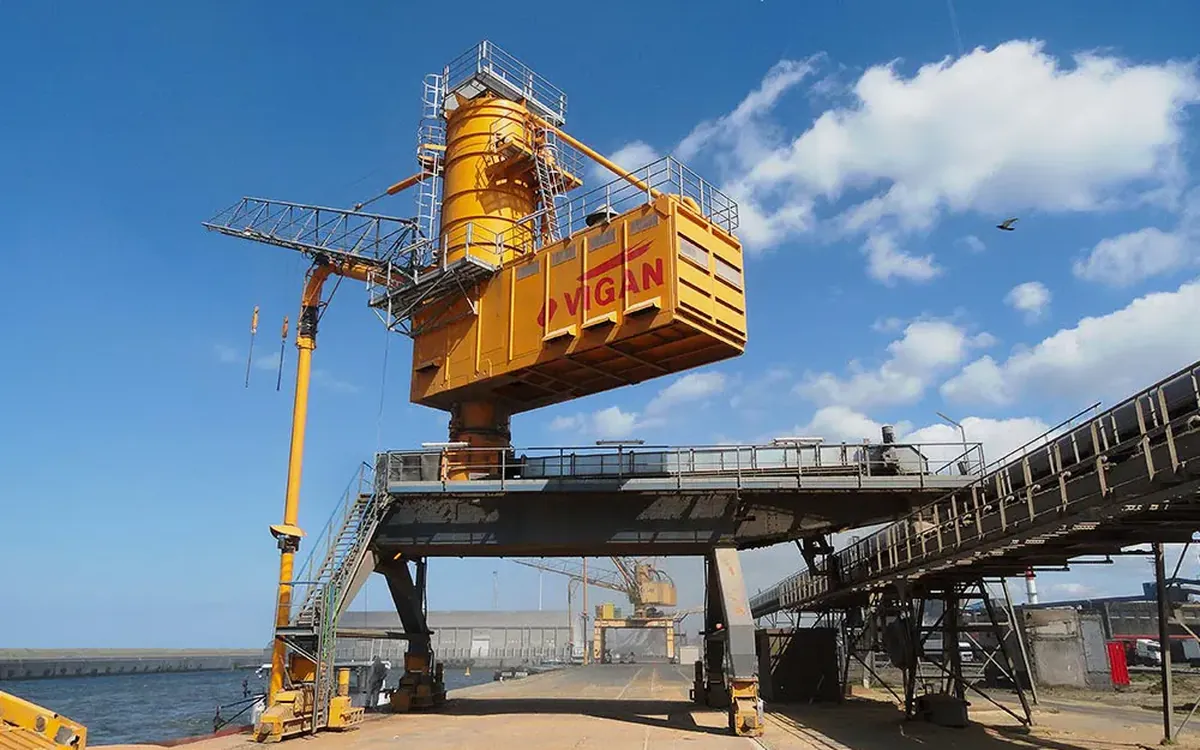
A turbo blower pulls a vacuum and sucks free-flowing cargo up a telescopic pipe into a filter receiver; an airlock then drops it onto the quay conveyor or into trucks. Low dust and gentle on grain.
What a pneumatic unloader is
A pneumatic unloader, often called a vacuum unloader, is a continuous ship unloader that moves bulk cargo with air instead of a grab or a bucket chain. The machine stands on the quay, usually on a gantry, and swings a boom over the hatch. A vertical suction pipe hangs from the boom tip and reaches down into the hold.
Because the cargo travels inside a closed pipe from the hold to the receiver, there is very little spillage or dust on the quay. That is the main reason grain, feed and similar agribulk terminals use the type.
How it works
VIGAN builds its NIV unloaders around high-pressure multi-stage centrifugal turbo blowers, driven directly and controlled by a frequency inverter. The blower pulls air out of a receiver vessel at the top of the machine. The pressure drop draws air and cargo in at the suction nozzle and up through the telescopic pipe and boom piping.
In the receiver the cargo drops out of the air stream. The air passes through a self-cleaning filter, cleaned by jet pulses of compressed air, before it reaches the blower. VIGAN sizes the filter between 68 m² and 400 m² depending on capacity and product. A rotary airlock at the bottom of the receiver lets cargo out while keeping the vacuum in, and discharges onto a wharf conveyor, into trucks or wagons, or to an elevator.
The boom luffs hydraulically, and the operator controls boom and telescopic pipe movements remotely. Wear parts such as the airlock, pipes, flexibles and elbows are made of hard wear-resistant alloys, including NiHard cast iron for the elbows.
Capacity, sizes and key figures
VIGAN quotes capacities of up to 800 tonnes per hour per suction pipe, with machines built from about 200 t/h upward. Example references in its leaflet include a 300 t/h, 250 kW unloader on a tyred gantry with a diesel generator, and a 600 t/h, 500 kW unloader on rails with a cable reel. One Egyptian terminal runs four machines on tyres for 2,200 t/h in total.
Booms reach up to 30 m, which allows the machine to work vessels from barges up to post-Panamax bulk carriers and tankers. VIGAN gives the energy use as about 0.7 kWh per tonne unloaded.
Cargo and where it is used
The type suits free-flowing materials with a bulk density usually between 0.5 and 0.9: cereals, seeds, nuts and animal feed. It also handles delicate cargo such as malt, rice and cocoa beans, some chemicals (dense soda ash, urea, alumina), wood pellets, and slightly compacted products such as soybean meal. Other products are tested on a sample before the maker commits.
Typical sites are grain import berths, flour mill and feed mill jetties, and river barge terminals. Gantries can be stationary, self-propelled on rubber tyres, or on rails, so the same design fits a fixed berth or a shared multipurpose quay. Freight rates for cargo through these terminals can be compared at rates.navo24.com.
Power, dust and safety
Power comes from the grid or from an on-board diesel generator, depending on the berth. Electric units on rails take power through a cable reel. Dust stays low because the whole path is under vacuum and the filter cleans itself automatically.
Grain dust can explode, so machines are built with ATEX zone protection. VIGAN fits stair access for operators as standard and offers lighting for night work, an operator's cabin, noise insulation, full steering for tyred gantries, and a winch to lower a bulldozer into the hold for trimming the last of the cargo.
How to choose, strengths and limits
Start from the cargo, the vessel sizes and the target rate. Rate per pipe sets how many machines or suction pipes a berth needs. Boom length follows from the ship's beam and the quay layout. Then decide how the machine moves (fixed, tyres or rails) and how it is powered.
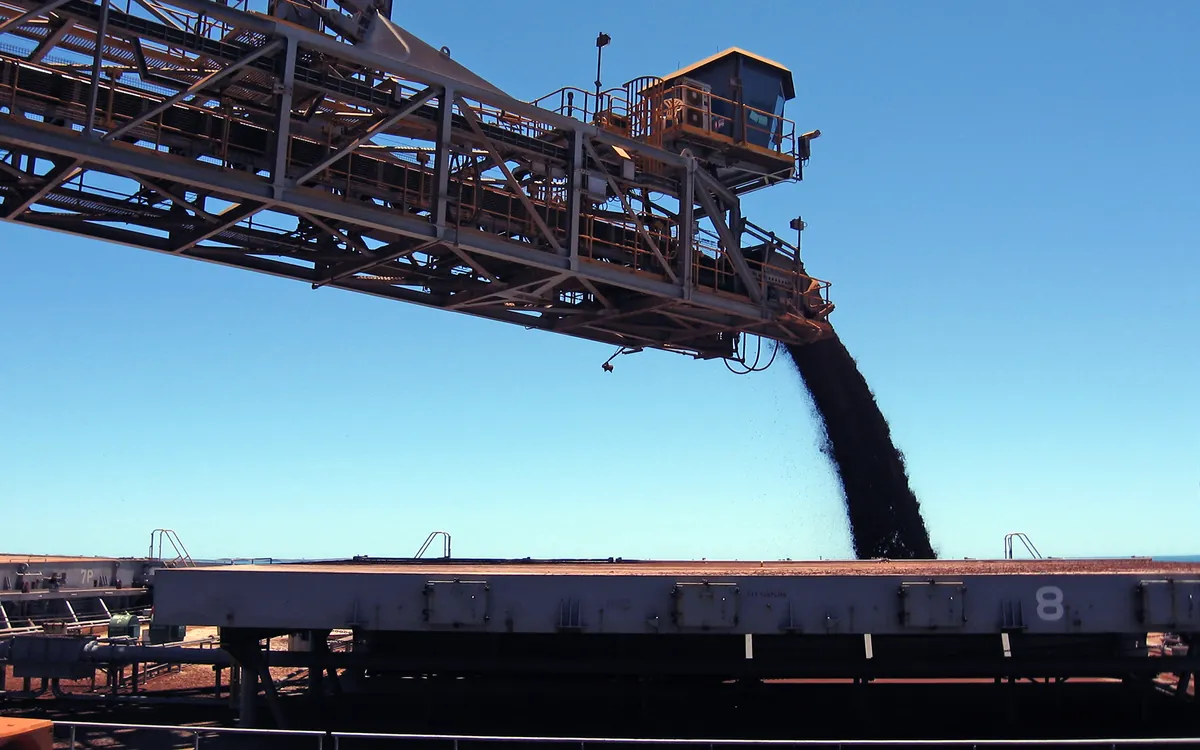
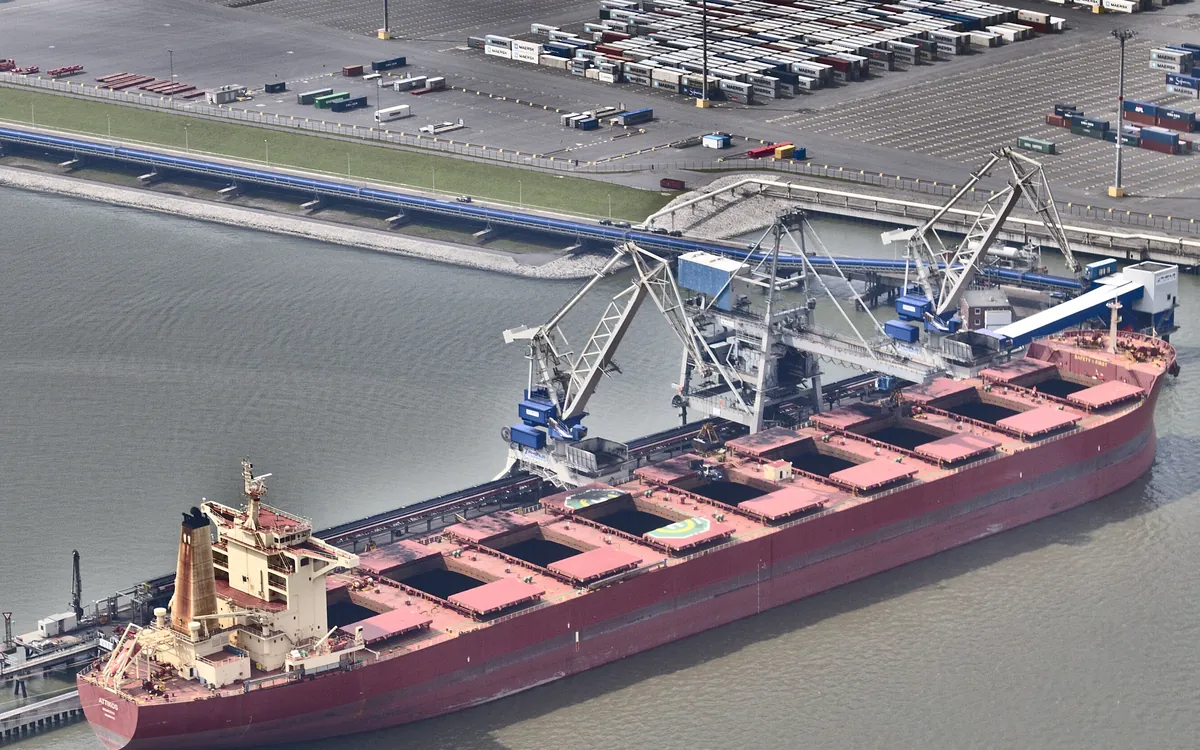
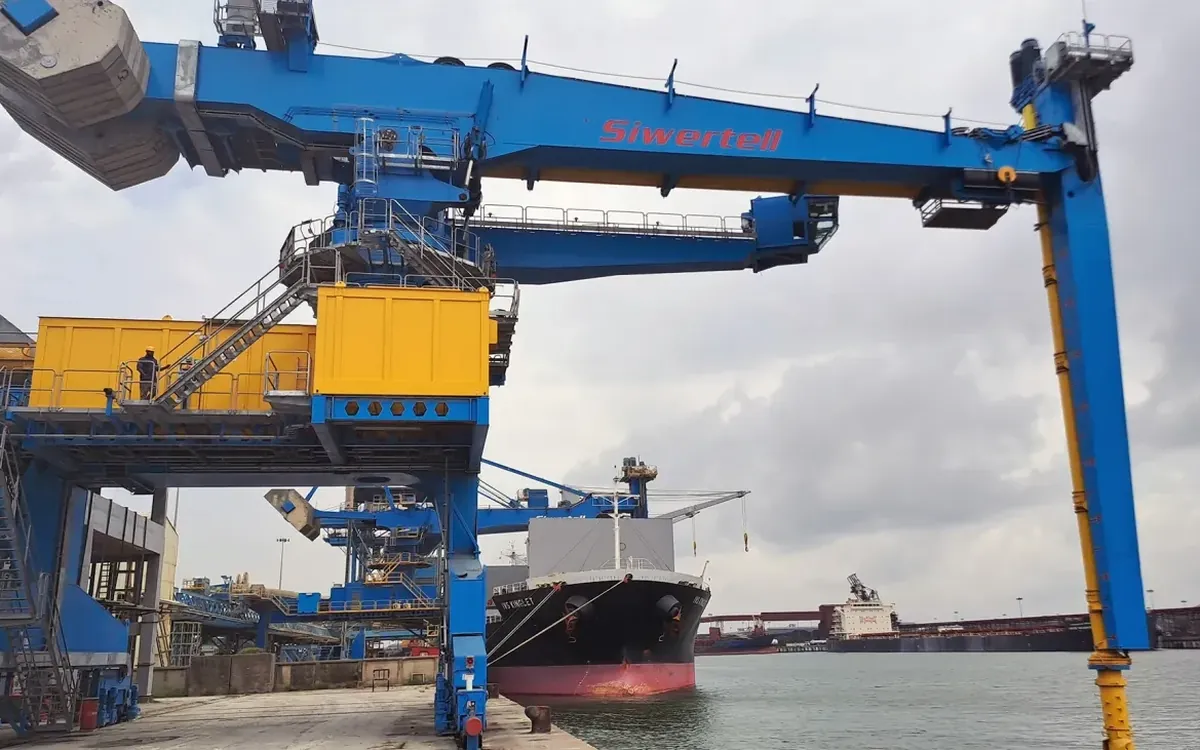
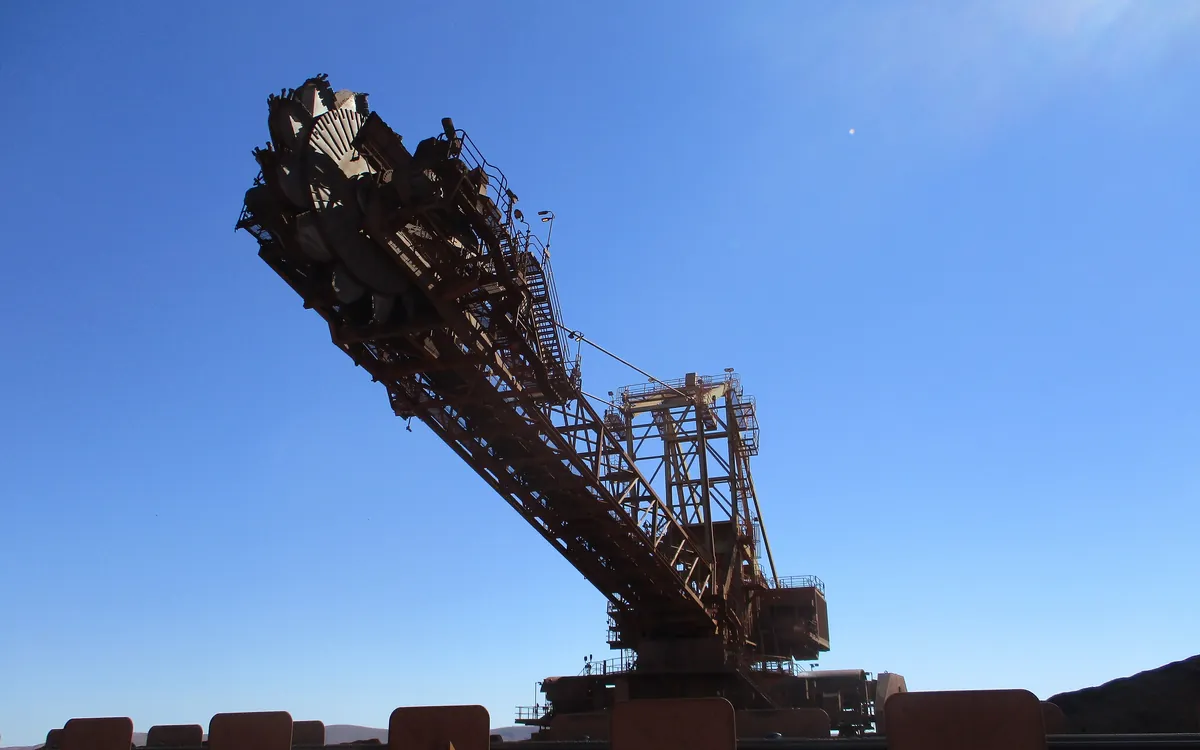
The strengths are low dust, gentle handling and an enclosed cargo path. The limits are the cargo range, since heavy or sticky materials are not suitable, and the energy cost of moving air. For dense minerals such as iron ore or coal, terminals use grab cranes or mechanical continuous unloaders instead.
Variants
Questions shippers ask
How fast does a pneumatic ship unloader work?
VIGAN quotes up to 800 t/h per suction pipe. Individual machines in its references run at 300 or 600 t/h, and larger terminals group several machines.
Which cargo can be unloaded pneumatically?
Free-flowing bulk with a bulk density usually between 0.5 and 0.9: cereals, seeds, feed, malt, rice, cocoa beans, wood pellets and some chemicals such as urea, soda ash and alumina.
How much energy does a vacuum unloader use?
VIGAN gives about 0.7 kWh per tonne unloaded for its NIV machines with direct-drive turbo blowers and frequency inverters.
What ship sizes can it handle?
From barges up to post-Panamax bulk carriers, with booms of up to 30 m.