Hooks on the dolphins that hold the tanker’s mooring lines and let go under full load, by hand lever or remote release, when the ship has to leave in an emergency.
What a quick release hook is
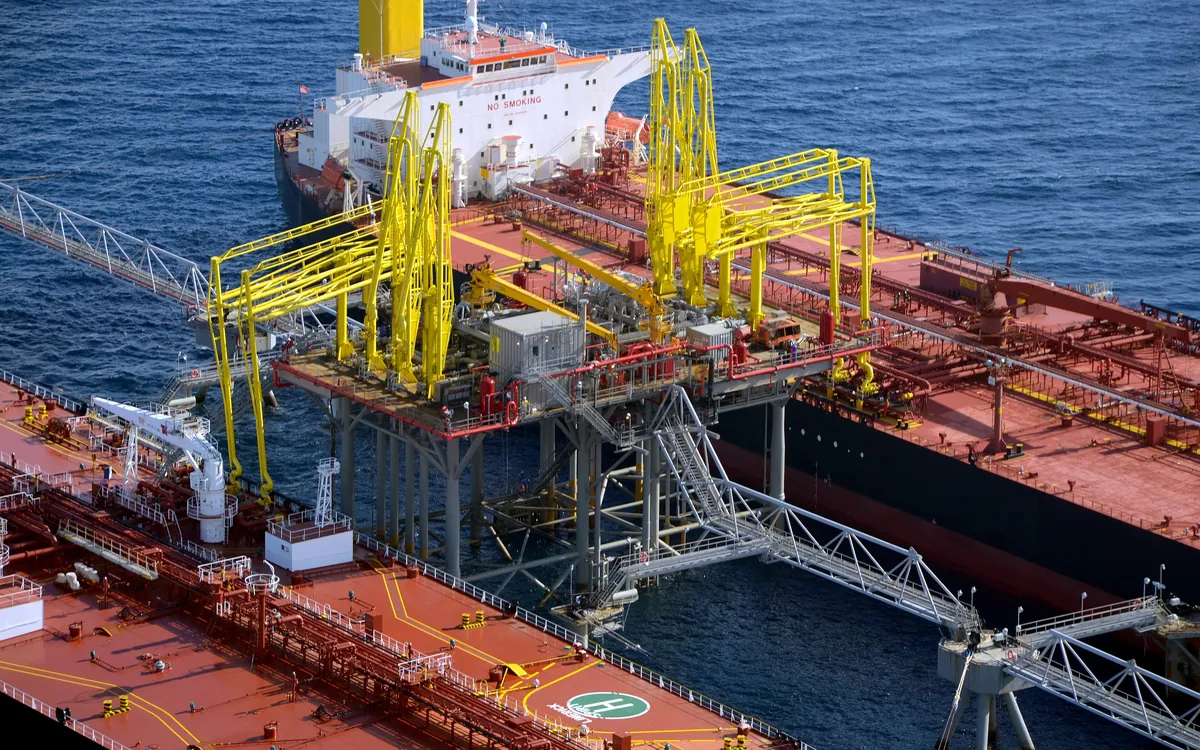
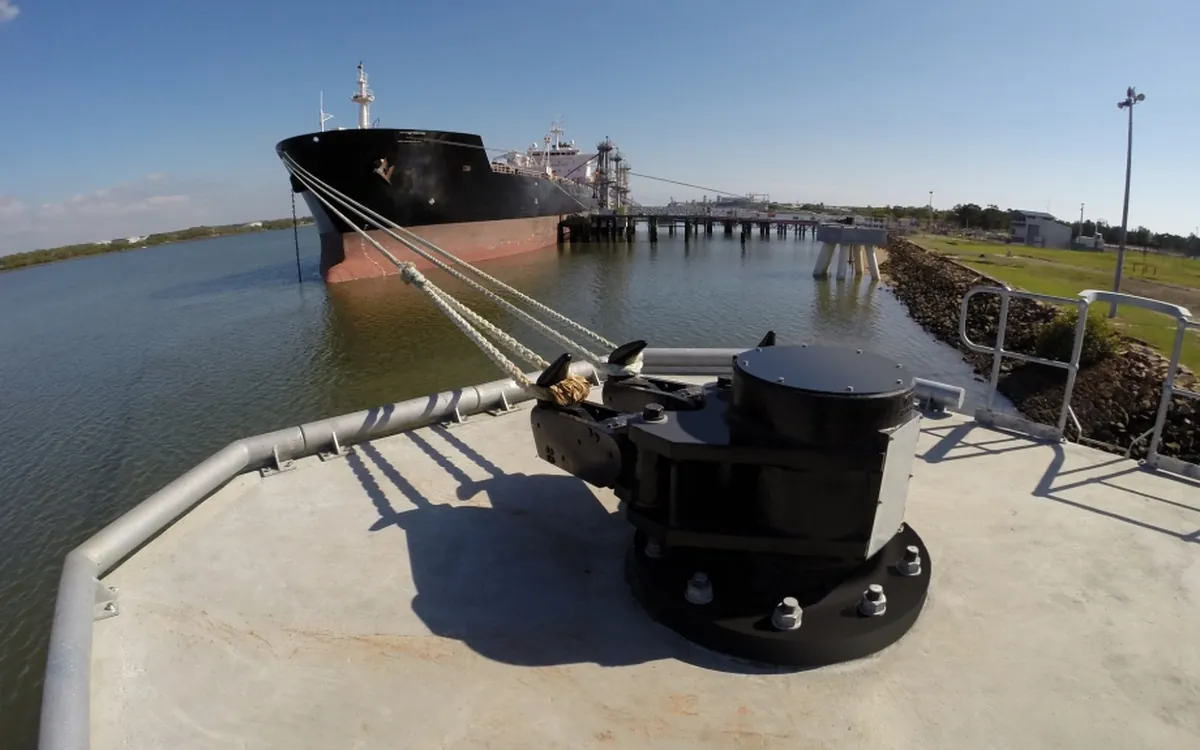
At an oil, chemical or gas jetty the ship's mooring lines run to mooring and breasting dolphins. A bollard holds a line only as long as it is made fast. A quick release hook (QRH) holds the eye of the line in a hinged hook that can be tripped open, so the line drops free at once.
Trelleborg's SmartMoor Series II, used as the reference here, has been in service since 1972 and installed at over 600 mooring facilities. Units carry one to four hooks.
How it works
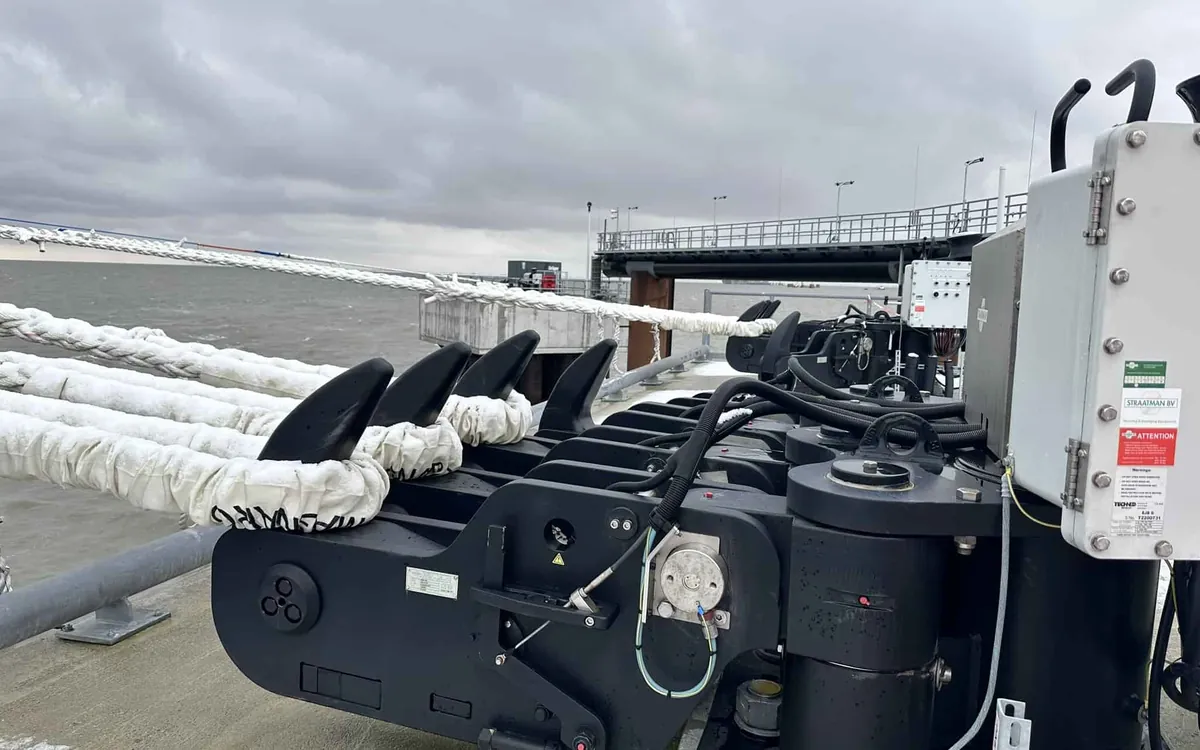
Each hook cantilevers from a cast or fabricated base bolted to the dolphin. The hook can swing sideways and tilt up, so it lines up with the mooring line as the ship moves. On a single hook the horizontal range is -90° to +90°, and all bases allow -5° to +45° vertically.
To release, the operator pulls the removable lever at the hook or sends a remote release signal. The release mechanism is designed to open under full working load. Elastomeric impact blocks absorb the energy as the hook swings open, and polypropylene blocks help prevent sparks in hazardous areas.
An electric capstan in the base hauls the messenger line and mooring line up to the hook. Trelleborg capstans pull 1 to 3 t at about 30 m/min, with motors of 5.5 to 15 kW and a spring brake that holds when power is off.
Sizes and key figures
Standard hooks have safe working loads (SWL) of 45, 60, 75, 100, 125, 150 and 200 t. The range quoted on the card is 30 to 200 t. A multi-hook base carries the SWL times the number of hooks, so a double 75 t unit has a 150 t base capacity.
Every hook is load tested to a proof load of 125% of SWL (150% available) and released by hand at the rated SWL. Standard units operate from -15 °C to +60 °C. Line sizes are up to 100 mm for the 45 to 75 t series, 110 mm up to 150 t and 130 mm for 200 t. Shipping mass ranges from about 1.45 t for a single hook to about 3.4 t for a quadruple 125 t unit.
The capstans that come with the hooks are rated by line pull and starting pull: 1 t line pull with 2 t starting pull on the smallest model, up to 3 t line pull with 6 t starting pull on the largest, each in safe-area or hazardous-area versions.
Where it is used
QRHs are standard at tanker and gas carrier berths, on mooring and breasting dolphins, and at terminals where fast release is part of the emergency plan. Multiple hooks per unit let several lines from one ship be held at the same point.
Hooks can be electrically insulated from the jetty, which prevents current flowing between ship and shore through the lines. Freight rates for cargo through these terminals can be compared at rates.navo24.com.
Remote release and monitoring
Remote release lets the jetty control room free one hook, a group or all hooks without anyone standing near a loaded line. Load cells in the hook pins report line tension, and Trelleborg recommends one line per hook where load monitoring is used. Tension data shows when lines need adjusting and gives warning of overload before a line parts.
Where hooks have load monitoring, Trelleborg recommends one mooring line per hook, so each sensor reads a single line. Hooks are checked by non-destructive testing to ASTM E1444 and welded to D1.1 or AS 1554 standards, and class design approval can be arranged on request.
How to choose, strengths and limits
Pick the SWL from the minimum breaking load of the largest ship's lines, the number of hooks from the mooring layout, and the capstan from the line weight. Check the temperature range, foundation design and the hazardous area class for electrical parts.
Quick release hooks make emergency departure fast and keep people away from lines under tension. They need regular testing and maintenance, and a release under load must be planned, because the line will whip as it goes.
Variants
Questions shippers ask
Why do tanker berths use quick release hooks?
They let the terminal release mooring lines under full load in seconds, so a ship can leave quickly if there is a fire or other emergency.
What safe working load do quick release hooks have?
Trelleborg SmartMoor hooks range from 30 to 200 t per hook. Multi-hook units carry the SWL times the number of hooks.
How are quick release hooks tested?
Each hook is load tested to 125% of SWL (150% available) and released by hand at its rated SWL.
Can the hooks be released remotely?
Yes. Remote release and load monitoring are options, so lines can be let go from the control room.